
Why Choose a Moto Electric Bike for Global Buyers?
For global buyers, the Moto Electric Bike is becoming more than a transport product. It is a practical response to rising fuel costs, urban congestion, and stricter emissions goals. The International Energy Agency’s Global EV Outlook 2024 identifies electric two- and three-wheelers as the largest road-electrification segment by fleet size. This matters in crowded cities, where a compact bike can move efficiently through narrow streets and limited parking areas.
Real-world value depends on more than motor power. Battery capacity, charging time, range, warranty coverage, and replacement support deserve careful attention. BloombergNEF’s Electric Vehicle Outlook 2024 highlights continuing battery-cost improvements and broader electrification across transport markets. However, buyers should not treat every forecast as a guarantee. Local electricity prices, climate conditions, road quality, and service networks can change ownership costs sharply.
A reliable Moto Electric Bike should also meet the destination market’s safety and equipment requirements. Buyers need clear technical specifications, traceable battery information, dependable brakes, quality lighting, and documented after-sales support. The European Environment Agency and other transport authorities continue to emphasize safer, lower-emission urban mobility, but policy details differ between countries. That difference is easy to overlook.
The best choice is therefore market-specific. A commuter in Barcelona may prioritize removable charging. A delivery rider in Bangkok may value battery durability and service access. A rural user may need stronger suspension and longer range. The answer is not always yes. Yet, when product quality, compliance, and local support align, the Moto Electric Bike can offer measurable efficiency, quieter travel, and a more flexible ownership experience.
What Is a Moto Electric Bike?
Why Choose a Moto Electric Bike for Global Buyers?
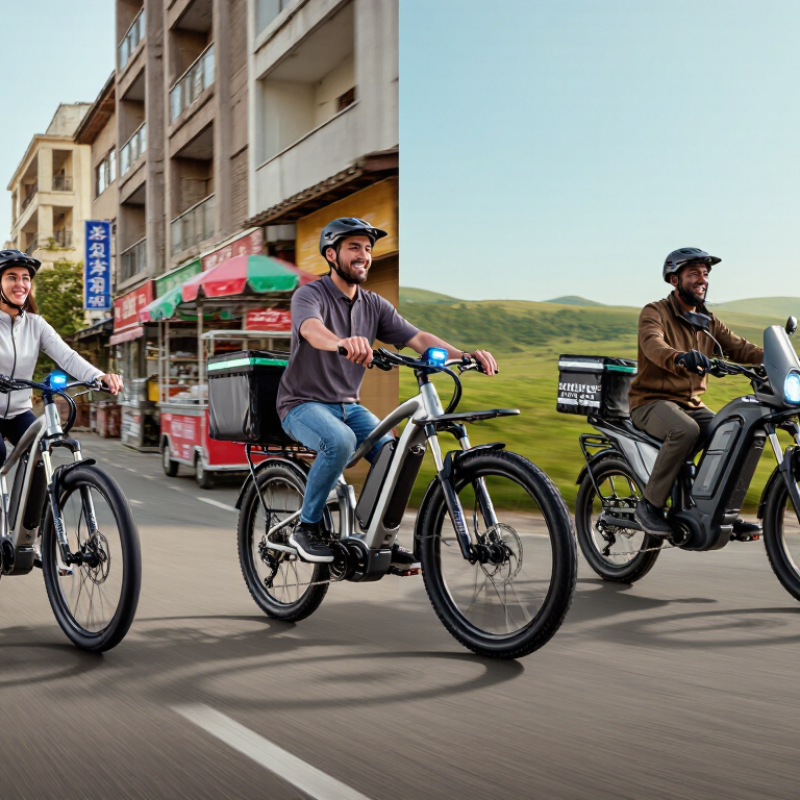
A moto electric bike is a two-wheeled electric vehicle shaped like a small motorcycle. It uses a rechargeable battery and an electric motor instead of a fuel engine. Riders control speed with a handlebar throttle, while footrests and a wider seat improve comfort. Many models include pedals, but their motorcycle-style frame usually feels more substantial than a standard electric bicycle. The exact classification depends on motor power, maximum speed, and local regulations.
For global buyers, this design offers quiet urban travel and convenient daily charging. A home outlet may refill the battery overnight, although charging time varies with battery size and charger output. Check the frame weight, brake performance, tire grip, and battery protection before purchase. In practical use, a low center of gravity feels stable on wet streets, but heavy batteries can make stairs difficult. A common mistake is judging range from laboratory figures. Cold weather, hills, cargo, and rider weight can reduce real distance noticeably. That detail deserves more attention.
Tips: Confirm voltage compatibility and charger certification before shipping. Ask for battery test records, warranty terms, spare-part access, and service instructions. Check local rules for registration, helmets, speed limits, and road access. Test the riding position if possible. Small discomfort becomes tiring on longer trips. Also inspect cable seals after rain. The protection may be adequate, but assumptions are not inspections.
How Does a Moto Electric Bike Work?
A moto electric bike works by turning stored battery energy into controlled wheel movement. The battery sends direct current to a motor controller, which regulates power several times each second. When the rider twists the throttle or presses the pedals, sensors send a signal to the controller. The controller then delivers current to the hub or mid-drive motor. More current usually creates stronger acceleration, but it also reduces range.
The battery management system monitors temperature, voltage, and charging activity. This protection helps prevent overheating and uneven cell wear. A practical check is simple: after a short ride, feel the motor casing and inspect the charging port for unusual heat or looseness. The display may show speed, battery level, and assistance mode. Do not treat those readings as exact. Cold weather, hills, rider weight, and tire pressure can change real performance.
Some systems use regenerative braking, sending limited energy back to the battery during deceleration. This feature sounds impressive, but it rarely replaces regular charging. Mechanical brakes still provide dependable stopping power, especially on wet roads. Buyers should also compare battery capacity in watt-hours, motor output, frame size, and service access. A larger battery adds weight. That trade-off is easy to underestimate. For global use, confirm the bike’s specifications match local equipment and road requirements before purchase. A careful test ride remains more informative than a polished product claim.
What Benefits Does It Offer Global Buyers?
Why Choose a Moto Electric Bike for Global Buyers?
For global buyers, a moto electric bike offers practical savings in daily urban travel. The International Energy Agency’s Global EV Outlook 2024 identifies electric two- and three-wheelers as the largest electric vehicle fleet worldwide. Their compact frames suit narrow streets, crowded districts, and short commutes. Charging at home can also reduce dependence on fuel stations. That matters in cities where parking is limited and fuel prices change frequently.
The financial case is measurable. BloombergNEF reported that average lithium-ion battery pack prices fell to 115 dollars per kilowatt-hour in 2024, a 20% annual decrease. Lower battery costs may support more accessible vehicle pricing over time. Electric drivetrains also contain fewer moving parts, which can simplify routine maintenance. Buyers should still check battery warranty terms, replacement costs, and local repair support. The cheapest purchase price is not always the cheapest ownership option.
Range depends heavily on temperature, rider weight, road conditions, and battery age. The picture is imperfect. Charging still matters. The IEA notes that charging access remains uneven across markets, especially outside major cities. Global buyers should compare charging standards, import requirements, safety certification, and spare-parts availability before ordering. A model that performs well in a warm coastal city may lose range during a cold winter commute. Reliable after-sales service can therefore be as valuable as speed or design.
Why Choose a Moto Electric Bike for Global Buyers? - What Benefits Does It Offer Global Buyers?
| Buyer Benefit | Typical Data or Benchmark | Value for Global Buyers | Important Consideration |
|---|---|---|---|
| Lower energy cost | Many electric two-wheelers use approximately 3–8 kWh of electricity per 100 km, depending on speed, weight, terrain, and weather. | Electricity can cost less per kilometer than gasoline or petrol, especially where home or off-peak charging is available. | Actual savings depend on local electricity prices, fuel prices, riding habits, and charging losses. |
| Useful urban range | A typical electric moped or light electric motorcycle may offer about 60–200 km of claimed range per full charge. | This range is suitable for commuting, delivery work, short-distance travel, and many daily urban journeys. | Real-world range is usually lower at high speeds or under heavy loads and may decrease in cold weather. |
| Convenient charging | Standard household charging commonly takes around 4–8 hours; compatible rapid systems can reduce charging time to roughly 1–2 hours. | Overnight charging can support daily use without regular visits to a fuel station. | Charging time varies with battery capacity, charger output, local voltage, and whether rapid charging is supported. |
| Reduced routine maintenance | Electric drive systems generally have fewer moving parts and do not require engine oil, spark plugs, fuel filters, or exhaust-system servicing. | Fewer engine-related service items can simplify ownership and reduce scheduled maintenance needs. | Tires, brakes, suspension, bearings, electronics, and the battery still require inspection and replacement when worn. |
| Quiet operation | Electric motors produce substantially less mechanical and powertrain noise than internal-combustion engines, particularly at low speeds. | Lower noise can improve comfort for riders and reduce disturbance in residential and densely populated areas. | Tire and wind noise remain, and pedestrians may hear an electric bike less easily in busy environments. |
| No tailpipe emissions | Electric bikes produce no direct tailpipe exhaust while operating. | They can help reduce roadside air pollutants in cities and enclosed areas compared with combustion-powered vehicles. | Total environmental impact also depends on electricity generation, battery production, use, and end-of-life recycling. |
| Good low-speed response | Electric motors deliver torque immediately, providing smooth acceleration from a standstill. | Immediate response is useful in stop-and-go traffic, at intersections, and on moderate urban inclines. | Performance depends on motor power, controller settings, battery state of charge, rider weight, and local legal limits. |
| Flexible operating formats | Models may use fixed or removable batteries, with rated voltage commonly ranging from approximately 48 V to 96 V in light electric two-wheelers. | Removable batteries can help users charge in apartments, offices, shops, or locations without dedicated parking infrastructure. | Battery weight, connector standards, charger compatibility, and local electrical regulations should be checked before purchase. |
| Potentially lower total ownership cost | Energy and routine service costs may be lower, although the initial purchase price and battery replacement cost can be significant. | Frequent riders may recover part of the upfront cost through lower energy and maintenance expenses over time. | A meaningful comparison should include purchase price, financing, insurance, registration, electricity, maintenance, battery life, and resale value. |
| International usability | Usability depends on local rules covering speed classification, power rating, licensing, registration, helmets, insurance, and charging safety. | A model that matches local regulations can be easier to register, insure, import, and operate legally. | Global buyers should verify certification, plug and voltage compatibility, spare-parts availability, warranty support, and import requirements before ordering. |
Note: Figures are representative ranges for light electric two-wheelers and vary by vehicle class, battery capacity, test method, climate, road conditions, rider weight, and local regulations.
What Factors Should Buyers Compare Before Purchase?
Why Choose a Moto Electric Bike for Global Buyers?
Before purchasing, compare the motor’s rated power, peak output, and hill-climbing ability. A larger motor is not always better for city travel. It may increase weight, energy use, and local compliance concerns. Check whether the motor supports smooth starts on wet roads and crowded streets.
Range claims can mislead. Compare battery capacity, rider weight, terrain, temperature, and average speed. A practical test ride reveals more than a specification sheet.
Fit matters. Check frame size, handlebar reach, saddle height, tire width, and braking control.
Battery safety deserves careful attention. Ask about cell protection, charging temperature limits, water resistance, and replacement procedures. Confirm that the charger matches the local electrical system.
Review recognized safety certifications for your target market. Rules may differ regarding speed limits, lighting, helmets, registration, and road access. Confirm these requirements with official transport authorities before ordering.
Do not rely only on a seller’s short product description.
Total ownership cost also deserves comparison. Include shipping, import charges, insurance, servicing, replacement batteries, and storage equipment. Examine the warranty duration and the exact parts it covers.
Reliable support should provide clear manuals, diagnostic guidance, and accessible spare parts. A low purchase price can become expensive after one unavailable component.
A common mistake is focusing on maximum range while ignoring charging time and daily parking. That comparison is incomplete. Buyers should record their regular route, charging location, climate, and cargo needs. Small details often decide whether the bike feels useful after the first month.
How Can Buyers Handle Importing, Charging, and Maintenance?
Why Choose a Moto Electric Bike for Global Buyers?
Importing a moto electric bike requires more than comparing prices online. Buyers should confirm battery specifications, motor output, dimensions, and included documents before payment. Ask the seller for commercial invoices, packing details, test reports, and clear battery safety records. These documents can affect customs clearance and shipping options. Requirements differ by destination. Check them with local customs officials or a qualified freight agent. Do not assume a household socket or standard plug will work. A small mistake can delay delivery or damage equipment.
Charging needs careful planning after arrival. Measure the parking area and identify a dry, ventilated charging location. Confirm the charger’s voltage and frequency match the local electrical system. A certified electrician can inspect grounding and circuit capacity. Avoid extension cables that feel warm during charging. Never charge a damaged, swollen, or wet battery. Simple habits matter. Keep the connector clean and store the charger away from rain, dust, and direct sunlight.
Maintenance is manageable, but it is not maintenance-free. Inspect tire pressure, brake response, lights, fasteners, and cable condition every few weeks. Battery performance may drop in extreme heat or cold. Follow the supplied service schedule, even when the bike appears normal. In my experience, owners often check the battery and ignore brake wear. That is a costly oversight. Replacement parts may take time to import, so record component numbers and locate a trained technician before problems begin. Some advice online sounds confident but lacks evidence. Verify unusual repairs through the service manual or an experienced professional.
Why Choose a Moto Electric Bike for Global Buyers?
Charging time depends on battery capacity and charger power. The chart shows a calculated example for fully charging a 5 kWh battery with approximately 90% charging efficiency.
For importing, buyers should confirm local vehicle certification, customs classification, duties, VAT, and lithium-battery transport requirements before shipment. For maintenance, regular checks of tires, brakes, drive components, charging connectors, battery condition, and software are important. Actual charging time varies with temperature, battery state, charger limits, and local electrical standards.