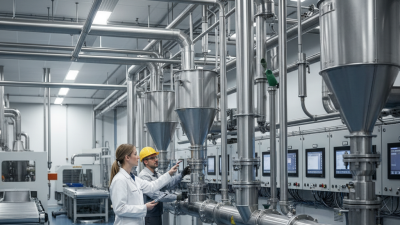
China Top Pneumatic Conveying Systems Manufacturers?
China has become a significant production base for Pneumatic Conveying Systems used in food, chemicals, plastics, pharmaceuticals, and minerals. Its manufacturers offer dense-phase and dilute-phase solutions, vacuum conveying units, pressure conveying lines, and custom material-handling equipment. However, choosing a reliable supplier requires more than comparing catalogue prices.
This guide examines China’s leading manufacturers through practical and technical criteria. These include conveying capacity, pipeline design, filtration performance, automation, material compatibility, and after-sales support. Real experience matters. A system moving flour behaves differently from one handling abrasive powder or fragile granules. Small details matter, such as elbow wear, air velocity, filter cleaning, and the position of discharge valves.
Some companies show strong engineering depth, while others focus mainly on fabrication and lower-cost assembly. No ranking is perfect. Public information can be incomplete, and impressive product photos cannot confirm long-term performance. Buyers should request flow calculations, equipment drawings, factory evidence, test records, and references from comparable applications. A reliable manufacturer should explain pressure loss clearly and identify possible blockage risks before signing a contract.
The manufacturers discussed here are considered from an international buyer’s perspective. Their capabilities, certifications, customization experience, and communication quality deserve careful review. Site visits may reveal more than brochures. So do honest questions.
This overview aims to support a balanced shortlist for Pneumatic Conveying Systems projects. It does not replace process testing or professional engineering validation. Conditions change. Materials change. Good decisions leave room for both evidence and revision.
What Are Pneumatic Conveying Systems?
China Top Pneumatic Conveying Systems Manufacturers?
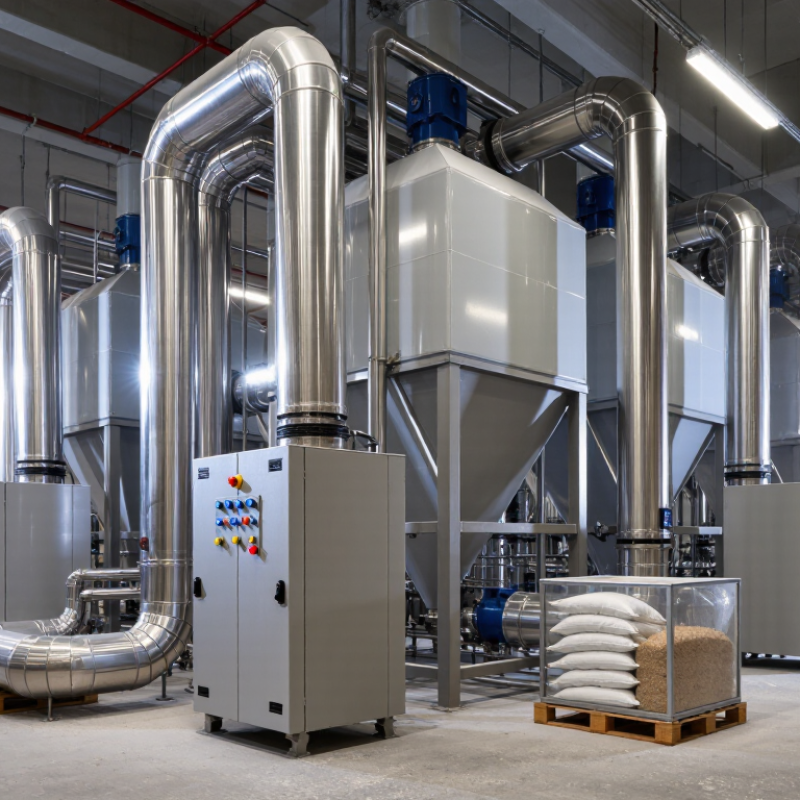
Pneumatic conveying systems move powders, pellets, and granules through enclosed pipelines. Air creates the transport force. A blower, rotary valve, pipeline, filter, and receiving vessel form the working system. Dilute-phase conveying carries material at higher speed and lower concentration. Dense-phase conveying uses slower, denser plugs and can reduce product damage.
The choice depends on bulk density, moisture, particle shape, distance, and required capacity. A food powder may need gentle movement and sanitary surfaces. A mineral powder may demand abrasion-resistant bends. Grand View Research’s 2024 Pneumatic Conveying System Market report projects global growth through 2030, reflecting wider use in food, chemicals, pharmaceuticals, and manufacturing. Yet market growth does not guarantee a good installation. Poor airflow calculations can cause blockages, overheating, or excessive energy use. Real systems are less tidy than diagrams.
Tips: Test the actual material before final design. Measure particle size, moisture, and bulk density. Keep conveying velocity only as high as necessary. The U.S. Department of Energy’s Compressed Air Systems guidance warns that compressed air is often an expensive industrial utility. Leak checks, pressure control, and correctly sized filters can reduce avoidable losses. One practical lesson remains easy to miss: a shorter route is not always better if bends create impact and wear.
Pneumatic conveying systems transport bulk solids through pipelines using moving air or gas. Dilute-phase conveying typically operates at higher air velocities, while dense-phase and plug-flow conveying use lower velocities to reduce particle damage and system wear. The ranges shown are representative engineering values; the final operating point depends on material properties, pipeline design, pressure, and throughput.
How Pneumatic Conveying Systems Work in Industrial Settings
In industrial settings, pneumatic conveying systems move powders, granules, and pellets through enclosed pipelines. A blower or compressor creates controlled airflow. A rotary valve or feeder then introduces material into the stream. The air carries it through pipes toward a storage bin, mixer, or packaging line. Some systems use positive pressure, while others use vacuum to pull material forward. The choice depends on distance, product behavior, and plant layout.
Air does the heavy lifting.
At the receiving point, a filter or cyclone separates the material from the conveying air. The product falls into a hopper, while cleaned air exits through the filtration unit. Pressure sensors, airflow meters, and level indicators help operators detect blockages early.
Pipeline bends require careful design because sharp turns can increase wear and damage fragile particles. Moisture also matters. Wet powder may stick inside the line and reduce capacity.
When evaluating pneumatic conveying systems manufacturers, engineers should request test data, energy estimates, and maintenance guidance. System sizing must consider bulk density, particle size, temperature, and conveying distance. A pipe that works for plastic pellets may fail with fine flour or abrasive minerals. Real plants are rarely perfect. Small leaks, unstable feeding, or poor filter cleaning can quietly reduce performance. Regular inspections reveal problems earlier than production losses do.
Key Types of Pneumatic Conveying Systems in China
China’s pneumatic conveying sector serves food processing, chemicals, minerals, and pharmaceuticals. Key system types differ by pressure, airflow, and material sensitivity. MarketsandMarkets estimated the global pneumatic conveying system market at about USD 7.5 billion in 2023. Its forecast suggests continued growth through 2028, driven by automation and cleaner material handling.
Pressure dilute-phase conveying is common for powders and granules. Air moves quickly through pipelines, often above 18 metres per second. It suits long routes and frequent feeding, but fragile particles may break. Vacuum conveying pulls material through sealed lines. It is useful for hygienic production because leaks move inward, not outward. Many Chinese plants use vacuum systems near mixers, bag dump stations, and filling equipment.
Dense-phase conveying uses lower air speed and higher solids concentration. It can reduce particle damage and dust, especially for pellets, flour, and sensitive powders. The trade-off is higher control complexity. Positive-pressure systems work well across longer distances, while negative-pressure systems simplify pickup from several points. A 2024 report from Fortune Business Insights linked market expansion with demand for enclosed, automated transport in process industries. However, reported market figures vary by definition. That matters. A system selected from catalogue data may struggle when moisture changes, bulk density shifts, or pipelines collect residue. Experienced engineers test the actual material, not only its name. Even then, no design is perfect.
Leading Chinese Manufacturers and Their Product Specialties
China’s pneumatic conveying manufacturers serve food, chemical, pharmaceutical, plastic, and mineral processing plants. Their specialties differ, so equipment selection should match the material, distance, and production rhythm. Some focus on dense-phase conveying, which moves powder gently through pipelines. Others develop dilute-phase systems for higher speed and simpler layouts. Vacuum conveying units are common where dust control and enclosed transfer matter.
Experienced manufacturers usually provide blowers, rotary valves, filters, pipelines, and control cabinets as integrated systems. Their technical strength often appears in small details, such as air velocity adjustment, wear-resistant bends, and easy filter cleaning. Stainless steel construction suits hygienic applications, while abrasion-resistant designs support sand-like or granular materials. In real projects, a standard configuration may look efficient but still fail with sticky powder or changing moisture levels. That is worth questioning.
Tips: Ask for material testing before purchasing. Confirm throughput using your actual bulk density, not a brochure estimate. Request noise, energy, cleaning, and maintenance data. Check whether the supplier can provide drawings, commissioning support, and replacement parts. A transparent manufacturer will explain pressure loss and possible blockages clearly. Do not ignore operator feedback. The best system on paper may become troublesome during night shifts, especially when access panels are difficult to open.
How to Evaluate China’s Pneumatic Conveying System Manufacturers
Evaluating China’s pneumatic conveying system manufacturers requires more than comparing quotations. Check the engineering evidence behind each proposal. The U.S. Department of Energy reports that compressed air may represent about 10% of industrial electricity consumption. This makes air demand a major ownership cost, not a minor specification. Ask for tested airflow, pressure, conveying capacity, and power data using your actual material. A supplier should explain how moisture, particle size, bulk density, and pipeline length affect performance. Vague “high efficiency” claims are weak evidence.
Experience matters on the factory floor. Request commissioning records, factory acceptance test procedures, and references for similar powders or pellets. Inspect weld quality, pipe supports, filters, valves, and dust collection points. Verify that control panels and pressure vessels meet applicable standards, including ISO 12100 principles and relevant electrical and dust-safety requirements. The European Commission’s energy-efficiency guidance also identifies compressed-air leakage as a frequent source of waste. A serious manufacturer should provide a leakage inspection plan and measurable maintenance intervals. I would not rely on a polished showroom alone. It can hide practical weaknesses.
Tips: Compare lifecycle cost, not only purchase price. Require a material test before signing. Ask for noise, air-consumption, and spare-parts data. Confirm response times in writing. One overlooked detail matters: operators must be able to clean filters without stopping the entire line. Even experienced buyers sometimes miss this point.
Related Posts
-
Best Pneumatic Conveying Systems for Efficient Material Handling?
-
Maximize Durability with 5 Essential Tips for Cost Effective Maintenance of Best Industrial Blowers
-
Unlocking Global Trade Opportunities with Sawdust Vacuum System at the Canton Fair 2025
-
Resilient Growth of Chinese Manufactured Best Bag House Filters Amid US China Tariff Challenges
-
Top 10 Industrial Dust Collector Systems for Global Buyers?
-
What is the Efficiency of the Best Baghouse Dust Collector in Industrial Applications