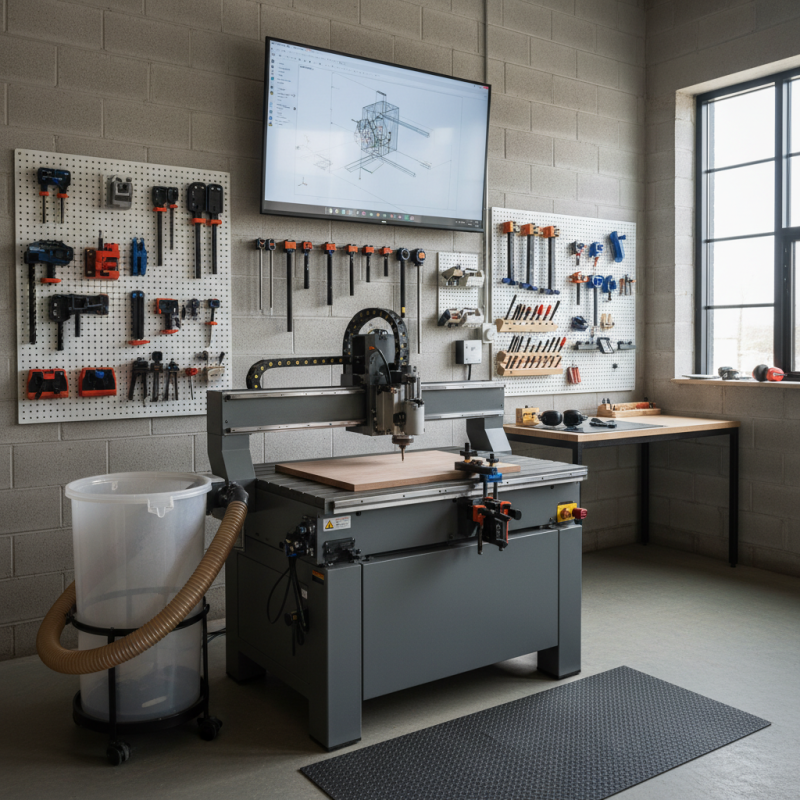
Top 10 CNC Accessories You Need for Your Workshop?
CNC Accessories play a crucial role in enhancing the functionality of your workshop. These tools and add-ons can significantly improve your CNC machining experience. From efficiency to precision, they make work easier.
When setting up your CNC workspace, choosing the right accessories is key. For instance, clamps ensure that materials stay steady during operation. Dust collection systems keep your environment clean. Each piece helps elevate your craftsmanship. However, it is easy to overlook essential accessories when starting out.
Many hobbyists focus solely on the CNC machine itself. This can lead to frustration in projects. Invest time in researching the best CNC Accessories for your needs. Reflect on previous projects to identify what you might have lacked. A well-equipped workshop will not only save you time but also enhance the quality of your work.
Essential CNC Router Bits for Precision Cutting
CNC router bits are critical for achieving precision in your workshop. Choosing the right bits can make a huge difference in your projects. For example, spiral bits are excellent for clean cuts and smooth edges. They can easily cut through various materials such as wood, plastic, and even aluminum.
On the other hand, straight bits are versatile and handy for making grooves or slots. These bits tend to create more chips, which can lead to messy workspaces. Remember, keeping bits sharp is essential for optimal performance. Dull bits can cause burning, irregular cuts, and frustration.
Another essential type is the ball end bit. This bit allows you to create intricate designs and 3D shapes. However, mastering its use can be challenging for beginners. Take time to practice. The right technique will improve your skills and the quality of your work. Experimentation is key in finding what works best for your projects. Embrace the learning process, and don't be discouraged by mistakes.
Must-Have CNC Workholding Solutions for Stability
In any CNC workshop, effective workholding solutions are essential for stability. A report by the National Institute of Standards and Technology shows that improper workholding can lead to a 30% decrease in machining precision. With this in mind, investing in reliable fixtures is crucial.
Clamping systems should be versatile. A good setup allows different workpiece shapes and sizes to be held securely. Often, jigs and fixtures come into play, yet they may require customization. This process can lead to initial inefficiencies and wasted material. However, the right holding technique ensures that machining remains precise and reliable.
Using vacuum tables offers a different approach for specific tasks. They can create strong, evenly distributed suction. This method is effective but may struggle with thicker materials. Regular maintenance of these systems is vital for optimal performance. A small oversight can result in misalignment, leading to flawed parts. Balancing efficiency with stability remains a challenge for many. Each workshop must assess its unique needs while constantly improving workholding practices.
Top CNC Software for Streamlining Your Workflow
When it comes to CNC machining, software plays a crucial role in enhancing efficiency. Many workshops overlook the importance of a robust software solution. According to recent reports, around 70% of CNC shops experience delays due to ineffective software tools. This often results in missed deadlines and increased costs, which can significantly impact overall productivity.
Effective CNC software enables better design-to-production workflows. Features like 3D modeling and precise machining simulations are essential. A study highlighted that companies using advanced CAD/CAM software reported a 30% increase in production speed. However, not all software is user-friendly. Some operators struggle with complex interfaces, leading to errors and wasted time. It's essential to invest time in training staff to maximize the capabilities of the software.
Moreover, integrating your CNC machine with the right software can improve maintenance and tracking. A report showed that firms that utilize software to monitor machine performance reduce downtime by 25%. Nonetheless, many workshops fail to harness these tools fully. Regularly updating software and seeking user feedback can help identify areas for improvement. Embracing technology is not just about having the latest tools; it's about optimizing existing processes.
Quality Measurement Tools for CNC Accuracy
Accurate CNC machining relies heavily on quality measurement tools. These tools help ensure your projects meet precise specifications. One essential tool is the digital caliper. It measures thickness or diameter with ease. A micrometer is also crucial for high precision tasks. It allows you to measure small distances accurately.
Using these tools frequently can help reduce measurement errors. However, you should maintain them properly. Calibration is necessary. Tips: Regularly check the accuracy of your tools before each project. If measurements vary, trust your instincts. Don’t hesitate to recalibrate.
Another indispensable accessory is the height gauge. This tool helps establish reference points for your workpieces. It can simplify the process of marking and machining. Measure twice; cut once. This old saying holds true in CNC machining. Always ensure your measurements align before proceeding to avoid mistakes.
Safety Gear to Protect Yourself While Operating CNC Machines
Operating CNC machines comes with significant risks. Proper safety gear is essential. Approximately 30% of workplace injuries in manufacturing are due to improper personal protective equipment (PPE). Investing in the right gear can prevent many of these incidents.
A good pair of safety goggles is non-negotiable. They protect your eyes from flying debris and harmful dust. Hearing protection is also vital. Many CNC machines operate at high decibel levels, potentially causing hearing damage over time. In fact, continuous exposure to sounds above 85 decibels can lead to permanent hearing loss.
Protective gloves are important too. They shield your hands from cuts and abrasions. However, not all gloves are suitable for all tasks. Some materials can grip poorly when oily, leading to accidents. Additionally, wear durable work boots with steel toes for foot protection. They cushion your feet and guard against heavy falling objects. Regularly review your safety practices; complacency can lead to dangerous situations in the workshop.
Top 10 CNC Accessories You Need for Your Workshop