China Top Child Car Seat Accessories Suppliers?
Choosing reliable China suppliers for Child Car Seat Accessories requires more than comparing online prices. It demands careful checks of product design, material quality, manufacturing experience, and communication. A supplier may offer seat protectors, head supports, mirrors, organizers, or replacement covers. However, each accessory should support safe use without interfering with the car seat’s original structure.
Experienced buyers often request product specifications, material declarations, sample units, and factory inspection records. A close look can reveal important details. Check stitching around straps, plastic edges, buckle compatibility, and the smell of foam after unpacking. Suppliers with clear quality procedures usually explain how products are inspected before shipment. They should also provide traceable business information and respond directly to technical questions.
This market is competitive.
Still, product photos are not enough. Some listings appear professional but provide limited testing evidence or unclear compatibility data. That weakness deserves attention. Buyers should compare samples under realistic conditions, including installation, cleaning, storage, and repeated adjustment. Independent testing may be appropriate when an accessory affects positioning, restraint access, or visibility.
This guide examines China’s leading Child Car Seat Accessories suppliers through practical criteria, including product range, customization capability, quality control, export experience, and after-sales support. It does not assume that the largest supplier is automatically the best choice. A smaller manufacturer may offer stronger communication or more flexible development. Yet, that advantage must be verified through documents, samples, and consistent production results. Careful sourcing protects purchasing decisions and supports safer products for families.
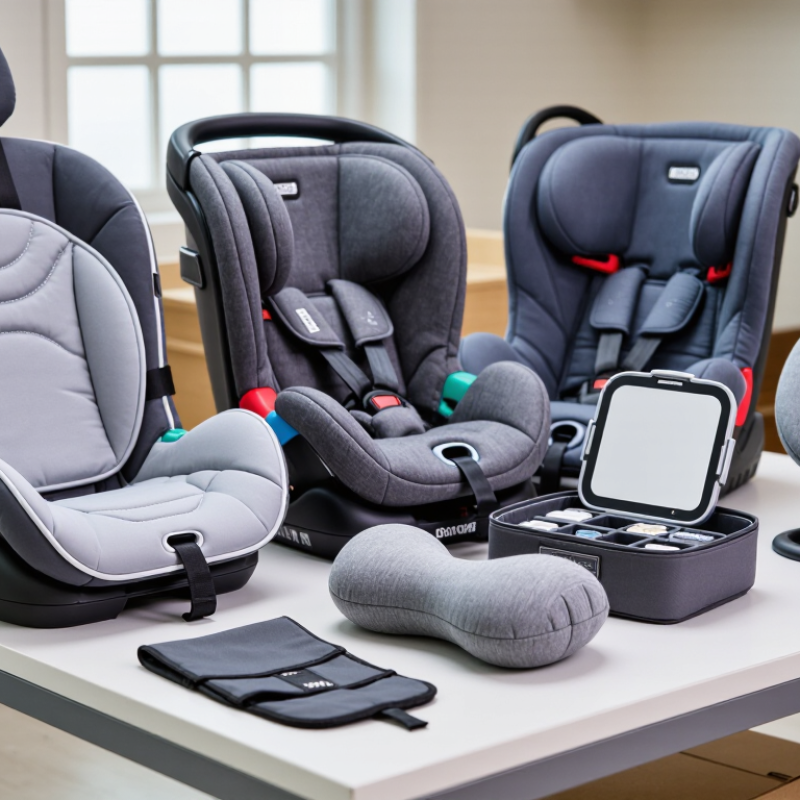
What Are Child Car Seat Accessories and Why Do They Matter?
Child car seat accessories are add-on items that support installation, comfort, cleaning, or everyday organization. Examples include washable liners, sun shades, protective mats, cup holders, travel bags, and adjustment tools. They matter because small details affect daily use. A slippery cover can change a child’s seating position. A poorly fitted mat can interfere with stable installation.
From practical product checks, the best accessories solve specific problems without distracting from the seat’s original safety design. Soft padding should not push the child’s body forward. Harness-related parts must match the seat model and follow its instructions. Keep it simple.
Suppliers should provide clear dimensions, material details, care guidance, and compatibility information. Products should also undergo documented quality testing, including stitching checks, odor inspection, and repeated-use assessment.
Reliable suppliers do more than offer attractive samples. They explain limitations honestly and respond when a design needs improvement. I once noticed that a neat-looking storage pocket blocked access to an adjustment area. That detail was easy to miss. It still mattered. Responsible manufacturers review user feedback, control production changes, and maintain consistent packaging and labeling. Buyers should request sample approval, inspection records, and traceable batch information before placing larger orders. A lower price may look appealing, but weak materials or unclear instructions can create avoidable trouble.
Which Accessories Are Commonly Produced by Chinese Suppliers?
Chinese suppliers commonly produce practical child car seat accessories for comfort, storage, and daily travel. Popular items include padded harness covers, removable seat liners, sun shades, backseat organizers, travel bags, and protective vehicle mats. Some factories also make cup holders, buckle covers, head supports, and adjustable footrests.
Small details matter. A harness cover should feel soft but remain securely positioned during use. Seat liners often use breathable mesh, water-resistant fabric, or washable padding. Suppliers may offer polyester, nylon, cotton blends, and molded plastic components. Buyers should check material composition, stitching strength, edge finishing, and cleaning instructions. These features affect durability more than attractive packaging.
Fit requires careful attention. A universal accessory may not fit every seat or vehicle. Certain add-ons can interfere with harness movement, belt routing, or manufacturer instructions. Experienced suppliers should provide dimensional drawings, product samples, and test documentation for the intended market. They should also explain whether an accessory is approved for use with specific seat structures. A low quotation can hide weak stitching or inconsistent foam density. The fit is not always perfect. Sampling several production batches is wiser than trusting one attractive sample. Clear inspection records, traceable materials, and responsive technical communication help reduce sourcing mistakes.
How to Evaluate China-Based Child Car Seat Accessory Suppliers?
Evaluating China-based child car seat accessory suppliers requires more than comparing prices. Start with the factory, not the sales brochure. Ask for registration details, production capacity, quality procedures, and recent audit records. A reliable supplier should explain where fabrics, foam, plastics, and fasteners come from. Request samples from regular production, not specially prepared units. Small details matter, such as uneven stitching, sharp edges, weak snaps, or loose padding.
Check whether an accessory can affect the car seat’s original restraint system. Covers, harness pads, mirrors, organizers, and sun shades should fit their stated purpose without blocking belts or reducing visibility. Ask for material safety reports, flammability information, chemical test results, and inspection records required for your target market. Independent laboratory testing is useful, but testing one sample cannot prove every batch is consistent. Confirm lot numbers, inspection points, and corrective action procedures. Keep written records of every change.
A factory visit can reveal practical evidence. Watch workers inspect seams, measure dimensions, and pack finished goods. Ask how rejected items are separated. We once focused too heavily on packaging quality and overlooked inconsistent hook strength. That was a costly lesson. Supplier evaluation should include repeat orders, complaint response time, and replacement handling. Clear drawings and approved samples reduce misunderstandings. Still, even strong documentation needs physical verification. A polished sample may hide process weaknesses. Question confident promises, especially when technical answers remain vague. Reliable cooperation grows through evidence, not enthusiasm.
How to Evaluate China-Based Child Car Seat Accessory Suppliers
Use this weighted evaluation framework to compare suppliers consistently. Prioritize documented product safety, traceability, manufacturing capability, and delivery reliability before considering price.
Recommended assessment weights are shown as percentages of the total supplier evaluation score. Verify each criterion with current certificates, test reports, factory records, samples, and written commercial terms.
What Quality and Safety Standards Should Buyers Check?
When evaluating China-based child car seat accessory suppliers, buyers should check safety standards before comparing prices or packaging. The accessory must suit the original seat design and should never obstruct harness paths, belt routes, or side-impact protection. Ask suppliers which market standard applies, such as UN ECE R129, FMVSS 213, or China’s GB 27887. Requirements differ by destination.
Request complete test reports, not only certificate images. Reports should identify the exact product model, materials, test date, laboratory, and production batch. Testing may cover crash performance, flammability, chemical migration, stitching strength, and buckle durability. An accredited independent laboratory adds credibility. ISO 9001 can support factory quality control, but it does not prove crash safety. That distinction is often missed.
Inspect samples with real fitting checks. A padded insert can change a child’s seating angle, while a loose mirror or hanging toy can become a projectile during sudden braking. Suppliers should provide material specifications, inspection records, traceability codes, and corrective-action reports. Ask how they control color, foam density, and seam strength across repeated batches. A clean sample proves little. My practical concern is consistency: one approved prototype may not match later production. Buyers should repeat inspections, document weaknesses, and accept that some attractive accessories should be rejected when compatibility remains uncertain.