
• Parts
  • Services
  • OEM Equipment &
    Engineered Systems
  • EPC &
    Turnkey
  • Industries
    Served

What Are the Top 10 Inverter IGBT Welders?

Choosing among the top 10 Inverter Igbt Welder models requires more than reading power ratings. Real performance depends on arc stability, duty cycle, electrode compatibility, portability, and service support. A welder may look impressive on paper yet struggle with rusty steel or long outdoor jobs.

This guide examines popular inverter welders through practical, experience-based criteria. We consider output consistency, thermal protection, control accuracy, cable quality, and ease of maintenance. A stable arc should feel predictable, even when welding thin sheet metal or thicker structural steel. Clear controls matter too, especially when adjusting current with gloved hands.

Small details often decide the purchase.

The comparison also recognizes that no machine suits every workshop. A compact model may be excellent for repairs but unsuitable for continuous fabrication. Some advertised duty cycles depend on ideal temperatures and controlled testing conditions. That limitation deserves attention. Independent specifications can also vary between regions, and user reviews are not always perfectly reliable.

Each selected Inverter Igbt Welder is assessed for practical value, not marketing language alone. We compare build quality, welding range, protection features, included accessories, and long-term ownership concerns. Safety remains essential, including proper ventilation, grounded equipment, protective clothing, and inspection before use. The final ranking may not satisfy every welder, but it aims to make the differences visible. Readers can then choose with realistic expectations, stronger technical judgment, and fewer costly surprises.
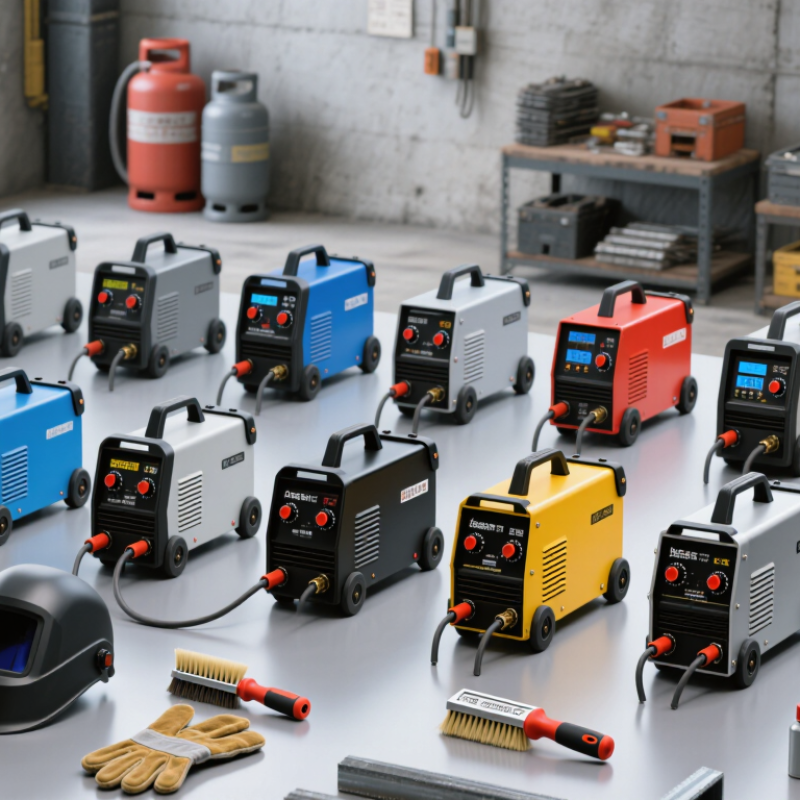
What Are the Top 10 Inverter IGBT Welders?

What Is an Inverter IGBT Welder and How Does It Work?

An inverter IGBT welder converts incoming electrical power into a controlled welding current. Inside the machine, a rectifier first changes alternating current into direct current. IGBT switches then turn that current on and off rapidly, shaping it into high-frequency power. A compact transformer adjusts the voltage, and further circuitry produces the output used at the electrode.

The result is a smaller, lighter welder than many traditional transformer machines. It can also respond quickly when the arc changes, helping maintain a steadier weld. You may notice this when striking an arc on a clean steel plate: the current adjusts without the machine’s large, heavy transformer humming nearby. The process is efficient, but not magic. Dust, heat, poor ventilation, or unstable input power can affect performance. I have seen users blame the settings when a clogged fan was the real problem.

IGBT refers to the insulated-gate bipolar transistor, the electronic switch at the heart of the design. Its control system sets welding current and, in some models, functions such as hot start or arc force. These features can make starting easier, though they do not replace correct technique. Check the duty cycle, input requirements, and electrode range before choosing a machine. A compact case is convenient, but the display alone cannot tell you how reliably it will perform under sustained work.

Which Features Determine the Best Inverter IGBT Welders?

Which Features Determine the Best Inverter IGBT Welders?

A capable inverter IGBT welder should deliver stable current, predictable arc starts, and adjustable output for different materials. Check the rated duty cycle at a stated current; a higher rating means longer welding periods before cooling is needed. For example, a 40% duty cycle at 200 amps allows four minutes of welding in a ten-minute period. Don’t compare duty-cycle figures without checking their test conditions. Input-voltage tolerance, clear controls, and thermal-overload protection also matter in real workshops.

Portability is useful, but weight alone tells little. Look for a sturdy case, protected connectors, and enough output range for the electrode sizes and workpieces you use. The American Welding Society’s 2023 workforce data projected a need for about 360,000 new welding professionals by 2027. That demand makes dependable equipment and straightforward setup valuable, especially for training and busy repair environments. Still, published specifications cannot replace a practical test with your materials and power supply.

Tips: Before buying, verify the rated input, duty cycle, and available replacement parts. Try a short bead on scrap metal. Listen for an even arc, and inspect whether the controls are easy to adjust with gloves on. A compact machine can be excellent—but not if its cables feel flimsy.

How to read this chart: These are editorial priority scores, not measured product ratings or a ranking of specific welders. When comparing inverter IGBT welders, check output range, rated duty cycle, input power, process compatibility, and protection features against your materials and workload. Duty-cycle ratings should be compared at the same output current and test standard.

What Are the Top 10 Inverter IGBT Welders?

What Are the Top 10 Inverter IGBT Welders?

There is no universal top-ten ranking: the right inverter IGBT welder depends on material, electrode size, supply power, and workload. Compare ten practical criteria: process compatibility, rated output, input voltage, duty cycle, arc stability, hot-start control, anti-stick response, thermal protection, portability, and service support. Check the rating plate and manual, not just the largest number in an advertisement. A compact unit may suit occasional repairs, while fabrication work needs dependable output over longer runs. Details matter.

Duty cycle deserves special attention. It states how long a welder can operate within a specified test period and current; a higher current setting often shortens that time. The U.S. Department of Energy’s 2022 Industrial Decarbonization Roadmap identifies energy efficiency as an important industrial improvement area, but it does not rank welding machines. Likewise, Grand View Research’s welding equipment market analysis tracks market growth, not individual welder performance. Use such reports for industry context, then compare verified model specifications and independent test results. In a workshop, stable arcs and suitable duty cycles matter more than flashy peak-amperage claims. I would still inspect cables and cooling vents before buying; product tables rarely capture everyday wear.

What Are the Top 10 Inverter IGBT Welders? - What Are the Top 10 Inverter IGBT Welders?

The table compares ten common inverter IGBT welder configurations. These are representative equipment categories, not a brand ranking; actual output, duty cycle, and weight vary by model and operating conditions.

No. Welder configuration Processes Typical input Typical output range Typical duty cycle Common use
1Compact stick inverterMMA / Stick120 V AC20–90 AAbout 20–35% at maximum outputHome repairs and light maintenance
2Dual-voltage stick inverterMMA / Stick, often Lift TIG120/230 V AC20–160 AAbout 20–40% at maximum outputPortable repair and light fabrication
3230 V stick inverterMMA / Stick, sometimes Lift TIG220–240 V AC20–200 AAbout 25–60% at maximum outputGeneral fabrication and field work
4Dual-voltage multiprocess inverterMIG, Flux-Cored, Stick, Lift TIG120/230 V ACMIG/Stick: roughly 20–180 AAbout 20–35% at maximum outputSmall workshops and varied repair tasks
5230 V MIG inverterMIG / GMAW, Flux-Cored / FCAW220–240 V AC30–200 AAbout 20–40% at maximum outputAutomotive work and mild-steel fabrication
6Pulse MIG inverterMIG, Pulse MIG, Flux-Cored220–240 V or 3-phase supply, model dependent30–250 AAbout 30–60% at rated outputControlled welding of thinner materials and aluminum
7DC TIG inverterDC TIG / GTAW, Stick120/230 V or 230 V AC5–200 AAbout 20–60% at rated outputSteel and stainless-steel precision welding
8AC/DC TIG inverterAC TIG, DC TIG, Stick230 V AC, sometimes 3-phase5–250 AAbout 20–60% at rated outputAluminum, steel, and stainless-steel TIG work
9Three-phase industrial stick inverterMMA / Stick, often Gouging380–415 V, 3-phase AC30–400 AAbout 40–100% at rated outputIndustrial fabrication and heavier electrodes
10High-output multiprocess inverterMIG, Flux-Cored, Stick, TIG; model dependent380–415 V, 3-phase AC50–500 AAbout 40–100% at rated outputProduction welding and heavy-duty shop use

Note: Duty cycle is commonly stated over a 10-minute period and depends on the rated current and test standard. Check the machine nameplate and manufacturer documentation before selecting a welder or power supply.

How Do the Top Models Compare in Performance and Value?

The strongest inverter IGBT welders are not automatically the most expensive. Their real differences appear during ordinary jobs: striking an arc, keeping it steady, and handling repeated starts. A compact unit may suit light repairs and farm or workshop use, while a higher-output model can better manage thicker steel. Check the rated duty cycle, not just the maximum amperage. A machine rated for 200 amps may need frequent cooling breaks at that setting.

For value, compare what comes in the box and what the welder can reliably do. Look for clear amperage controls, useful overload protection, and leads long enough to reach your workbench without awkward repositioning. Some models include lift-TIG capability or a digital display; these features matter only if they fit your routine. Simple can be better. A low-cost welder may deliver clean beads on thin material, yet feel less consistent when the input supply fluctuates. That trade-off is easy to overlook.

When comparing ten leading models, test them against the same task, electrode, and material thickness. Note arc starts, spatter, and how often thermal protection interrupts work. Also consider weight and fan noise if the machine will move between sites. A tidy display is not proof of durability. Reviews help, but individual results can vary with setup and technique. I would give more weight to stable performance over several sessions than to one impressive test. That judgment is imperfect, but practical.

How Should You Choose the Right Inverter IGBT Welder?

Choosing the right inverter IGBT welder starts with the work you actually do. Check the metal thickness and welding process you use most often, then match the machine’s output range to those jobs. A unit rated for high amperage may look impressive, but it can be awkward for thin sheet metal. Low-current stability matters too. Test whether the arc starts smoothly and stays steady at settings you commonly need.

Look closely at input power and duty cycle. A compact welder may run from a standard outlet, but its output can be limited by the available supply. Duty cycle shows how long it can weld within a ten-minute period before cooling. For repeated welds on a workbench, this affects real productivity. Check the display, adjustment knobs, and cable length in person if possible. Gloves make tiny controls harder to use. Not always obvious.

Protection features such as thermal shutdown and overload protection can help prevent damage during demanding sessions. Also inspect the torch or electrode holder, earth clamp, and ventilation openings; loose connections and blocked vents can cause trouble. Consider the machine’s weight if you carry it between sites. A lighter unit is easier to move, though its cables may feel short. I would not choose by price alone. Warranty terms, available repairs, and clear operating instructions deserve a careful look, even when the specification sheet seems complete.