
China Top 10 BMS Wire Harness Manufacturers?
China’s Bms Wire Harness industry supports electric vehicles, energy storage systems, power tools, and industrial battery packs. A reliable harness does more than connect cells. It carries current, protects signals, and supports safe battery management.
Dr. Gregory Offer, a battery-systems researcher, puts the engineering challenge clearly: “No single battery chemistry is best for every application.” The same principle applies to wiring. A suitable Bms Wire Harness must match the battery’s voltage, current, temperature range, and installation space. Small details matter. Terminal plating matters. Insulation thickness matters. Connector locking strength matters.
This guide examines China’s top 10 BMS wire harness manufacturers through practical criteria. These include production experience, customization capability, material control, testing procedures, and export reliability. We also consider whether suppliers can provide stable crimping, accurate wire lengths, and consistent connector quality. A harness may look simple on a sample table. It can behave differently after vibration, heat cycling, moisture exposure, or repeated assembly.
Price alone is not enough. A low quotation may hide weaker terminals, limited traceability, or inconsistent inspection. Conversely, a higher price does not automatically prove better engineering. This is where careful comparison becomes necessary. Factory audits, sample testing, and technical communication still matter.
The ranking is not perfect. Supplier capabilities can change, and public information is sometimes incomplete. That limitation deserves attention. However, the companies discussed here represent useful starting points for buyers seeking dependable Bms Wire Harness partners in China. The right choice should fit the battery design, production volume, compliance requirements, and long-term service expectations.
What Is a BMS Wire Harness and Why Does It Matter?
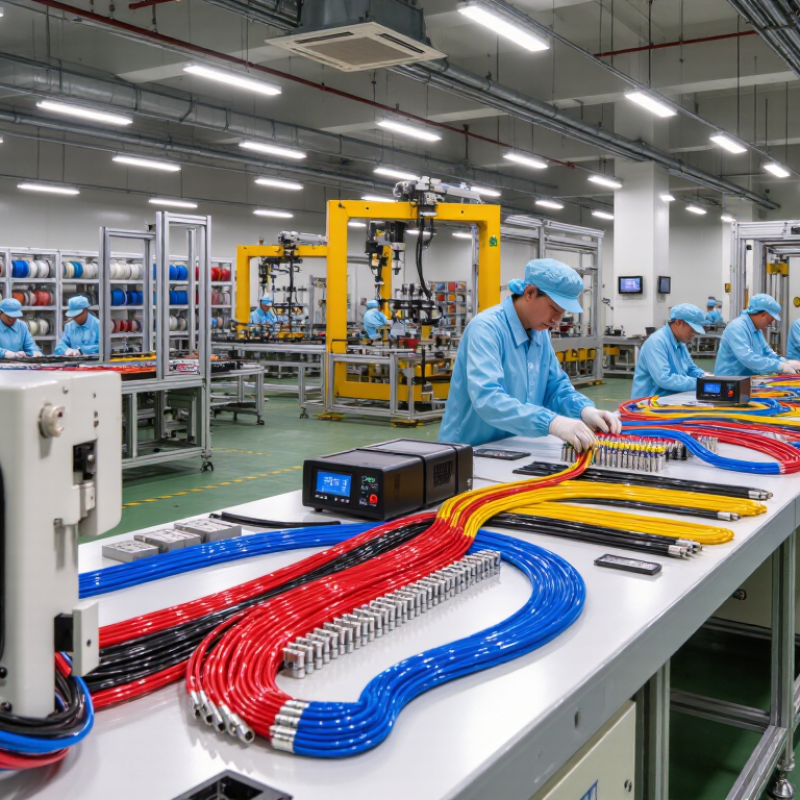
A BMS wire harness is the communication and power pathway inside a battery pack. It links battery cells, voltage sensors, temperature sensors, and the control board. In a real pack, thin wires may pass through tight spaces beside metal cell holders. Each terminal must carry stable signals without loosening under vibration. That small assembly affects monitoring accuracy, charging control, and fault detection. Not just cables.
During battery-pack inspections, I have seen a loose crimp create unstable voltage readings. Poor routing may press wires against sharp edges or create excessive bending near connectors. Reliable harnesses use suitable insulation, secure locking terminals, and clear circuit identification. Color coding helps, but it cannot replace proper testing. The best inspection includes continuity, insulation resistance, pull-force, and temperature-cycle checks. A continuity test alone is not enough. Heat and vibration expose weak points.
When comparing leading Chinese manufacturers, buyers should examine process control rather than factory size alone. Ask for engineering drawings, traceability records, crimp-force data, and material certificates. Samples should be tested in conditions close to actual vehicle or storage use. I would not trust a polished sample without production evidence. The uncomfortable truth is that even a clean prototype can hide inconsistent crimping on a later batch. A reliable supplier explains limitations, corrects defects, and documents every change. Details decide safety.
China Top 10 BMS Wire Harness Manufacturers? - What Is a BMS Wire Harness and Why Does It Matter?
An anonymized comparison of common BMS wire-harness manufacturing capability profiles. Company names and brand-specific information are intentionally omitted.
| Capability Profile | Typical Battery Application | Supported Cell-Series Range | Typical Sense-Wire Gauge | Power / Current-Wire Capability | Common Connector Configuration | Key Manufacturing Strength | Recommended Quality Evidence | Why It Matters to BMS Performance |
|---|---|---|---|---|---|---|---|---|
| Profile 1 — Compact Low-Voltage Pack | Portable power stations, light electric vehicles and small energy-storage packs | 4S–16S | 26–28 AWG, commonly nickel-plated copper or tinned copper | 18–22 AWG for auxiliary power circuits, subject to current and temperature requirements | Small locking wire-to-board or wire-to-wire connector; balance lead assembly | Compact routing, short lead lengths and controlled connector polarity | Continuity test, pin-to-pin test, polarity check and pull-force inspection | Reduces voltage-sensing errors and prevents incorrect cell-order connection |
| Profile 2 — High-Cell-Count Battery Pack | Residential energy storage, telecom backup and modular battery systems | 13S–24S | 24–26 AWG | 16–20 AWG for auxiliary power and temperature-sensor branches | Multi-position locking connector with separate temperature-sensor terminals | High pin-count assembly and clear circuit identification | 100% electrical testing, resistance measurement and dimensional inspection | Maintains reliable measurement across many series-connected cells |
| Profile 3 — Electric Two-Wheeler Harness | E-bikes, electric scooters and low-speed electric motorcycles | 10S–20S | 22–26 AWG | 14–18 AWG for auxiliary power, ignition and communication branches | Water-resistant locking connectors with protective sleeving | Vibration resistance, flexible routing and abrasion protection | Water-ingress screening, bend testing, continuity testing and terminal retention testing | Protects BMS signals from vibration, moisture and intermittent contact |
| Profile 4 — Electric Vehicle Module Harness | Low-voltage vehicle battery modules and commercial mobility systems | 8S–24S per module | 22–26 AWG, depending on sensing distance and insulation system | 12–18 AWG for module power and service branches | Automotive-style locking connectors, terminals and secondary locks | Automated crimping, terminal positioning and traceable assembly control | Crimp-height records, cross-section analysis, hipot testing and terminal retention testing | Stable contact resistance is essential for accurate monitoring and safe isolation |
| Profile 5 — High-Current Industrial Pack | Material-handling equipment, robotics and industrial battery systems | 12S–32S | 20–24 AWG for sensing circuits | 8–14 AWG for higher-current auxiliary and power circuits | High-retention connectors with separate power and signal paths | Heavy-duty terminals, heat-resistant insulation and strain relief | Current-carrying verification, thermal-rise testing and crimp pull-force testing | Limits heating and voltage drop in demanding operating environments |
| Profile 6 — Flexible Robotic-Pack Harness | Robotic systems, automated guided vehicles and mobile machinery | 8S–20S | 24–26 AWG with flexible conductor construction | 14–18 AWG for auxiliary power branches | Compact locking connectors with high-flex cable and molded strain relief | Repeated-flex durability and controlled bend radius | Flex-cycle testing, insulation inspection and continuity monitoring during movement | Prevents conductor fatigue and intermittent BMS communication faults |
| Profile 7 — Temperature-Rich Battery Harness | High-power storage, traction batteries and packs requiring several thermal sensors | 12S–24S | 24–28 AWG for cell taps and sensor circuits | 16–20 AWG for auxiliary supply circuits | Combined balance, thermistor and service-interlock connector layout | Accurate sensor placement and separation of signal circuits | Resistance verification of thermistor branches, continuity testing and labeling audit | Improves thermal monitoring and supports timely over-temperature protection |
| Profile 8 — Shielded Communication Harness | Battery systems using CAN, RS-485 or other low-voltage communication interfaces | 8S–32S | 22–26 AWG for sensing and communication conductors | 16–20 AWG for auxiliary power circuits | Twisted-pair or shielded communication branch with locking termination | Signal integrity, controlled grounding and electromagnetic-noise management | Shield continuity, resistance testing, pin mapping and communication error screening | Reduces data errors between the BMS, charger, inverter and vehicle controller |
| Profile 9 — Serviceable Modular Harness | Replaceable battery modules, laboratory systems and field-service equipment | 6S–24S per removable module | 22–26 AWG | 12–18 AWG for module power and service disconnect circuits | Keyed, detachable connectors with secondary locking features | Service access, mistake-proof assembly and replaceable sub-harness design | Connector mating-cycle test, keying inspection, polarity test and visual inspection | Enables safer maintenance while minimizing incorrect reconnection risk |
| Profile 10 — Harsh-Environment Storage Harness | Outdoor energy storage, marine equipment and industrial backup systems | 12S–32S | 20–26 AWG with chemically and thermally resistant insulation | 10–16 AWG for auxiliary and power-related branches | Sealed or highly protected connectors with gaskets and locking mechanisms | Moisture resistance, corrosion protection and long-term environmental durability | Ingress testing, salt-spray or corrosion evaluation, insulation testing and thermal cycling | Maintains electrical reliability where humidity, dust and temperature variation are present |
Technical note: The ranges shown are typical engineering values for BMS wire-harness designs, not guaranteed limits for every application. Final wire size, insulation type, connector rating, temperature rating and test requirements should be confirmed using the battery voltage, current, cell count, installation environment, creepage and clearance requirements, and applicable safety standards.