
• Parts
  • Services
  • OEM Equipment &
    Engineered Systems
  • EPC &
    Turnkey
  • Industries
    Served

Top PSC Tool Holder Manufacturers for Global Buyers?

Choosing reliable Psc Tool Holder manufacturers requires more than comparing catalogue prices. Global buyers must examine taper accuracy, runout control, balancing standards, and production consistency. A holder may look flawless in product photos, yet perform poorly under high-speed cutting. Small defects can cause vibration, poor surface finishes, and shortened tool life.

Experienced manufacturers usually provide clear material specifications, heat-treatment details, inspection records, and compatibility information. Buyers should ask whether each Psc Tool Holder is tested with calibrated equipment. They should also confirm the interface standard, permissible speed, coolant delivery method, and replacement-part availability. A supplier with stable export experience can reduce communication delays and unexpected customs problems. However, certificates alone are not enough. Some documents require closer verification.

This guide reviews leading manufacturers for international purchasing teams. It considers engineering capability, quality-control procedures, customization support, delivery reliability, and after-sales communication. Factory visits, sample testing, and reference checks can reveal more than polished marketing language. One practical test is simple: install the holder, measure runout, and record its behavior during continuous cutting. Results may vary between batches, even from respected suppliers. That reality deserves attention. No ranking can replace technical validation for a specific machine, material, and cutting condition. The strongest manufacturers remain transparent when limitations appear, and they respond with measurable corrective action. That is often a better sign of reliability than an impressive sales presentation.
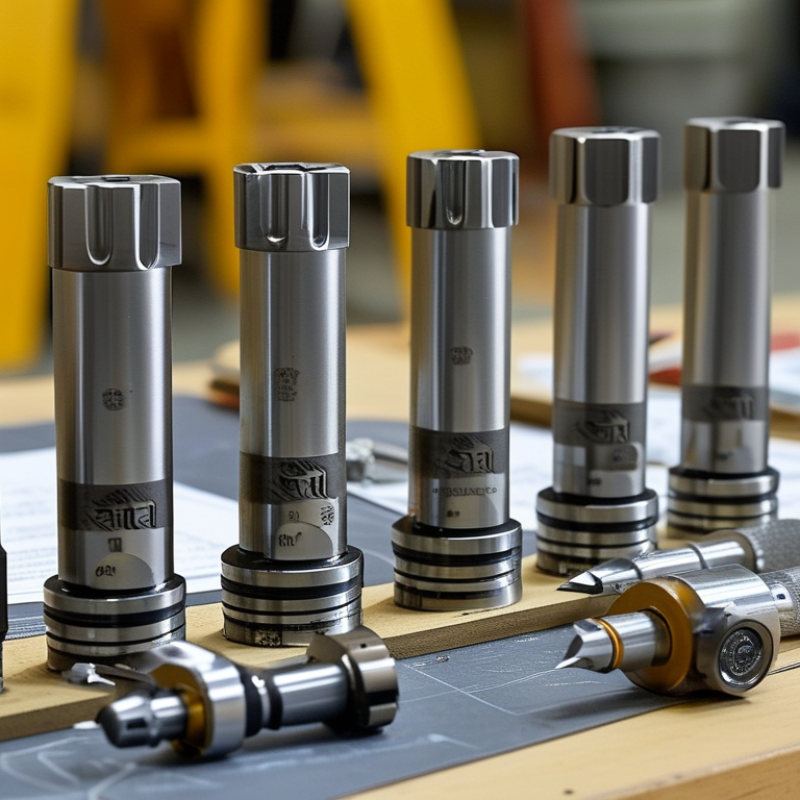
Top PSC Tool Holder Manufacturers for Global Buyers?

What Is a PSC Tool Holder and Where Is It Used?

A PSC tool holder is a polygonal shank holder designed for accurate, repeatable CNC machining. PSC means Polygonal Shank with Clamping Flange, covered by ISO 26623. Its tapered polygon and flange create radial and axial contact. This dual-contact structure limits runout, tool movement, and vibration during cutting. The holder connects directly with the machine spindle or an adapter.

Its use is common in turning centers, mill-turn machines, and automated production cells. A typical example is a steel shaft requiring several operations. One PSC holder can support drilling, milling, or boring tools with controlled positioning. Tool changes become faster when presetting and automatic clamping are properly managed. The ISO standard also helps buyers compare dimensions across suppliers. However, compatibility still requires checking the spindle interface, coolant path, gauge length, and permissible speed.

Market demand reflects this need for reliable tooling. Gardner Intelligence reported global machine-tool consumption of about 81.9 billion US dollars in its 2023 World Machine Tool Survey. Meanwhile, the International Federation of Robotics recorded more than 541,000 industrial robot installations worldwide in 2023. These figures indicate stronger pressure for repeatable, automation-ready workholding. Yet PSC is not automatically better for every process. Poor flange cleaning can create micron-level errors, while excessive clamping force may damage mating surfaces. A practical purchasing review should inspect runout records, balancing data, heat-treatment controls, and replacement availability. That last point is often overlooked. Costly downtime can begin with one missing holder.

Top PSC Tool Holder Manufacturers for Global Buyers?

What Is a PSC Tool Holder and Where Is It Used?

PSC, also known as Capto-style polygonal shank tooling, is a modular tool-holder interface standardized under ISO 26623. Its polygonal coupling provides repeatable radial positioning, high rigidity, and reliable torque transmission for modern CNC equipment.

The chart shows standardized PSC nominal polygon sizes. Smaller interfaces are commonly selected for compact turning, milling, and driven-tool applications, while larger sizes are used when higher stiffness and torque capacity are required on larger machine tools and multitasking centers.

Key Standards for Evaluating PSC Tool Holder Manufacturers

Global buyers should evaluate PSC tool holder manufacturers through measurable standards, not attractive catalogs. The key reference is ISO 26623, which defines the PSC interface and its critical dimensions. Ask for inspection reports covering taper accuracy, flange contact, pull-stud compatibility, and radial runout. Measure the fit.

A dependable manufacturer should control steel composition, heat treatment, surface hardness, and grinding quality. Tool holders must resist deformation during repeated clamping and high-speed cutting. Request balancing data at the intended operating speed, not a generic certificate. Traceability matters. Each batch should link to material records, inspection results, and production dates. Clear drawings and tolerances also reveal technical maturity.

Factory experience becomes visible during sample testing. Mount a holder on the actual spindle, check contact with a blueing test, and measure runout near the tool nose. Test it after cleaning, reclamping, and moderate cutting cycles. A strong supplier explains differences between nominal accuracy and working accuracy. That distinction is often missed. Certifications help, but they do not replace inspection. I would still question unusually low prices, vague delivery promises, and reports without test conditions. Reliable manufacturers offer stable packaging, documented corrective actions, and responsive engineering support. No supplier is perfect. The better choice is one that identifies weaknesses early and provides evidence for every important claim.

Leading PSC Tool Holder Manufacturers for International Buyers

Leading PSC Tool Holder Manufacturers for International Buyers

International buyers need more than a polished catalog. A reliable manufacturer should demonstrate ISO 26623 compliance, controlled heat treatment, and measurable taper accuracy. PSC holders connect directly with the machine spindle, so small errors can become visible marks on a finished aerospace or automotive part. Practical checks include inspection records, balancing grades, coating details, and batch traceability. Ask for actual test data, not only claims.

Market pressure is growing. Grand View Research valued the global machine tools market at approximately USD 86.8 billion in 2023 and expects continued expansion through 2030. This growth increases demand for stable tooling, especially in automated production cells. Manufacturers serving global buyers should support common PSC sizes, documented tolerances, and export packaging that protects the polygonal interface from impact and moisture. Replacement availability matters too. A low purchase price becomes expensive when one damaged holder stops a spindle.

There is no perfect supplier.

Some manufacturers report excellent static runout but provide limited data under high-speed rotation. That gap deserves attention. Buyers should request measured runout at the working gauge line, dynamic balancing results, and sample inspection reports. According to MarketsandMarkets, smart manufacturing is increasing demand for connected and repeatable machining processes. PSC tooling fits that direction, but only when dimensional consistency remains stable across batches. Trial orders, independent inspection, and clear warranty terms reduce avoidable risk. A factory visit can reveal more than a sales presentation.

How to Compare Quality, Compatibility, and Production Capacity

Top PSC Tool Holder Manufacturers for Global Buyers

Comparing PSC tool holder manufacturers requires more than checking a polished product photo. Quality begins with controlled steel selection, heat treatment, and grinding accuracy. Ask for material certificates, hardness results, and measured radial runout. A practical target is consistent runout across several samples, not only one showroom piece. Request inspection reports from recent production batches. This reveals whether quality is repeatable. Surface finish matters too, but it can hide poor internal accuracy. Look deeper.

Compatibility must match the machine, cutting tool, and operating conditions. Confirm the PSC interface dimensions, gauge length, pull stud requirements, coolant delivery, and allowable speed. A holder may fit physically yet fail during high-speed machining. Check balancing grades and test methods. Ask whether tolerances follow recognized technical standards. Trial fitting with your own spindle is valuable. Small differences matter.

Production capacity needs evidence, not confident promises. Review monthly output, lead times, equipment lists, and quality-control staffing. A supplier with several grinders may still struggle during peak orders. Request a sample schedule for standard and customized holders. Inspect packaging, labeling, and batch traceability. These details reduce receiving errors. I would also compare response times after technical questions. Fast replies are useful, but precise replies are better. No supplier is perfect. A transparent manufacturer should explain limitations, rejected rates, and corrective actions instead of hiding them.

Top PSC Tool Holder Manufacturers for Global Buyers? - How to Compare Quality, Compatibility, and Production Capacity

Comparison Dimension Factual Reference or Requirement Recommended Buyer Comparison Data Verification Evidence Evaluation Weight
PSC Interface Standard PSC polygonal shank tool holders are generally specified under ISO 26623. The exact polygon size, flange form, and gauge-line dimensions must match the machine-side interface. Confirm the required ISO 26623 size, machine interface drawing, flange geometry, and gauge length before comparing suppliers. Controlled dimensional drawing, inspection report, and interface conformity statement. Very High
Taper and Flange Compatibility PSC holders use a polygonal taper and flange contact system; compatibility is not interchangeable with CAT, BT, HSK, or conventional steep-taper holders unless the machine interface is specifically designed for it. Compare taper size, flange contact, drive-key or orientation features, retention method, and machine spindle clearance. Machine-tool interface drawing, mating-gauge test, and installation trial record. Very High
Runout Accuracy Runout depends on the holder design, manufacturing process, tool projection, collet or insert system, and measurement location. ISO 26623 defines the interface but does not establish one universal runout value for every complete tool-holder assembly. Request total indicated runout at the specified gauge length, such as 3D or 4D from the holder nose, with the measurement method clearly stated. CMM or certified gauge report, measurement temperature, gauge length, and inspection frequency. Very High
Balance Quality Balancing is normally stated as residual unbalance or balance quality grade at a defined rotational speed. ISO 16084 is commonly used for balancing tool systems and tool-holder assemblies. Compare the declared balance grade, test speed, assembled condition, and whether the specification covers the holder alone or the complete tool system. Balance-machine report with rotational speed, residual unbalance, date, and serial or batch reference. High
Material and Heat Treatment Precision tool holders are commonly produced from alloy tool steel or bearing-grade steel and may receive hardening, tempering, nitriding, or other surface treatment according to the design. Compare steel grade, hardness range, case depth where applicable, corrosion protection, and treatment distortion control. Material certificate, heat-treatment record, hardness test, and traceability documentation. High
Coolant Delivery PSC holders may support through-tool coolant, flange or peripheral coolant, or no internal coolant. The holder must match the machine’s coolant pressure, sealing arrangement, and delivery path. Compare coolant type, maximum stated pressure, sealing components, nozzle configuration, leakage control, and cleaning access. Pressure test record, coolant-flow test, sealing specification, and technical cross-section drawing. High
Retention and Pull-Stud Compatibility The retention method and pull-stud or retention-knob geometry must be compatible with the machine spindle and automatic tool changer. Thread form, length, contact angle, and material are critical. Compare retention specification, pull-stud thread, engagement length, tightening torque, and compatibility with the machine manufacturer’s spindle system. Retention-component drawing, torque specification, pull-force test, and machine-side compatibility confirmation. Very High
Tool Clamping System PSC bodies can be configured for hydraulic chucks, shrink-fit tools, milling chucks, collet chucks, shell-mill arbors, drill chucks, and other applications. Compare tool diameter range, permissible cutting loads, clamping length, accessible nose design, replacement parts, and intended machining operation. Product drawing, load or torque data, application test, and spare-parts list. High
Dimensional Inspection Capability Critical PSC dimensions include polygonal taper geometry, flange position, gauge length, concentricity, face runout, key or orientation features, and internal coolant passages. Compare inspection equipment, calibration status, inspection points per drawing, first-article inspection process, and batch sampling plan. ISO 17025-calibrated equipment records, inspection plan, FAI report, and nonconformance procedure. Very High
Production Capacity Capacity should be evaluated using verified output for the exact PSC family, not a supplier’s total machining capacity across unrelated products. Compare monthly available capacity, current utilization, standard lead time, peak-season capacity, equipment count, and expansion plan. Production records, capacity-loading report, machine list, sample delivery history, and confirmed production schedule. Very High
Process Stability Stable production requires controlled CNC machining, grinding, heat treatment, cleaning, marking, final inspection, and traceability across each batch. Compare first-pass yield, rework rate, corrective-action response time, process-control records, and lot traceability. Quality dashboard, process flow chart, control plan, CAPA records, and batch traceability sample. High
Customization and Engineering Support Custom gauge lengths, coolant layouts, clamping arrangements, balancing specifications, marking, and packaging may require engineering validation and a controlled drawing revision. Compare design-review time, prototype process, engineering-change control, minimum order quantity, and sample approval procedure. Approved drawing, prototype inspection report, revision history, and sample sign-off record. Medium to High
Packaging and Corrosion Protection Precision ground surfaces can be damaged by impact, contamination, or corrosion during international transport and storage. Compare rust-preventive treatment, protective caps, individual packaging, humidity control, shock protection, and storage-life instructions. Packaging specification, transport test record, corrosion-protection data, and incoming-inspection checklist. Medium
Export Readiness and Delivery Global buyers need consistent documentation, correct customs information, stable delivery terms, and reliable handling of replacement or warranty claims. Compare quotation validity, Incoterms, export packing, documentation accuracy, average lead time, on-time delivery rate, and after-sales response time. Commercial invoice, packing list, certificate of origin where required, delivery records, and warranty procedure. High
Buyer note: The comparison figures and requirements above are purchasing benchmarks and verification criteria, not manufacturer-specific claims. Final acceptance should be based on the approved drawing, machine interface requirements, inspection results, and documented production capability.

Global Purchasing, Certification, and Supplier Verification Steps

Top PSC Tool Holder Manufacturers for Global Buyers

Global purchasing needs more than a competitive quotation. Buyers should confirm PSC tool holder dimensions, shank tolerances, material grade, surface treatment, and runout data. Request current inspection reports and traceable material certificates for every production batch. Certification requirements may differ by destination, so verify accepted standards with your quality team and customs advisor. Do not rely on a logo or a scanned certificate alone. Check the certificate number, issuing body, validity period, and matching company details.

Supplier verification should combine documents with practical evidence. Ask for production photos, machine lists, sample measurements, and a clear quality-control flow. A remote factory tour can reveal storage conditions, labeling systems, and inspection equipment. Independent pre-shipment inspection is useful for larger orders.

I once treated a polished sample as proof of stable production. That was too optimistic. A sample can hide weak process control. Review lead times, packaging strength, replacement policies, export experience, and communication records before signing.

Tips: Compare at least three qualified suppliers. Use the same technical checklist for each quotation. Ask for a sample with measured runout and thread details. Confirm packaging against long-distance transport risks. Keep every drawing revision in writing. Small omissions become expensive.