
• Parts
  • Services
  • OEM Equipment &
    Engineered Systems
  • EPC &
    Turnkey
  • Industries
    Served

China Top Pan Tilt Video Platform Suppliers?

Choosing among China’s top Pan Tilt Video Platform suppliers requires more than comparing catalog prices. Buyers should examine engineering depth, manufacturing consistency, and documented field performance. A reliable supplier can explain payload limits, rotation accuracy, camera compatibility, and weather protection without vague promises. These details matter when a platform must follow moving subjects across a wide outdoor site.

Experienced buyers usually request factory evidence, not polished product photos alone. Useful materials include test reports, sample footage, wiring diagrams, and inspection records. A serious manufacturer should also describe calibration procedures and failure-response times. Ask whether the supplier controls key processes internally or relies heavily on unknown subcontractors. That answer may reveal more than a long product list.

The strongest companies often support customization, such as thermal camera integration, low-light imaging, or network control. They should understand installation conditions, maintenance access, and regional compliance requirements. In practical testing, check tracking stability, vibration control, latency, and performance during rain or temperature changes. Small weaknesses can become expensive later.

No supplier is perfect. Claims still need verification. An overlooked connector, unclear software license, or delayed spare part can disrupt deployment. This guide compares leading Chinese manufacturers through technical capability, quality systems, communication, and after-sales support. It also considers real purchasing risks, because a promising sample does not always represent every production batch. Careful evaluation helps buyers choose a Pan Tilt Video Platform that performs reliably beyond the showroom.
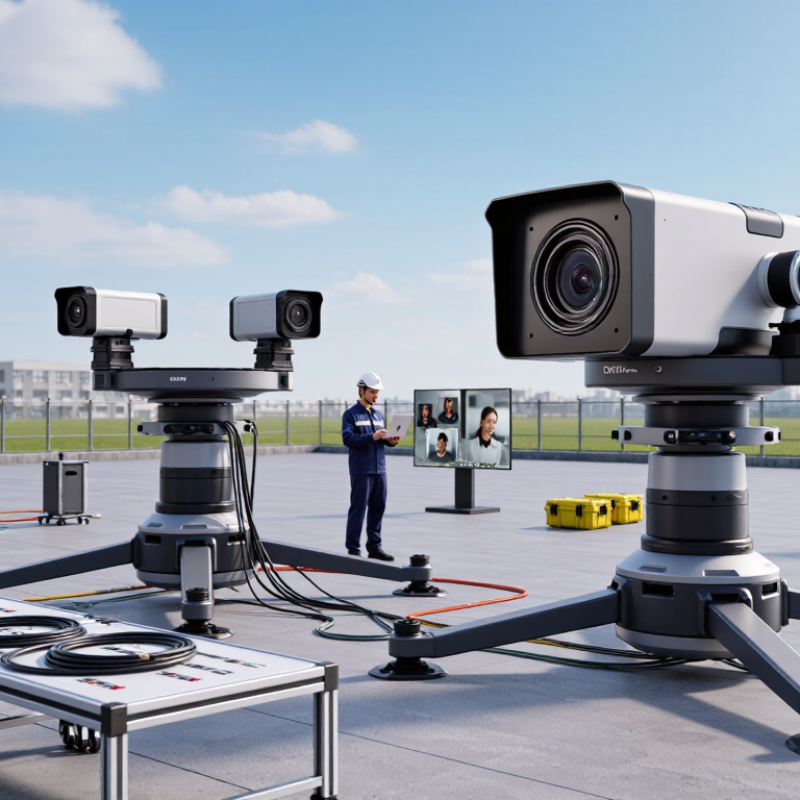
China Top Pan Tilt Video Platform Suppliers?

What Is a Pan-Tilt Video Platform and How Does It Work?

A pan-tilt video platform is a camera system that moves horizontally and vertically. Unlike a fixed camera, it can follow changing scenes without physical relocation. Pan means left-to-right movement. Tilt means upward or downward movement. Together, these axes create a wider viewing range. The platform may support security monitoring, industrial inspection, event production, or remote observation.

Its operation combines a camera, motorized joints, control software, and a stable mounting base. An operator sends movement commands through a controller or network interface. The motors then adjust the camera to a selected angle. Many systems also provide zoom, preset positions, and automatic tracking. Encoders report the camera’s actual position, helping the system correct movement errors. Smooth control matters. Sudden motion can create blurred footage or missed details.

When evaluating suppliers, examine movement accuracy, load capacity, response speed, weather resistance, and software compatibility. A well-built platform should remain steady when the camera reaches its highest tilt angle. In field testing, cable management often matters more than advertised speed. Small wiring problems can interrupt long monitoring sessions. No platform performs perfectly in every environment. Dust, vibration, weak networks, and poor lighting can reduce performance. Buyers should request practical test footage and clear maintenance guidance before making a decision. The real question is simple: will it move reliably when the scene changes unexpectedly?

Key Features of China’s Pan-Tilt Video Platform Suppliers

China Top Pan Tilt Video Platform Suppliers?

China’s pan-tilt video platform suppliers increasingly focus on stable movement, clear imaging, and practical integration. A strong platform should offer smooth 360-degree rotation, accurate tilt control, and programmable position presets. These features help operators follow activity across warehouses, campuses, and transport areas without constant manual adjustment.

Image quality matters in changing conditions. Look for wide dynamic range, low-light performance, suitable zoom, and reliable autofocus. Outdoor models need weather resistance, vibration control, and dependable operation across temperature changes. Network compatibility is also essential. Support for common video protocols, secure authentication, and encrypted transmission can simplify integration with existing systems. I would test latency carefully. A polished specification sheet does not always reflect real network performance.

Tips:

Request demonstration footage from bright and dark scenes. Check movement noise, preset accuracy, recovery after power loss, and software update procedures. Ask for test reports and service response times. Local technical support can prevent small faults from becoming long interruptions. Still, no supplier is perfect. Some platforms offer impressive hardware but weaker software documentation. Others provide flexible configuration but inconsistent accessories. Comparing samples, not only prices, usually reveals the more dependable choice. Experiences from installers and long-term users can also expose maintenance issues that short demonstrations miss.

Main Supplier Types and Manufacturing Capabilities in China

China’s pan tilt video platform suppliers generally fall into three groups: OEM factories, ODM engineering houses, and specialized system integrators. OEM suppliers usually build from fixed drawings and focus on repeatable production, stable pricing, and volume delivery. ODM suppliers can modify housings, mounting patterns, control protocols, and camera payloads. System integrators add software, tracking functions, network management, and field installation support.

Manufacturing capabilities vary widely. A capable supplier may use CNC machining, die casting, powder coating, and sealed cable assembly in one production chain. Precision bearings and controlled gearboxes help reduce vibration during slow panoramic movement. Some factories integrate visible-light, infrared, thermal, or low-light camera modules. Others manufacture only the pan tilt mechanism and leave imaging integration to the buyer. Ask for load tests, rotation accuracy records, ingress protection reports, and sample videos from actual production units.

Experience is easier to judge through evidence than promises. Review engineering drawings, firmware revision procedures, inspection records, and failure analysis reports. A supplier should explain how it manages backlash, cable twisting, weather exposure, and long operating cycles. Do not rely on one perfect demonstration sample. It may hide production limitations. Pilot orders reveal more. Request several units from the same batch and test them under heat, rain simulation, vibration, and continuous movement. Even experienced teams can miss small sealing or connector problems, so honest technical discussion matters.

China Top Pan Tilt Video Platform Suppliers? - Main Supplier Types and Manufacturing Capabilities in China
Supplier Type Typical Manufacturing Hubs Main Product Scope Typical Pan/Tilt Performance Payload and Integration Capability Manufacturing Strengths Common Quality and Compliance Support Best-Fit Applications
OEM/ODM Pan-Tilt Platform Manufacturers Guangdong, Zhejiang, Jiangsu Motorized pan-tilt units, outdoor PTZ mechanisms, camera positioning platforms, customized housings and control systems Continuous 360° pan; typical tilt range from approximately -90° to +90°; speed commonly configurable from slow tracking to rapid positioning Usually supports visible-light cameras, thermal modules, laser rangefinders, illuminators and customer-specified payload brackets CNC machining, die casting, sheet-metal fabrication, injection molding, PCB assembly, firmware customization and private-label production ISO 9001 commonly available IP-rated enclosure options Factory inspection support Security monitoring, perimeter protection, industrial inspection and customized surveillance projects
Precision Motion and Gimbal Specialists Shenzhen, Dongguan, Shanghai, Suzhou High-accuracy two-axis gimbals, stabilized camera mounts, servo-driven pan-tilt heads and precision positioning assemblies Closed-loop servo control, low backlash transmission, programmable motion profiles and fine positioning for image stabilization Designed for lightweight electro-optical payloads; payload capacity varies by frame size and stabilization requirements Precision gearboxes, brushless motors, encoders, inertial sensors, control algorithms and vibration-reduction engineering Encoder feedback testing Vibration testing Motion accuracy reports UAV support systems, robotics, stabilized observation, surveying and machine-vision positioning
PTZ Camera and Video-System Integrators Guangdong, Fujian, Beijing, Shanghai Complete pan-tilt video platforms combining cameras, optics, motors, control boards, video compression and network interfaces Preset-position recall, proportional zoom-speed control, auto-focus support and remote pan/tilt operation through network or serial control Commonly integrates optical zoom cameras, low-light sensors, thermal cameras, audio modules and digital video interfaces System-level integration, image tuning, network software, firmware development, automated testing and project customization ONVIF-compatible options EMC testing support Network interoperability testing Commercial security, public facilities, education, conference rooms, broadcasting and remote operations
Industrial Automation and Robotics Suppliers Jiangsu, Zhejiang, Guangdong, Shandong Heavy-duty pan-tilt mechanisms, inspection platforms, robotic camera axes and automated visual inspection assemblies Emphasis on repeatability, duty cycle, controlled acceleration, position feedback and integration with industrial controllers Suitable for industrial cameras, machine-vision lighting, barcode readers, sensors and specialized inspection tools Servo drives, PLC integration, precision machining, custom fixtures, automated assembly and factory acceptance testing CE documentation often available Factory acceptance testing Traceability options Warehouses, manufacturing lines, ports, energy facilities and infrastructure inspection
Cost-Optimized Contract Assemblers Guangdong, Zhejiang, Jiangxi Standard pan-tilt brackets, compact camera mounts, entry-level PTZ assemblies and high-volume subassemblies Standardized motion ranges and speed profiles; performance is generally optimized for basic remote surveillance Best suited to compact cameras and light accessories with fixed or semi-custom mounting interfaces High-volume assembly, sourcing of standard motors and electronics, simplified tooling, packaging and private-label fulfillment Incoming inspection Batch sampling Custom labeling Retail products, small commercial installations, basic monitoring and price-sensitive projects
Ruggedized Outdoor and Long-Range Platform Suppliers Guangdong, Fujian, Shandong, coastal manufacturing regions Weather-resistant pan-tilt platforms, long-range observation units, thermal imaging mounts and integrated outdoor surveillance systems Designed for continuous outdoor operation, preset tracking, long-distance observation and stable movement under wind and temperature changes Supports larger optical assemblies, thermal sensors, infrared illuminators, laser modules and protective environmental housings Sealing design, corrosion-resistant materials, thermal management, environmental testing and reinforced mechanical structures IP66/IP67 options Salt-spray testing Temperature testing Coastal security, border monitoring, mining, transportation, emergency response and critical infrastructure
Research, Surveying and Specialized Equipment Manufacturers Beijing, Shanghai, Wuhan, Xi’an, Shenzhen Precision camera platforms for surveying, mapping, scientific observation, laboratory automation and specialized remote sensing Prioritizes measurement repeatability, coordinate control, synchronization and stable movement rather than consumer-style features Supports scientific cameras, surveying sensors, multispectral modules, optical instruments and application-specific payloads Custom mechanical design, optical integration, software interfaces, prototype development and low-to-medium volume production Design verification Calibration records Project documentation Research institutions, mapping, astronomy support, laboratory automation and specialized inspection
Data shown are industry-typical manufacturing profiles and capability ranges for supplier categories in China. Actual specifications, certifications, production capacity and environmental ratings should be verified through technical drawings, samples, factory audits and project-specific quotations.

How to Evaluate China-Based Pan-Tilt Video Platform Suppliers

China Top Pan Tilt Video Platform Suppliers?

How to Evaluate China-Based Pan-Tilt Video Platform Suppliers

Choosing a China-based pan-tilt video platform supplier requires more than comparing catalog prices. I have learned to inspect the complete product path, from mechanical movement to software response. Request live demonstrations with realistic conditions. Watch how smoothly the camera moves at low speed. Listen for gear noise. Check whether the platform returns accurately to preset positions.

A dependable supplier should provide clear specifications, test records, and traceable quality procedures. Ask about payload limits, rotation angles, operating temperature, ingress protection, and vibration resistance. These details matter in coastal sites, warehouses, and outdoor monitoring towers. Confirm how firmware updates are managed. Also verify support response times, spare-part availability, and training arrangements. Vague answers deserve caution.

Test the control interface with your own network equipment. Measure command delay, video stability, and recovery after a connection drops. Small delays can become serious during routine operation. Review samples from different production batches, not only one carefully prepared unit. That takes more time. It often reveals consistency problems.

Supplier evaluation should also include factory communication. Can engineers explain a failure without hiding behind technical language? Are inspection photos dated and traceable? Check applicable certifications through official records, rather than accepting copied documents. I once treated a low price as strong evidence of value. It was not. Total cost included integration work, replacement parts, and repeated testing. A written acceptance plan can expose these costs before purchase.

How to Evaluate China-Based Pan-Tilt Video Platform Suppliers

This 100-point reference scorecard prioritizes image quality, pan-tilt performance, system integration, cybersecurity, reliability, and after-sales support. Buyers can adjust the weighting according to project requirements and verify each category through technical documents, testing, certifications, and service-level commitments.

Applications and Future Trends of Pan-Tilt Video Platforms

Pan-tilt video platforms now serve more than basic monitoring. In factories, operators inspect conveyor belts, storage tanks, and narrow maintenance areas from one control room. In ports, cameras follow moving vehicles across wide yards. Hospitals and campuses use them for scheduled observation, remote assistance, and incident review. A practical installation needs stable pan-tilt movement, accurate presets, clear night images, and fast control response. Small delays matter.

Future platforms will combine edge computing with artificial intelligence. Local processing can detect unusual movement without sending every video stream to a distant server. Low-light sensors, thermal imaging, and three-dimensional positioning may improve performance in rain, smoke, and crowded spaces. Private wireless networks could support smoother control in large facilities. However, automatic tracking still produces false alarms. Human review remains important.

Privacy protection will shape product development. Effective systems should support masking, access permissions, encryption, audit logs, and clear data-retention settings. Interoperability also matters when buyers compare China-based suppliers. Open interfaces can reduce dependence on one software environment and simplify future upgrades. Field testing is essential. Engineers should measure latency, tracking accuracy, vibration, and recovery after network loss. Real sites are messy. Dust, glare, weak signals, and poor camera placement can defeat impressive specifications. Suppliers that document these limitations appear more reliable than those promising perfect results.