How to Choose the Right Baghouse Dust Collector?
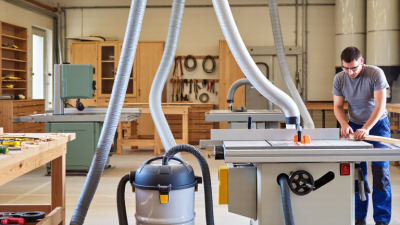
Choosing the right Baghouse Dust Collector is not simply a matter of selecting the largest unit. The correct system must match your dust type, airflow, temperature, production schedule, and available space. A collector designed for wood dust may perform poorly with abrasive mineral particles. Fine powders can also behave differently from heavier chips. Dust behavior matters.
Real-world selection requires more than a catalog comparison. Experienced engineers examine dust concentration, particle size, moisture, explosion risks, and required filtration efficiency. They also review fan performance, filter-media compatibility, hopper capacity, and cleaning methods. A metalworking facility may need abrasion-resistant components, while a food-processing plant may require hygienic construction and careful contamination control. Small details matter. They often determine whether the system remains reliable after months of operation.
This guide explains how to evaluate a Baghouse Dust Collector with practical criteria and dependable technical references. It considers energy use, maintenance access, replacement-filter costs, noise, and future capacity. Manufacturer data should be checked against measured operating conditions, not accepted blindly. A collector can appear efficient on paper but struggle when filters load quickly or ductwork creates excessive pressure loss. That possibility deserves attention. There is no perfect system for every facility, and choosing only by purchase price can create expensive problems later. A thoughtful decision balances performance, safety, serviceability, and long-term operating value.
Define Dust Hazards with Kst, Pmax, and OSHA PEL Values
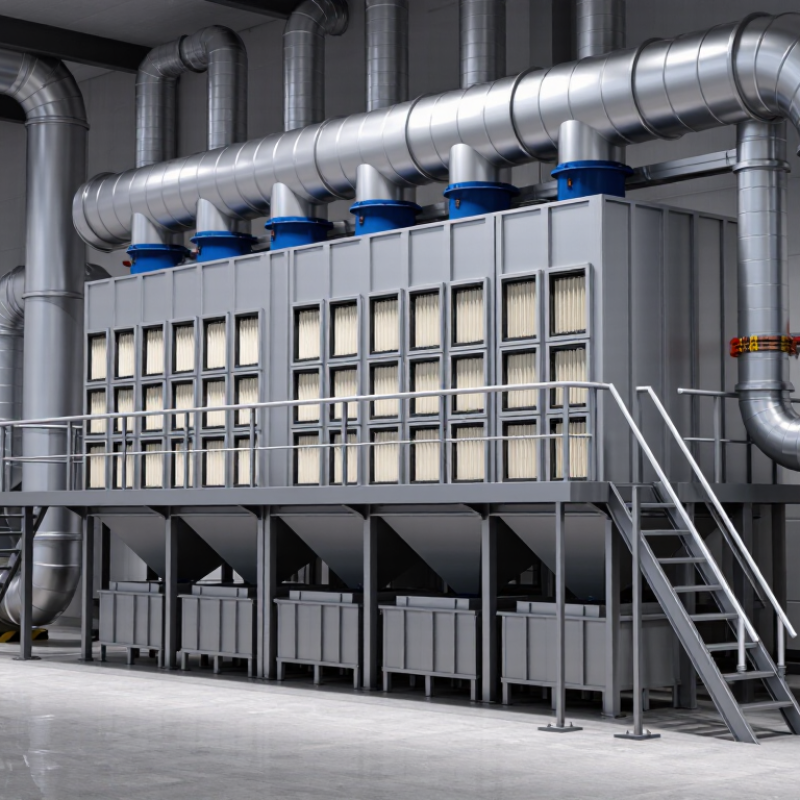
Choosing a baghouse dust collector starts with defining the dust hazard, not selecting a filter size. Kst measures explosion severity, expressed in bar·m/s, while Pmax shows the highest pressure reached during a standardized dust explosion test. ASTM E1226 is commonly used for this testing. Higher Kst values can require stronger containment, explosion venting, isolation, and faster pressure relief. Numbers matter.
These values come from the actual dust, moisture level, particle size, and test method. A metalworking dust sample may behave differently after oil contamination or fine-particle buildup. NFPA 652 guidance emphasizes a documented Dust Hazard Analysis for combustible particulate operations. The U.S. Chemical Safety Board recorded 281 combustible dust incidents, 119 deaths, and 718 injuries between 1980 and 2005. That history makes assumptions expensive. A collector rated only for airflow may still be unsafe.
OSHA PEL values address worker exposure, not explosion pressure. For respirable crystalline silica, OSHA’s 29 CFR 1910.1053 sets an 8-hour PEL of 50 micrograms per cubic meter. The correct collector therefore needs both effective capture and verified explosion protection. Ask for laboratory Kst and Pmax results before specifying filter media or vessel construction. Also confirm whether the PEL applies to total, inhalable, or respirable dust. One weakness in many specifications is treating “dust” as a single material. It is not. Re-test when the process, feedstock, or dust accumulation pattern changes.
Size Filter Area Using Air-to-Cloth Ratios of 2–8 ft/min
How to Choose the Right Baghouse Dust Collector?
Air-to-cloth ratio is the starting point for sizing a baghouse. It describes airflow divided by usable filter area. For example, 10,000 cubic feet per minute at 4 ft/min requires 2,500 square feet of cloth. A ratio near 2 ft/min suits heavy, abrasive, or sticky dust. Cleaner and less demanding applications may tolerate 6–8 ft/min, but this decision needs evidence.
The U.S. EPA Fabric Filter Air Pollution Control Technology Fact Sheet reports typical collection efficiencies of 99–99.9%. That result depends on proper airflow, dust loading, cleaning, and maintenance. The ACGIH Industrial Ventilation handbook also identifies air-to-cloth ratio as a central fabric-filter design factor. Higher ratios can reduce equipment size, yet they may increase pressure drop and shorten bag life. Small savings can become expensive.
Dust behavior matters more than a convenient number. Fine flour, welding fume, cement, and wood dust do not build filter cake in the same way. Moisture can make a thin layer behave like wet paper. I once treated the airflow figure as fixed; that was a weak assumption. Fan heat, duct leakage, pulse-cleaning intervals, and future production changes can shift the real ratio. Measure actual airflow where possible. Then check the design against EPA data, supplier test records, and site dust samples. A practical first review is 2–8 ft/min, followed by testing rather than guesswork.
Select Filter Media for Gas Temperature, Moisture, and Chemistry
How to Choose the Right Baghouse Dust Collector?
Select Filter Media for Gas Temperature, Moisture, and Chemistry
Filter media selection should begin with the gas, not the dust. Measure normal temperature, peak temperature, moisture, oxygen, and chemical exposure at the collector inlet. The U.S. EPA Air Pollution Control Cost Manual reports fabric filters can achieve about 99–99.9% particulate collection efficiency with suitable design and maintenance. That performance can disappear when condensation weakens the bags.
Temperature needs a real operating profile. The EPA manual indicates typical fabric-filter service may span roughly 180–500°F, depending on fiber and system design. Polyester can suit moderate, dry gas. Aramid or PPS may better tolerate hotter streams. PTFE-based media can handle severe chemical conditions, but cost and mechanical strength still matter. A higher temperature rating is not automatically safer.
Moisture creates another problem. Gas near its acid dew point can condense inside the baghouse, causing blinding, corrosion, and sticky dust. Sulfur-bearing combustion gases deserve special attention because sulfuric acid condensation may occur near 250–300°F, according to U.S. EPA combustion guidance. Keep the inlet temperature above the measured dew point, with a practical safety margin. Chemistry also matters: acids, alkalis, solvents, and oxidizers attack fibers differently. Field audits often reveal incomplete gas data. That is uncomfortable, but useful. Test the gas during startup, shutdown, and upset conditions, not only during steady production. Sources: U.S. EPA Air Pollution Control Cost Manual, Fabric Filters; U.S. EPA AP-42, Chapter 1.3.
Verify 4–10 in. w.g. Pressure Drop and NFPA 652 Safety Controls
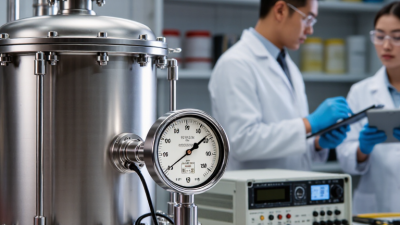
Choosing the right baghouse dust collector starts with measurable operating conditions. In field inspections, I verify pressure drop with a calibrated differential gauge. The target is often 4–10 inches of water gauge, when specified by the collector and process design. A clean filter reading establishes the baseline. A rising reading may indicate dust cake buildup, weak pulse cleaning, or overloaded filters. A sudden low reading can signal a torn bag or an open access door. Do not force every application into this range.
Record readings during startup, normal production, and peak loading. Compare them with airflow, material feed, and cleaning-cycle performance. A gauge alone cannot confirm safe operation. That shortcut is risky. Confirm alarm setpoints, fan capacity, hopper discharge, and filter compatibility with the dust characteristics. Small details matter, especially when dust becomes sticky or abrasive.
For combustible dust, use the required NFPA 652 hazard analysis and confirm the currently adopted edition with the authority having jurisdiction. Safety controls should address ignition sources, bonding and grounding, explosion venting or suppression, spark detection, and explosion isolation. Keep access panels sealed and inspect ducts for settled dust. Train operators to recognize unusual pressure trends and abnormal sounds. Real sites are rarely perfect. I have seen maintenance teams accept a “normal” reading that was based on a damaged gauge. Independent verification and documented inspections make the decision more reliable.
How to Choose the Right Baghouse Dust Collector?
Verify the collector’s operating pressure drop within the 4–10 in. w.g. reference range and confirm that applicable combustible-dust safety controls are addressed.
The 4–10 in. w.g. band is a screening reference, not a universal setpoint. Final alarm and maintenance limits should be established from the collector design, filter media, airflow, dust loading, and manufacturer test data. For combustible dust, complete a Dust Hazard Analysis and apply relevant explosion prevention, venting, isolation, suppression, and housekeeping controls under the adopted NFPA requirements.