Essential Tips for Sourcing High Quality PCB Boards?
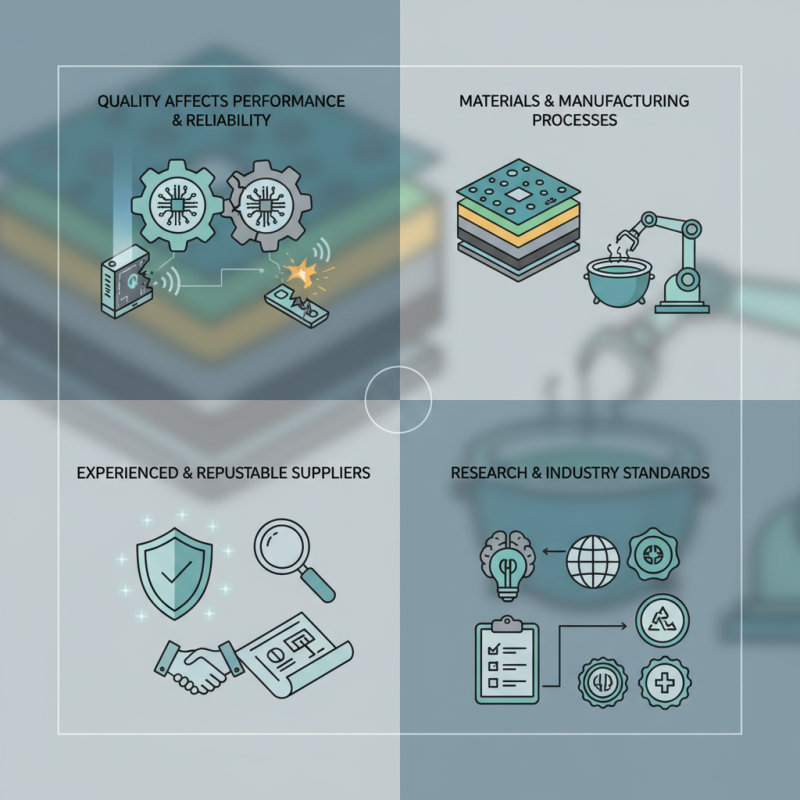
When sourcing high-quality Pcb Boards, it’s essential to focus on various critical factors. Quality affects performance and reliability in electronic devices. Low-quality boards can lead to failures and increased costs over time. It’s vital to understand the materials and processes used in manufacturing PCB boards.
Experience plays a significant role in identifying reputable suppliers. Look for those who have established credentials and positive reviews. A reliable supplier should demonstrate expertise in PCB fabrication techniques. This includes knowledge of design specifications and material selection.
During the sourcing process, reflection is crucial. Not all suppliers meet high standards, so thorough research is necessary. Original equipment manufacturers should not overlook the impact of sourcing decisions. Ensuring that your PCB boards meet specific industry standards will bolster reliability and performance.
Understanding PCB Types and Their Applications
When sourcing PCB boards, understanding the types and their applications is crucial. There are several types of PCBs. Rigid PCBs are the most common, used extensively in consumer electronics. Flex PCBs, on the other hand, provide flexibility, making them ideal for compact devices. They can bend and fit in tight spaces. Rigid-flex PCBs combine both, offering versatility in design.
Different applications call for different materials and specifications. For example, medical devices require high reliability and precision in PCB manufacturing. Automotive applications need robust PCBs that can withstand harsh conditions. Choosing the right type impacts the overall performance and durability of the final product. It's essential to assess your project's specific needs.
Quality control in PCB sourcing is not always straightforward. Some suppliers may promise high standards but may not meet them. It's wise to ask for samples and review their manufacturing processes. A PCB might look perfect visually but could have faults affecting performance. Always prioritize suppliers with proven expertise to ensure reliability.
Identifying Reliable PCB Manufacturers and Suppliers
Finding reliable manufacturers and suppliers for PCB boards is crucial. According to a recent industry report, 43% of electronics companies report quality issues linked to subpar suppliers. Quality impacts performance and drives costs up. Selecting experienced manufacturers often leads to better results. Look for companies with more than five years in the industry.
Certifications play a significant role. A recent study revealed that 65% of high-quality PCB boards came from suppliers holding recognized industry certifications. This implies adherence to best practices. Reviewing customer feedback can provide insights. Positive reviews can hint at reliability, while consistent complaints signal a red flag.
Additionally, consider production capabilities. Some companies offer advanced technology, including automated assembly lines. However, not all providers have the latest equipment. This mismatch can lead to delays. Evaluate a supplier's website and resources. Transparency indicates reliability. An established supplier should provide clear information about their processes and quality control measures. Remember, a thorough vetting process can prevent costly mistakes down the road.
Essential Tips for Sourcing High Quality PCB Boards - Identifying Reliable PCB Manufacturers and Suppliers
| Dimension | Description | Importance |
| Manufacturer Location | Assess the geographical location for logistical and shipping advantages. | High |
| Certifications | Check for industry-standard certifications like ISO, IPC, and RoHS compliance. | Critical |
| Production Capacity | Evaluate the manufacturer's ability to handle your order size and complexity. | Moderate |
| Lead Time | Understand the typical lead time for production and delivery. | High |
| Customer Reviews | Research feedback from previous customers to gauge quality and service. | High |
| Technical Support | Assess the availability of technical assistance and consultation services. | Moderate |
| Pricing | Compare pricing models to ensure competitiveness while maintaining quality. | High |
Evaluating Quality Standards and Certifications for PCBs
Evaluating quality standards and certifications for printed circuit boards (PCBs) is crucial for ensuring reliability. Look for certifications like IPC-A-600 and IPC-A-610. These provide insight into the manufacturing quality and assembly standards of PCBs. A PCB supplier with these certifications demonstrates commitment to high standards.
When assessing quality, consider the materials used. High-quality PCBs are often made from FR-4 material. This fiberglass-reinforced epoxy laminate is known for its durability. Conducting tests like thermal cycling and X-ray inspection can reveal a lot about the PCB's performance.
Don’t forget to ask for the supplier’s process documentation. Understanding their manufacturing practices helps evaluate their expertise. A reliable supplier should be transparent about their methods. This transparency is essential in building trust. Monitor the PCB's performance in your specific application over time. Regular checks can reveal issues that arise in long-term use. Such insights can help refine your sourcing strategy.
Assessing Material Specifications for High-Quality PCB Production
Assessing material specifications is crucial for high-quality PCB production. The choice of materials directly impacts the performance and reliability of the final product. For instance, using FR-4 for core insulation is common due to its dielectric properties. However, recent studies suggest that materials like Rogers and Isola can improve signal integrity in high-frequency applications. In fact, a report from IPC indicates that the failure rate can decrease dramatically with proper material selection.
Another essential factor is the copper thickness on PCB boards. Most standard boards use 1 oz/ft², but thicker copper layers, such as 2 oz/ft² or 3 oz/ft², can enhance thermal conductivity and current-carrying capacity. This is particularly relevant for power electronics. Reports show that optimizing copper thickness can reduce thermal resistance by up to 20%.
Additives used in the laminate can also affect performance. For example, additives that enhance moisture resistance are vital for maintaining reliability in humid environments. Research highlights that PCBs without moisture-resistant materials have a 30% higher failure rate in such conditions. Evaluating these material specifications is essential to ensure the longevity and efficiency of the PCBs produced.
Essential Tips for Sourcing High Quality PCB Boards
This bar chart displays the average ratings of different material specifications critical for high-quality PCB production, such as copper thickness, dielectric material, and surface finish.
Cost Considerations and Budgeting for PCB Sourcing
When sourcing PCB boards, cost considerations play a crucial role. According to industry reports, about 40% of the total product cost is attributed to PCBs. Budgeting meticulously can affect overall project feasibility. For instance, low-cost options may lead to reliability issues. A balance between cost and quality is essential.
Understanding the pricing structure of PCBs is vital. Basic designs can start as low as $0.10 per unit, but complexity drives up costs significantly. Complex multilayer designs can exceed $5 per unit. Recent data suggests that sourcing from regions with lower labor costs saves money, but quality may suffer. This situation requires careful evaluation of trade-offs.
Transparent communication with PCB manufacturers is necessary to manage expectations. Off-the-shelf components might reduce costs. However, custom solutions can add value. It's also important to factor in lead times. Delays can inflate costs, impacting the entire supply chain. Companies should continuously assess their sourcing strategies. Mistakes here can be costly, both financially and timewise.