How to Choose the Best Sawdust Collector for Your Business
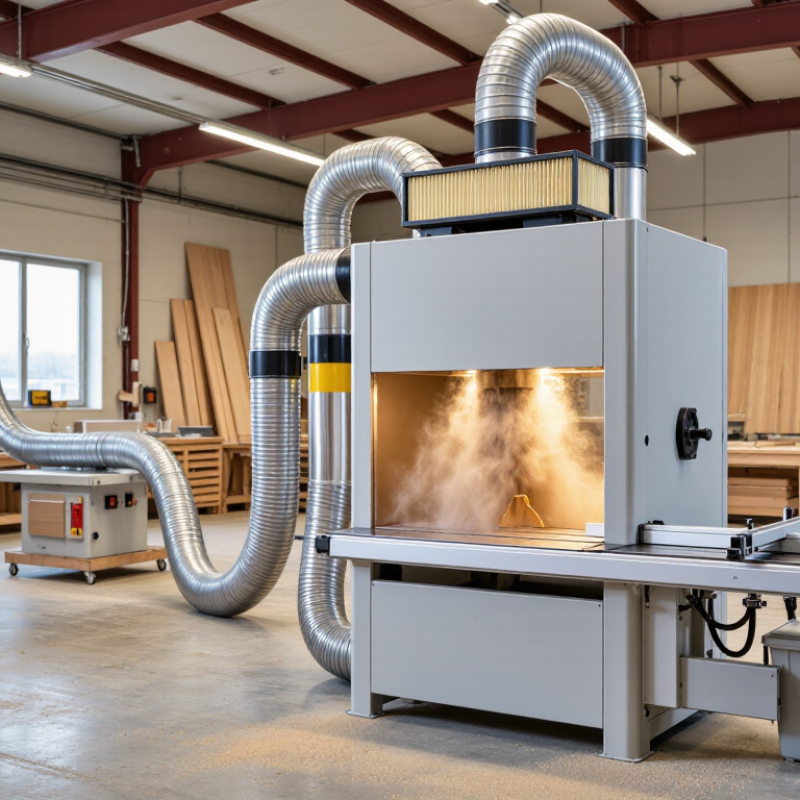
Choosing the right Sawdust Collector can shape your workshop’s safety, productivity, and long-term operating costs. A powerful motor alone does not guarantee effective collection. Airflow, static pressure, filter performance, duct design, and collection capacity must work together. A machine that looks impressive may still leave fine dust floating above a table saw.
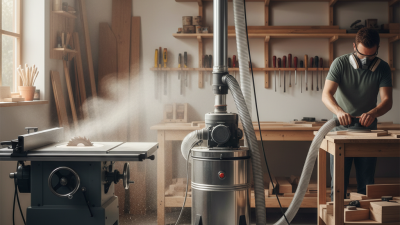
Bill Pentz, a recognized wood-dust collection specialist, puts it plainly: “The best dust collection systems capture the dust at the source.” This principle remains practical for cabinet shops, furniture makers, and larger manufacturing facilities. A collector should pull dust close to the cutting point, before it spreads across floors, machines, and breathing zones.
Start with your actual equipment list. Record each machine’s required airflow, outlet size, and operating frequency. Then examine your ductwork, bends, blast gates, and filter area. A narrow hose may restrict performance, even with a large collector. Fine particles also demand careful filter selection, because visible chips are not the only concern.
Real workshops rarely behave like product brochures. A collector rated for one machine may struggle when several gates open. That assumption can fail. Noise, maintenance access, bin capacity, and energy use also deserve attention. A practical choice balances measured performance with daily convenience, not marketing claims alone. This guide explains how to compare these details and select a Sawdust Collector that supports cleaner production, steadier workflow, and more informed investment decisions.
Define Dust Type and Hazard Class Using NFPA 652 and Kst/Pmax Data
Choosing a sawdust collector begins with the dust, not the equipment catalog. Under NFPA 652, a Dust Hazard Analysis should identify combustible materials, ignition sources, fire protection, and explosion protection needs. Sawdust can appear harmless, yet particle size, moisture, resin content, and processing temperature can change its behavior.
Do not guess. Send representative samples to a qualified laboratory. ASTM E1226 testing measures Kst and Pmax in a standardized vessel. Kst values classify explosion severity:
Pmax records the maximum explosion pressure. These figures help engineers size venting, isolation, and collector construction. NFPA 652 and FM Global Data Sheet 7-76 both emphasize tested material properties and documented hazard analysis.
A practical selection should also review the collector’s location, duct velocity, filter arrangement, and discharge method. Fine dust may settle inside hidden horizontal sections. That gap matters. One sample can mislead if production materials change. Repeat testing after major process changes.
I would also compare laboratory values with real operating observations, such as filter loading, visible leakage, and dust deposits around transfer points. The safest design may require more than a high-airflow fan. It needs verified Kst and Pmax data, suitable explosion relief, and controls that prevent flame or pressure from traveling upstream.
Mistakes happen when “wood dust” is treated as one uniform hazard.
Calculate Required Airflow with OSHA 1910.94 Capture-Velocity Criteria
Choosing a sawdust collector begins with airflow, not motor horsepower. OSHA 1910.94 uses capture velocity to control airborne contaminants at the source. It does not provide one universal velocity for every woodworking hood. Dust type, cutting speed, hood shape, and operator position all matter.
Measure each collection opening. Use the formula Q = V × A, where Q is airflow in cubic feet per minute, V is capture velocity, and A is opening area in square feet.
For example, a 12-by-8-inch opening has an area of 0.67 square feet. At 200 feet per minute, it requires about 134 CFM at the hood. That figure is only a starting point. Add the airflow from every open branch, then account for duct length, elbows, filters, and leakage.
Keep capture velocity separate from duct transport velocity. The hood must catch dust. The duct must move it without settling.
OSHA guidance, a qualified ventilation engineer, and field measurements should confirm the design. A vane anemometer can reveal weak airflow near a blade guard.
My first estimate was too optimistic because I ignored a partially blocked filter. That mistake increased dust around the operator.
Recheck airflow after installation, during filter loading, and whenever machinery changes. Small openings can need surprisingly high pressure. Instrument readings beat assumptions.
Compare Cyclone, Cartridge, and Baghouse Collectors by CFM and Filtration
Choosing the best sawdust collector starts with two numbers: required CFM and target filtration. CFM measures air volume, while filtration describes what the unit removes from that air. Add duct length, bends, hose diameter, and machine inlets before selecting capacity. A stated CFM at zero resistance can look impressive but disappoint under load. Measure twice.
A cyclone collector works well as a pre-separator for heavy chips and coarse sawdust. It drops larger particles before they reach the filter, reducing filter loading. However, it is not a fine-particle solution by itself.
Cartridge collectors offer compact footprints and fine filtration through pleated media. They suit workshops where floor space matters. Pulse cleaning helps maintain airflow, but dirty cartridges can cut performance quickly.
Baghouse collectors suit high-volume operations with continuous dust production. Their large fabric bags hold more dust and often tolerate rough service. With suitable filter media, they can capture fine particles effectively, but their size needs careful planning. Compare tested efficiency at the particle size your process creates, not only the advertised micron figure. During commissioning, use an airflow gauge at the farthest machine. I once underestimated duct resistance; the collector sounded powerful, yet suction remained weak. That mistake showed me that filtration quality and real-world CFM must be judged together.
Specify Explosion Protection Under NFPA 68 and NFPA 69
How to Choose the Best Sawdust Collector for Your Business
NFPA 68 and NFPA 69 should shape your collector specification from the beginning. Sawdust can form a combustible dust cloud inside a filter housing, hopper, or duct. A qualified engineer should review the dust’s Kst, Pmax, moisture, and particle size. These values affect the required protection design.
NFPA 68 focuses on deflagration venting. The collector may need properly sized vents, safe vent discharge areas, and correctly designed vent ducts. Never place a vent toward walkways, doors, or occupied workspaces. The vent panel must match the enclosure pressure and dust characteristics. A larger collector is not automatically safer.
NFPA 69 addresses explosion prevention and isolation. Possible measures include spark detection, suppression, pressure relief, and isolation devices between the collector and connected equipment. The final arrangement depends on airflow, duct length, building layout, and process conditions. One overlooked detail can weaken the entire system. In field reviews, maintenance access is often treated as an afterthought. That is a mistake. Operators need clear access to filters, rotary valves, grounding points, and inspection panels. Protection systems also require testing, documentation, and periodic verification. Ask the supplier for performance data, installation limits, and maintenance instructions. Then confirm the design with the authority having jurisdiction. Documentation may feel excessive, but missing records create uncertainty when conditions change.
How to Choose the Best Sawdust Collector for Your Business - Specify Explosion Protection Under NFPA 68 and NFPA 69
| Selection or Compliance Factor | What to Evaluate | Recommended Specification or Decision | Verification Information to Request |
|---|---|---|---|
| Dust Hazard Characterization | Wood dust can be explosible when dispersed in air and exposed to an ignition source. Hazard properties vary with wood species, particle size, moisture, and process conditions. | Obtain representative laboratory test data before finalizing the collector and protection system. Do not rely only on a generic “wood dust” classification. | Kst, Pmax, minimum explosible concentration, minimum ignition energy, minimum ignition temperature, moisture content, and test method. |
| Collector Type | The correct design depends on dust loading, particle size, required air volume, moisture, temperature, available space, and whether explosion protection is required. | Use a baghouse or cartridge collector for fine dry dust when high filtration efficiency is needed; consider a cyclone for coarse pre-separation; use a wet collector only when its water, corrosion, waste, and fire risks are acceptable. | Collector type, rated airflow, filtration area, filter-media specification, maximum operating temperature, dust-loading capacity, and compatible process conditions. |
| Airflow and Capture Performance | Insufficient airflow allows dust to escape at machines, hoods, transfer points, and duct branches. Excessive airflow can increase energy use and disturb production processes. | Size the fan and ducts from the required airflow, hood design, duct layout, fitting losses, filter pressure drop, and future expansion. Use the process designer’s required capture velocity rather than a universal value. | Airflow at each pickup, duct velocity basis, total system static pressure, fan operating point, balancing method, and commissioning measurements. |
| Filter Media and Pressure Drop | Filter selection affects collection efficiency, energy consumption, cleaning frequency, service life, and the risk of dust accumulation. | Select media compatible with dust abrasiveness, moisture, temperature, electrostatic characteristics, and cleaning method. Establish clean-filter and change-out pressure-drop limits. | Filter efficiency data, media construction, operating-temperature limit, cleaning method, pressure-drop curve, and replacement criteria. |
| Collector Location | A fire or explosion in a collector can expose personnel, buildings, and connected equipment to flame, pressure, smoke, and burning dust. | Where practical, locate the collector outdoors or in a properly separated, specially designed enclosure. Indoor installations require a documented engineering assessment and protection strategy. | Location drawing, separation distances, enclosure construction, deflagration vent discharge area, access controls, and authority-having-jurisdiction review. |
| NFPA 68 Deflagration Venting | NFPA 68 addresses the design, location, installation, and application of deflagration vents for enclosures that may experience a combustible-dust explosion. | Specify a calculated vent area and vent type based on the enclosure volume, enclosure strength, dust explosibility data, vent opening pressure, vent efficiency, and expected vent discharge conditions. Do not select a vent by area alone. | NFPA 68 calculation, vent-panel certification or data, Pred value, vent opening pressure, vent duct details, discharge direction, and clear exclusion zone. |
| Vent Discharge Safety | A vent can release flame, pressure, hot gases, and burning dust. The discharge path can become a serious personnel and property hazard. | Direct the vent to a safe outdoor location or use a listed flameless venting arrangement where appropriate. Keep doors, walkways, air intakes, ignition sources, and occupied areas outside the hazard zone. | Vent discharge hazard assessment, nearby-building review, exclusion-zone drawing, vent duct design, and installation instructions. |
| NFPA 69 Explosion Prevention | NFPA 69 covers systems intended to prevent or control explosions, including explosion suppression, isolation, inerting, and other engineered protective measures. | Use a documented NFPA 69 design when venting is impractical, when connected equipment could transmit an explosion, or when the risk assessment requires prevention or isolation instead of—or in addition to—venting. | Protection-system design basis, detection response time, suppression-agent data, isolation-device rating, control logic, fail-safe action, and inspection requirements. |
| Explosion Isolation | Ducts can transmit flame and pressure from the collector to upstream machinery or from one connected enclosure to another. | Evaluate isolation at every connected duct or process connection. Specify listed mechanical, chemical, or other engineered isolation technology where required by the hazard analysis. | Isolation-device location, activation method, pressure and flame rating, spacing basis, reset procedure, and compatibility with the conveying airflow. |
| Ignition-Source Control | Hot work, sparks, overheated bearings, foreign metal, static electricity, electrical equipment, and smoldering material can ignite dust. | Include spark detection or extinguishing where justified, bearing-temperature monitoring, foreign-material control, hot-work procedures, suitable electrical equipment, and bonding and grounding of conductive components. | Ignition-source assessment, sensor locations, alarm and shutdown sequence, grounding continuity records, and preventive-maintenance procedures. |
| Dust Discharge and Storage | Collected dust can remain combustible and may create a secondary explosion or fire hazard if allowed to accumulate or if handled improperly. | Use a sealed discharge arrangement, suitable containers, controlled emptying procedures, and a defined method for removing dust from the site. Avoid open dumping and uncontrolled transfer. | Discharge-device specification, container compatibility, maximum fill level, dust-removal frequency, disposal procedure, and ignition-control measures. |
| Housekeeping and Secondary Explosions | Dust deposits on floors, beams, ledges, equipment, and elevated surfaces can fuel a secondary explosion even when the collector is properly protected. | Design for cleanable surfaces, minimize dust leakage, prohibit compressed-air blowdown unless specifically justified and controlled, and establish documented inspection and cleaning schedules. | Housekeeping plan, inspection checklist, cleaning methods, responsible personnel, acceptable accumulation criteria, and corrective-action records. |
| Control System and Interlocks | A collector may need to shut down connected machinery, activate isolation, close dampers, or initiate suppression when an abnormal condition is detected. | Provide documented cause-and-effect logic, alarms, emergency stops, backup power where required, and a safe response to sensor or communication failure. | Control narrative, electrical drawings, interlock test procedure, alarm list, fail-safe philosophy, and commissioning records. |
| Maintenance and Inspection | Blocked ducts, damaged filters, worn seals, failed sensors, and disabled protection systems can reduce collection performance and invalidate the safety design. | Create preventive-maintenance intervals for filters, fans, bearings, ducts, vents, isolation devices, sensors, grounding connections, and control systems. | Maintenance schedule, spare-parts list, inspection forms, calibration requirements, protection-system test records, and management-of-change procedure. |
| Applicable Edition and Approval | NFPA documents are revised periodically, and local codes, occupational-safety rules, building requirements, and insurance requirements may also apply. | Identify the edition adopted by the local authority having jurisdiction and obtain review by a qualified fire-protection or process-safety professional before purchase and installation. | Applicable code list, adopted NFPA editions, engineering calculations, signed design review, permits, inspection approvals, and final as-built documentation. |

Note: NFPA 68 and NFPA 69 requirements must be applied using the edition adopted by the local authority having jurisdiction. Final venting, suppression, isolation, and collector selections require a documented combustible-dust hazard assessment and project-specific engineering calculations.
Evaluate Energy Use, Noise, Maintenance, and Total Ownership Cost
Choosing the best sawdust collector starts with energy use, not advertised airflow alone. In a busy workshop, a motor running eight hours daily can quietly dominate operating costs. Measure actual power draw during cutting, idle periods, and filter cleaning. Compare watts, duty cycles, and local electricity rates. A slightly smaller collector may perform better if ductwork is short and properly sealed. Bigger is not always wiser.
Noise also affects productivity and safety. I once worked near a collector that made conversation difficult, even with hearing protection. Check the rated sound level, but test the machine in the actual workspace. Walls and corners can amplify vibration. Rubber mounts, flexible connections, and a separate equipment room may reduce disturbance. However, these additions increase installation costs and require practical space.
Maintenance deserves a realistic schedule. Inspect filters, empty collection bins, and check seals before dust buildup restricts airflow. Record cleaning time and replacement intervals for several months. My first ownership estimate was wrong because I ignored labor. Include electricity, filters, bags, repairs, downtime, installation, and disposal expenses. A simple spreadsheet can compare five-year costs. Leave room for uncertainty; dust volume changes with materials, seasons, and production orders. Quiet operation feels valuable, but neglected maintenance can erase that advantage quickly.
How to Choose the Best Sawdust Collector for Your Business
Evaluate energy use, noise, maintenance, and total ownership cost before selecting a system.
This planning benchmark compares common medium-duty collector configurations for a woodworking shop operating approximately 2,000 hours per year. Lower values generally indicate lower operating burden, but airflow capacity, dust type, installation requirements, and workplace exposure limits should also be verified.
Estimates use electricity at $0.12 per kWh and include typical electricity, filter or bag replacement, routine service, and initial equipment costs over five years. Actual results vary by system size, duct layout, duty cycle, and local energy prices.
Related Posts
-
How to Choose the Best Dust Collector for Your Needs?
-
The Future of Efficient Dust Control with Advanced Bag House Systems
-
7 Reasons Why the Best Sawdust Collector is Essential for Your Workshop
-
How to Choose the Right Dust Collector for Your Industrial Needs Based on Air Quality Standards
-
Why You Need a Sawdust Vacuum System for Your Workshop?
-
Understanding the Importance of a Sawdust Collector for a Cleaner Woodworking Environment