
• Parts
  • Services
  • OEM Equipment &
    Engineered Systems
  • EPC &
    Turnkey
  • Industries
    Served

How to Choose the Best Passenger Cart in 2026?

Choosing the best Passenger Cart in 2026 requires more than comparing prices, battery sizes, or polished product photos. Buyers must examine real operating conditions. A resort may need quiet movement between villas, while an airport requires strong range, weather protection, and dependable daily charging. Hospitals may value easy cleaning and tight turning circles. Passenger capacity matters, but so does how safely people enter and exit.

Industry consultant Sarah Chen explains, “A passenger cart should fit the route, not merely fill the seat count.” Her point is practical. A six-seat cart can become uncomfortable on narrow paths. A powerful motor may waste energy on short, flat routes. Lithium batteries often reduce maintenance, yet their higher purchase cost deserves careful calculation. Small details matter, too. Check the step height, handrails, seat firmness, windshield visibility, and storage space. Ask to test the cart with a full passenger load.

Look beyond the first year. Review charging time, tire replacement, service response, warranty coverage, and spare-part availability. A reliable supplier should provide clear specifications and documented safety procedures. Be cautious with impressive claims. Some are difficult to verify.

The perfect cart may not exist.

Your best choice should match passengers, terrain, climate, and workload. It should also leave room for changing needs. That final point is easy to overlook. A thoughtful 2026 selection balances comfort, operating cost, durability, and responsible maintenance. The decision becomes stronger when real users, not only sales teams, help evaluate it.
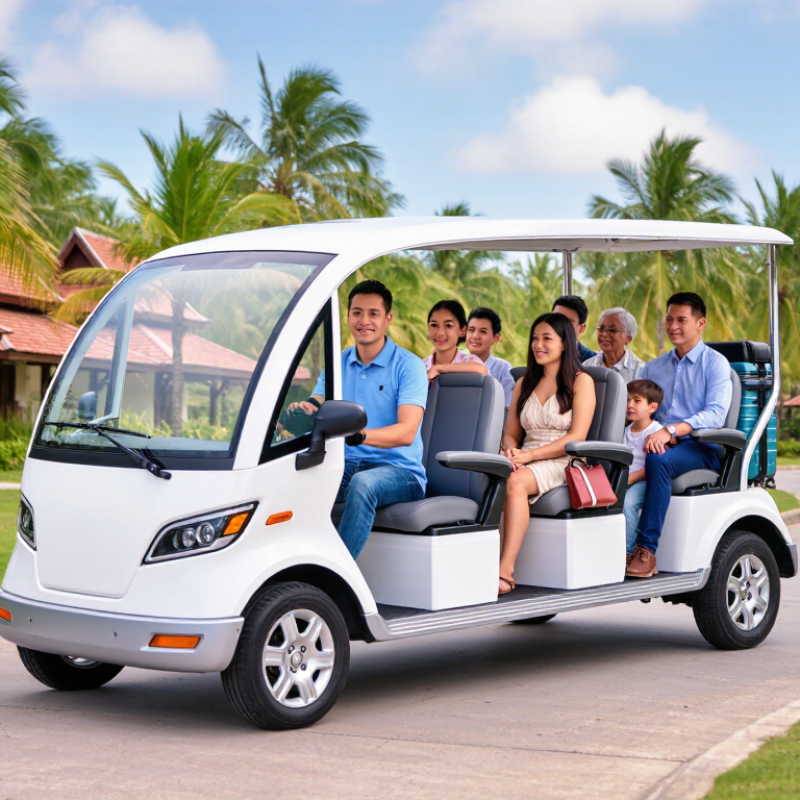
How to Choose the Best Passenger Cart in 2026?

Define Passenger Cart Types and Typical Use Cases

Passenger carts are compact vehicles designed to move people across short distances. Their best use depends on capacity, terrain, speed, and passenger needs. Electric carts suit resorts, campuses, hospitals, and airports because they operate quietly. Golf-style passenger carts work well on paved paths and light slopes. Shuttle carts with multiple rows handle hotels, event grounds, and large facilities. Utility-passenger models combine seating with space for tools or luggage.

Tips: Count real passengers, not ideal passengers. Leave room for bags and mobility aids. Check turning space near entrances. Test the cart on wet paths, ramps, and uneven pavement. Ask about charging time, battery replacement, brakes, lights, and daily inspection records. A trained operator also matters, especially in crowded areas.

In practical evaluations, seating comfort often matters more than maximum speed. Passengers notice hard benches after a ten-minute ride. Weather protection becomes important in heavy rain or strong sun. For hospitals and senior-care facilities, stable steps and easy access may outweigh extra seats. Campuses may need longer range and secure storage. Industrial sites often require stronger frames and clearer visibility. I have seen buyers focus on appearance first, then regret limited ground clearance. That mistake is easy to make. Before choosing, measure the route, record peak passenger numbers, and compare maintenance support with purchase cost. Local safety requirements should guide the final specification.

Match Cart Capacity to Passenger Numbers and Travel Conditions

How to Choose the Best Passenger Cart in 2026?

Match cart capacity to real passenger numbers, not optimistic estimates. The Federal Highway Administration’s 2022 National Household Travel Survey reports average vehicle occupancy near 1.5 people per trip. However, airport transfers, resorts, campuses, and event sites create different demand. A four-seat cart may serve two adults comfortably with luggage, but four adults can feel cramped. Count passengers, bags, mobility equipment, and the driver. Leave practical space.

Travel conditions matter just as much. A cart used on flat, paved paths needs less power than one climbing wet hills. The U.S. Department of Energy reports that cold weather can reduce electric-vehicle range, sometimes substantially. Passenger carts may experience similar battery stress, though results vary by battery type, load, speed, and temperature. That uncertainty deserves attention. A six-seat cart is not automatically better; its extra weight can reduce range and increase braking demands.

Tips: Record the busiest hour for seven days. Add one or two passenger spaces for unexpected demand. Check the route’s steepest slope, surface, turning radius, and charging access. Test the cart fully loaded, not empty. Ask whether the stated capacity includes luggage. It often does not. Choose slower, safer handling over maximum seating when paths are narrow. Review maintenance records and published test conditions before purchasing; specifications can look precise while real routes remain messy.

Compare Power Systems, Range, Speed, and Charging Requirements

How to Choose the Best Passenger Cart in 2026?

Power system choice shapes every later decision. Lead-acid batteries cost less initially, but they are heavy and need regular watering. Lithium-ion packs reduce weight and usually deliver steadier acceleration. BloombergNEF’s 2024 Battery Price Survey reported an average battery-pack price of $115 per kWh, down 20% year over year. That trend improves lithium economics, although replacement costs still deserve careful review. I have seen buyers chase maximum range and ignore payload. That is an expensive mistake.

Match range to daily routes, not marketing claims. A cart carrying six passengers, luggage, and climbing ramps can consume far more energy than a lightly loaded test vehicle. Request range data under realistic conditions, including stop-and-go driving and hot weather. Speed also matters. Higher speed increases energy use, braking demand, and charging frequency. A modest speed setting may provide better control around hotels, campuses, and event grounds.

Charging needs practical planning. The U.S. Department of Energy’s Alternative Fuels Data Center identifies Level 2 charging as 208–240-volt AC equipment, with outputs from 3.2 to 19.2 kilowatts. Many passenger carts use dedicated, lower-power chargers instead. Confirm voltage, amperage, connector type, ventilation, and charging time before purchase. A 5-kWh battery charged at 1.2 kW may need over five hours after losses. Overnight charging sounds simple. It is not always enough after a busy day. I would leave capacity unused, because real routes rarely behave perfectly.

Evaluate Safety Features, Accessibility, Comfort, and Build Quality

Choosing the Best Passenger Cart in 2026

A practical evaluation starts with safety, not appearance. Check the frame, brakes, tires, handrails, and seat anchors for visible wear. The cart should remain stable during sharp turns and controlled stops. Ask whether emergency access is clear and whether warning signals are easy to understand. A polished finish can mislead. Inspect the areas passengers rarely notice.

Accessibility should support different bodies and mobility needs. Look for a low step, secure handrails, spacious entry points, and a smooth boarding height. Wheelchair users need enough turning space, firm restraint points, and a route without awkward gaps. Controls should be reachable and clearly labeled. Test them while seated, not only while standing.

Tips: Sit in every passenger position. Check legroom and back support. Listen for rattles during movement. Confirm ventilation in warm conditions. Ask staff about cleaning routines and maintenance records. Small details matter.

Comfort also depends on vibration, noise, seat texture, and weather protection. A short trial ride can reveal more than a specification sheet. Build quality appears in welded joints, fasteners, panel alignment, and corrosion-resistant materials. I would not judge durability from one inspection alone. Repeated use, uneven surfaces, and careless loading expose weaknesses over time. Choose a cart with documented inspections, responsive service, and evidence of consistent performance.

How to Choose the Best Passenger Cart in 2026? - Evaluate Safety Features, Accessibility, Comfort, and Build Quality

Evaluation Dimension Compact 2-Row Cart Standard 4-Row Cart Heavy-Duty 6-Row Cart Low-Floor Accessible Cart Weather-Ready Enclosed Cart
Typical Passenger Capacity 4 passengers 8 passengers 12 passengers 8 passengers 8 passengers
Recommended Operating Environment Hotels, campuses, and short routes Resorts, airports, and event venues Large campuses and high-volume routes Accessible transport and public facilities Outdoor routes in variable weather
Maximum Design Speed 25 km/h 25 km/h 25 km/h 25 km/h 25 km/h
Braking System Hydraulic or mechanical service brake; parking brake Hydraulic service brake; parking brake Hydraulic service brake; parking brake; load-rated components Hydraulic service brake; parking brake Hydraulic service brake; parking brake
Seat-Belt Provision Two-point belts available for every seat Two-point belts available for every seat Two-point belts recommended for every seat Three-point belt for wheelchair position; passenger belts available Two-point belts available for every seat
Lighting and Visibility LED headlights, tail lamps, reflectors, and horn LED headlights, tail lamps, reflectors, turn indicators, and horn LED lighting package, reflectors, turn indicators, hazard warning lights, and horn LED lighting package, reflectors, hazard warning lights, and audible alert LED headlights, tail lamps, reflectors, turn indicators, hazard warning lights, and horn
Passenger Protection High-back seats, handrails, and a fixed front windshield High-back seats, handrails, side steps, and windshield High-back seats, handrails, side steps, windshield, and grab rails Low entry step, handrails, secure restraint points, and protected wheelchair area Windshield, roof, side curtains or doors, handrails, and enclosed passenger compartment
Accessibility Features Step-in access; limited space for mobility devices Wide side access; optional foldable step Wide side access; optional lift or ramp configuration Low-floor entry, ramp or lift provision, wheelchair restraint area, and priority seating Wide door opening; ramp compatibility; interior handrails
Wheelchair Accommodation Usually not available Optional, subject to interior layout One wheelchair position with suitable conversion Designed for at least one wheelchair position One wheelchair position with ramp or lift configuration
Seat Comfort Vinyl bench seats with moderate cushioning Padded bench seats with arm or side supports Reinforced padded seats with durable upholstery Priority seating, handrails, and clear transfer space Padded seats, roof coverage, and improved weather protection
Suspension and Ride Quality Leaf or coil suspension; best on maintained surfaces Independent or reinforced suspension; suitable for paved routes Heavy-duty suspension; stable under higher passenger loads Comfort-focused suspension; low step height Reinforced suspension with improved protection from wind and rain
Turning Circle Approximately 4.5–5.0 m Approximately 5.0–5.5 m Approximately 6.0–6.5 m Approximately 5.0–5.5 m Approximately 5.0–5.5 m
Chassis and Frame Welded steel or aluminum frame for light-duty use Coated steel or aluminum frame for regular commercial use Reinforced steel frame with higher payload capacity Reinforced low-floor frame with integrated restraint points Corrosion-protected frame designed for enclosed bodywork
Payload Capacity Approximately 350–450 kg Approximately 650–800 kg Approximately 950–1,200 kg Approximately 700–850 kg, depending on lift or ramp equipment Approximately 700–850 kg, depending on enclosure and equipment
Corrosion Protection Powder-coated frame and weather-resistant fasteners Powder-coated frame and protected electrical connectors Reinforced coating system and corrosion-resistant hardware Powder-coated frame and sealed accessible-area hardware Enhanced coating, sealed connectors, and weather-resistant body panels
Charging and Energy Options Lead-acid or lithium battery system; onboard charger optional Lead-acid or lithium battery system; onboard charger commonly available Higher-capacity battery system; charging time depends on battery type Lithium or lead-acid system; verify lift power requirements Lithium or lead-acid system; verify heating, lighting, and enclosure loads
Inspection Priorities Brake adjustment, tire condition, steering, lights, and battery Brake performance, seat-belt anchors, tires, steering, lights, and battery Brake wear, frame integrity, tire load rating, steering, suspension, and battery Ramp or lift operation, restraint anchors, brakes, handrails, and floor clearance Door and curtain condition, windshield, roof seals, brakes, lights, and ventilation
Best Selection Priority Maximum maneuverability and low operating cost Balanced capacity, comfort, and route flexibility High passenger throughput and heavy-duty durability Universal access, safe boarding, and inclusive passenger service Passenger comfort and protection in changing weather
Overall Suitability Score 7.8/10 8.6/10 8.4/10 9.1/10 8.7/10

Selection note: Confirm local road, workplace, accessibility, electrical, and passenger-transport requirements before purchase. Capacity, payload, braking performance, charging time, and wheelchair configuration vary with vehicle design and installed equipment. A suitable cart should be evaluated at its intended site with the expected passenger load.

Assess Maintenance Needs, Total Cost, and Supplier Support

Choosing the best passenger cart in 2026 requires more than comparing purchase prices. Maintenance records should show service intervals for brakes, tires, steering joints, batteries, and chargers. Electric drivetrains usually need fewer mechanical repairs. The U.S. Department of Energy confirms that battery-electric vehicles have fewer moving parts and typically lower maintenance requirements than conventional vehicles. That advantage can disappear when battery access is poor or technicians lack training.

Look beyond the invoice. Calculate energy use, replacement batteries, consumables, labor, insurance, storage, and downtime across five to eight years. The International Energy Agency reported that global battery pack prices fell 14% in 2023, but replacement costs still vary sharply by chemistry, capacity, and installation work. A cheaper cart may require more frequent tire changes or lose range during heavy passenger loading. Small details matter. Ask for battery-cycle data, charging efficiency, and real-world range with a full cabin.

Supplier support is an operating cost, not a courtesy. Request documented response times, spare-parts availability, technician training, and warranty exclusions. The National Institute of Standards and Technology emphasizes traceable maintenance records for reliable equipment management. In practice, a delayed controller can leave a resort route uncovered for days. That risk is easy to underestimate. I would also test the supplier’s support process before purchase, perhaps with a technical question and a parts-availability request. Marketing promises are not evidence.

How to Choose the Best Passenger Cart in 2026?

Five-year ownership comparison based on maintenance needs, total cost, and supplier support

This planning model compares three generic electric passenger-cart configurations without using company or brand data. Total cost includes estimated purchase price, scheduled maintenance, energy, and one battery replacement over five years. Supplier support is scored from 1 to 5 according to warranty coverage, spare-parts availability, technician response, and service documentation. Actual costs should be verified with local suppliers, operating hours, labor rates, and site conditions.