
• Parts
  • Services
  • OEM Equipment &
    Engineered Systems
  • EPC &
    Turnkey
  • Industries
    Served

How to Choose an Industrial Panel Hinge in 2026?

Choosing an Industrial Panel Hinge in 2026 requires more than comparing prices or polished product images. Manufacturing equipment is becoming more connected, compact, and frequently accessed. Deloitte’s 2024 Smart Manufacturing and Operations Survey reports that 86% of manufacturing leaders view smart manufacturing as a primary competitiveness driver. That shift increases pressure on every enclosure component, including the hinge that supports repeated service access.

A reliable selection begins with real operating conditions. Record the panel weight, center of gravity, opening angle, cycle frequency, and mounting clearance. Then check vibration, dust, moisture, cleaning chemicals, and temperature changes. IEC 60529 provides the framework for IP enclosure protection, but the hinge must not undermine the enclosure’s sealing design. ISO 12100 also supports a risk-based approach to machinery safety. The hinge is small. Its consequences are not.

Manufacturers should compare concealed, lift-off, adjustable, and continuous hinge designs against measured requirements. Stainless steel may suit washdown areas, while zinc-plated steel can fit less aggressive industrial environments. Corrosion resistance alone is not enough. Fastener compatibility matters too. Reports from MarketsandMarkets and Deloitte show continued investment in industrial automation, yet broad market forecasts rarely test hinge performance directly. That is a weakness worth remembering. Supplier load ratings may reflect ideal alignment, not years of vibration and misused doors. A practical evaluation should include sample testing, torque checks, cycle trials, and installation review. The best Industrial Panel Hinge is not the strongest-looking option; it is the one that remains stable, serviceable, and predictable in the exact enclosure environment.
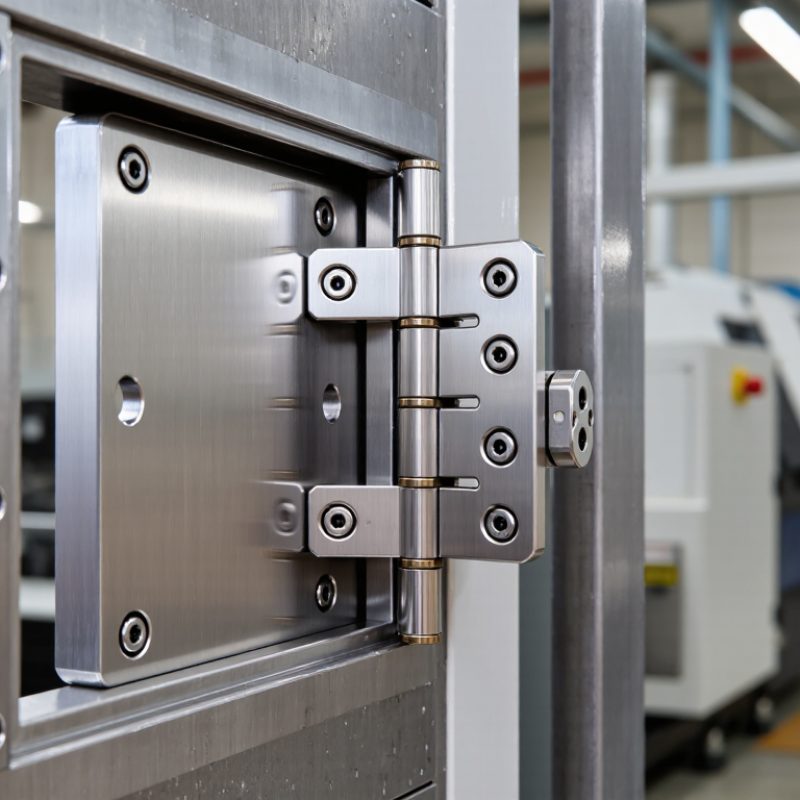
How to Choose an Industrial Panel Hinge in 2026?

What Is an Industrial Panel Hinge and Where Is It Used?

An industrial panel hinge is a mechanical joint that connects a removable or swinging panel to a machine frame. It supports repeated opening while keeping the panel aligned and secure. Unlike a household door hinge, it may operate beside vibration, oil mist, dust, heat, or washdown equipment. Put simply. It keeps access practical.

Common versions include concealed, lift-off, continuous, adjustable, and torque hinges. Lift-off designs help technicians remove panels quickly during maintenance. Continuous hinges spread the load across the panel edge. They suit long covers and enclosure doors.

These hinges are used on electrical cabinets, machine guards, control boxes, inspection covers, and industrial transport equipment. In a factory, small alignment errors become expensive problems. I have seen a stiff hinge distort a thin steel panel after repeated use.

Choosing one in 2026 requires more than checking the advertised load. Measure panel weight, center of gravity, thickness, opening angle, and available clearance. Then estimate cycle frequency and side loads from vibration or cables. A hinge rated for 100 kilograms may not safely support an offset panel.

Material also matters. Stainless steel resists corrosion, while plated steel may suit dry indoor areas. Polymer options can reduce weight but may soften under heat. Check operating temperature, fastener strength, surface finish, and supplier test data.

Ask for cycle testing when the panel opens many times each day. Do not ignore installation quality. Uneven drilling can create binding.

No choice is perfect. A field trial may reveal noise, sagging, or unexpected cable tension before full production.

Which Hinge Materials and Finishes Suit Industrial Environments?

How to Choose an Industrial Panel Hinge in 2026?

Industrial panel hinges need more than a strong pin. Material and finish determine service life, maintenance, and safety in real environments. In a dry indoor cabinet, zinc-plated carbon steel can offer economical protection. However, washdown areas, coastal facilities, and chemical rooms usually demand stainless steel. Grade 304 suits general moisture. Grade 316 performs better where chlorides are present. It is not automatically the best choice everywhere.

The NACE IMPACT study estimated global corrosion costs at about $2.5 trillion, or 3.4% of global GDP. That figure supports a practical selection rule: control corrosion before it reaches the hinge joint. Passivated stainless steel removes surface iron and improves resistance. Electropolishing can create a smoother surface, useful around dust, residue, and frequent cleaning. Powder coating adds color and barrier protection to steel, but chipped edges can expose the substrate. Small damage matters.

I have seen hinges fail because designers specified the coating, but ignored the pin and fasteners. Dissimilar metals may create galvanic corrosion in wet service. Match the hinge, pin, washer, and panel materials when possible. Salt-spray ratings can help compare finishes, yet ASTM B117 results do not predict every outdoor condition. That limitation deserves attention. Check temperature, humidity, cleaning chemicals, load cycles, and installation orientation. A hinge that looks excellent after testing may still collect water at its knuckle.

How to Match Hinge Type, Load Capacity, and Door Dimensions

How to Choose an Industrial Panel Hinge in 2026?

How to Match Hinge Type, Load Capacity, and Door Dimensions

Choosing an industrial panel hinge starts with the door, not the catalog. Measure height, width, thickness, and total weight, including locks, cables, and mounted equipment. A 900-millimeter steel door may weigh far more than its size suggests. Check whether the stated load applies to one hinge or a complete set. This detail is often missed.

Match the hinge type to the movement and installation space. Butt hinges suit simple external doors. Concealed hinges protect the mechanism and create a cleaner surface. Lift-off hinges help with removable panels during maintenance. Continuous hinges distribute force along the full edge, which can reduce local stress on tall doors. For frequent opening, inspect the pin, bearing surfaces, and cycle rating carefully.

Calculate more than static weight. Door width creates leverage, especially when the panel is opened fully or exposed to vibration. Use a practical safety margin for uneven loading and repeated movement. Mounting holes must align with the frame, while the hinge knuckle must clear seals, handles, and nearby panels. I once selected hinges from weight alone; the door still sagged because its center of gravity sat too far from the hinge line. Real installations rarely match the drawing. Review the clearances after a trial fit, and confirm the technical datasheet before ordering.

How to Choose an Industrial Panel Hinge in 2026? - How to Match Hinge Type, Load Capacity, and Door Dimensions
Hinge Type Typical Industrial Use Typical Load Capacity per Hinge Recommended Door Size Range Typical Door Weight Suitable Door Material Best Matching Conditions Selection Considerations
Concealed Hinge Electrical enclosures, control cabinets, machine guards, and cleanroom panels 25–80 kg Up to 1,200 × 1,800 mm Up to 50 kg Sheet steel, stainless steel, aluminum Flush exterior appearance, restricted access, and protected hinge components Verify cup depth, mounting clearance, opening angle, and service access before installation
Lift-Off Hinge Removable access panels, equipment housings, and maintenance doors 30–100 kg Up to 1,500 × 2,000 mm Up to 70 kg Steel, stainless steel, aluminum Frequent panel removal and fast maintenance access Use a retaining feature or safety fastener where vibration could lift the door from the hinge pin
Weld-On Hinge Heavy machine doors, industrial cabinets, gates, and welded frames 80–300 kg Up to 2,000 × 3,000 mm Up to 220 kg Carbon steel, stainless steel High structural strength and permanent hinge attachment Allow for welding distortion, corrosion protection, and accurate hinge-axis alignment
Adjustable Hinge Large access doors, sound enclosures, machine covers, and safety guarding 60–250 kg Up to 2,000 × 2,500 mm Up to 180 kg Steel, stainless steel, aluminum with reinforced mounting points Doors requiring height, lateral, or compression adjustment after installation Check adjustment travel, locking method, and the effect of adjustment on the door seal
Continuous Piano Hinge Long cabinet doors, instrument panels, inspection covers, and lightweight guarding 20–100 kg distributed along the hinge length Up to 1,500 × 2,000 mm Up to 70 kg Sheet metal, aluminum, composite panels Long narrow doors where load distribution and reduced edge stress are important Confirm hinge length, pin diameter, mounting-hole spacing, and resistance to torsional deflection
Friction Hinge Display panels, operator interfaces, instrument covers, and positioning doors 10–60 kg Up to 900 × 1,200 mm Up to 35 kg Aluminum, steel, plastic panels with reinforced inserts Doors or lids that must remain open at selected angles Choose the required holding torque; friction capacity decreases with wear and contamination
Spring-Loaded Hinge Safety doors, protective guards, access covers, and self-closing panels 20–120 kg Up to 1,200 × 2,000 mm Up to 80 kg Steel, stainless steel, aluminum with reinforced brackets Controlled closing, return action, and improved access protection Match spring torque to door weight and center of gravity; avoid excessive closing force
Heavy-Duty Barrel Hinge Large industrial doors, machine enclosures, transport equipment, and robust frames 150–500 kg Up to 2,500 × 3,500 mm Up to 350 kg Carbon steel, stainless steel High radial loads, outdoor equipment, and doors exposed to shock or vibration Use adequate hinge spacing and confirm pin wear, lubrication, corrosion protection, and frame stiffness
Selection note: The load ranges are practical preliminary values for evenly distributed loads under normal static conditions. Final selection should include the number of hinges, hinge spacing, door center of gravity, opening frequency, vibration, impact, temperature, corrosion exposure, safety factor, and the manufacturer’s tested load rating. For a basic calculation, hinge load is approximately the door weight divided by the number of hinges, but the upper hinge and mounting structure usually carry a larger share of the load.

What Installation, Adjustment, and Maintenance Features Matter?

How to Choose an Industrial Panel Hinge in 2026?

Installation quality often matters more than a hinge’s headline load rating. Choose a hinge with captive fasteners, clear mounting datums, and slotted holes for minor alignment corrections. A technician should install it with ordinary tools, even inside a crowded control cabinet. The U.S. Department of Energy’s Operations and Maintenance Best Practices Guide links preventive maintenance with 12–18% lower costs than reactive maintenance. That makes easy access a financial feature, not a convenience.

Adjustment must compensate for real factory conditions. Look for vertical, horizontal, and depth adjustment when door gaps affect sealing or latch alignment. A hinge should retain its setting after repeated opening cycles. Check the manufacturer’s tested load, cycle count, temperature range, and corrosion resistance. Do not confuse static capacity with usable capacity. A heavy cable bundle can change the result. IEC 60529 ingress protection also requires stable compression around the entire gasket, so uneven door movement deserves attention.

Maintenance details are easy to overlook. Select replaceable pins or bushings where practical, and confirm lubricant compatibility with seals and nearby plastics. Inspect loose fasteners, metal dust, coating damage, and rising operating force during scheduled service. A 2024 industrial maintenance survey found that unplanned downtime remains a major production concern across manufacturing sites. The exact percentage varies by sector. That is the uncomfortable part. A perfect specification can still fail when installation records are missing, adjustment tools are unavailable, or inspection intervals are guessed.

How to Compare Safety, Standards, Cost, and Supplier Reliability?

How to Choose an Industrial Panel Hinge in 2026?

Choosing an industrial panel hinge starts with safety, not price. Check the panel weight, opening angle, operating cycles, and mounting position. A hinge carrying a heavy steel door may need a rated load with a clear safety margin. Watch for pinch points near the knuckles. Fit matters. Smooth movement should not weaken door retention during vibration.

Standards require careful interpretation. Confirm which enclosure, machinery, electrical, and workplace requirements apply to your installation. Ask for material declarations, corrosion test results, dimensional drawings, and documented load testing. An IP-rated enclosure can lose protection if the hinge creates gaps or distorts the gasket. Test a complete door assembly, not only the loose hinge. That assumption can fail.

Cost comparison should include machining, fasteners, coating, installation time, and replacement risk. A low unit price may hide inconsistent hole patterns or short service life. Request samples from the intended production lot.

Measure pin diameter, mounting alignment, surface finish, and cycle performance. Supplier reliability also depends on traceability, stable lead times, engineering response, and honest change notifications. A supplier with clear inspection records is easier to trust. Still, paperwork is not proof by itself. Keep one sample for internal review, because even a good specification can miss a practical problem.