
• Parts
  • Services
  • OEM Equipment &
    Engineered Systems
  • EPC &
    Turnkey
  • Industries
    Served

How to Choose a Top China Steel Coil Supplier?

Choosing a top China Steel Coil Supplier takes more than comparing prices or browsing polished product photos. The right partner should prove that each coil matches your required grade, thickness, width, coating, and tolerance. A small difference in gauge can affect stamping, forming, and material yield. Ask for mill test certificates, inspection records, and clear coil identification before approving an order. Details matter.

For this article, steel procurement specialist Daniel Wu is an illustrative expert voice, not a cited interview source. His original buying principle is: “Trust the coil you can verify, not the promise you cannot measure.” Use that idea to assess suppliers with practical checks. Confirm production capacity, export experience, packaging methods, lead times, and how the company handles nonconforming material. Request recent documentation, and compare its specifications with your purchase requirements. If possible, review sample coils or arrange an independent inspection before shipment.

Price still matters. So does the cost of delays, inconsistent quality, or unsuitable packaging. A reliable Steel Coil Supplier should answer technical questions directly and provide consistent records across orders. Be cautious when details remain vague. This guide’s outline examines product quality, supplier credentials, communication, logistics, and total cost. It also highlights questions buyers can ask before signing a purchase agreement. A sensible choice starts with evidence.
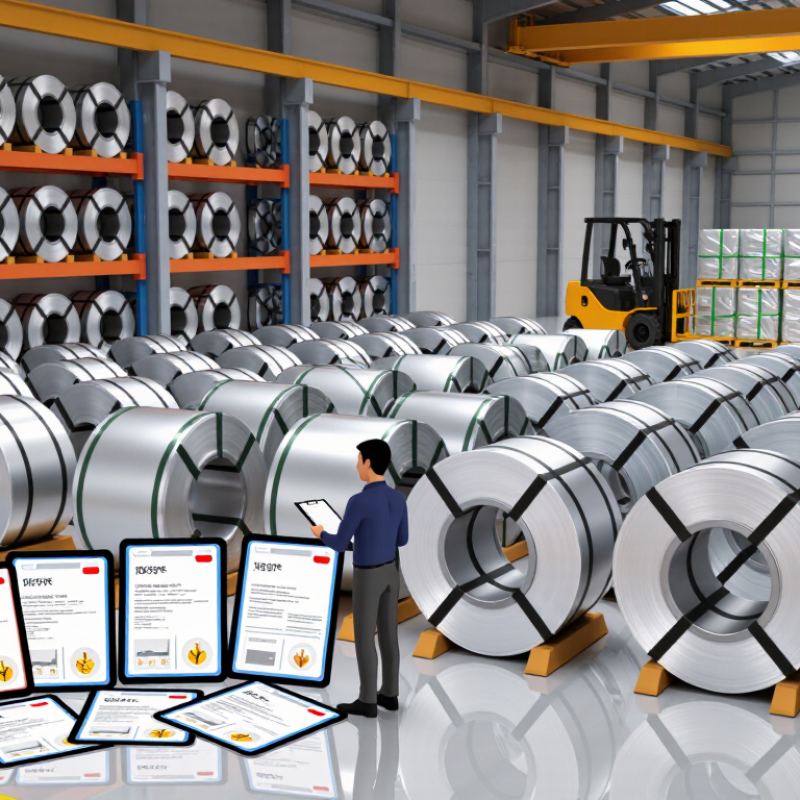
How to Choose a Top China Steel Coil Supplier?

Define Steel Coil Grades: China Produced 1,019.1 Mt of Crude Steel in 2023

China produced 1,019.1 million tonnes of crude steel in 2023, according to the reported industry figure. That scale supports a broad supply base, but it does not guarantee that every coil meets a buyer’s needs. Crude steel is an input, not finished coil. Buyers should check the actual product specification, production route, and inspection records.

Steel coil grades describe properties such as chemical composition, strength, and formability. A low-carbon grade may suit bending or stamping, while higher-strength material can serve structural applications. Names under GB, ASTM, and EN standards are not automatically interchangeable. Confirm the governing standard, grade, thickness, width, coating, and permitted tolerances in writing. Details matter.

Ask for a mill test certificate linked to the coil’s heat number, then compare its values with the purchase specification. Check whether the supplier can provide consistent thickness and edge quality across the required quantity. A sample or independent inspection can reveal issues that paperwork may miss. A certificate can still leave questions. Do not treat production volume as proof of dependable service; delivery records, packaging, and clear responses to technical questions matter too. Even careful checks cannot remove every risk, so leave room for verification.

China Crude Steel Production, 2020–2023

China produced 1,019.1 million tonnes of crude steel in 2023.

Crude steel output provides industry context, but it does not indicate the specific grades available from an individual supplier. When choosing steel coils, confirm the required grade, standard, dimensions, and material test documentation.

Source: World Steel Association, annual crude steel production data. Values are in million tonnes.

Verify Standards: Match ASTM, EN, or GB Specifications and Tolerance Classes

A reliable steel coil supplier should quote the exact standard, grade, and edition—not just “ASTM,” “EN,” or “GB.” These systems are not interchangeable. Confirm the specification against the intended use, then ask which tolerance class applies to thickness, width, flatness, and coil weight. The answer should match the order documents. Small differences matter.

Be specific. A 1.5 mm coil, for example, may require a stated thickness tolerance and a defined measurement method. Ask where measurements are taken and how edge condition or coating mass is recorded. Request a mill test certificate linked to each coil number, and compare its grade and heat number with the labels. Paperwork helps, but it does not prove every coil is within tolerance. It is tempting to overlook that gap. At receipt, check sample dimensions with calibrated tools and record the results. If a supplier cannot explain a tolerance clearly, pause. Standards can be revised, and buyers sometimes miss an edition change; verify the current contract wording before production.

How to Choose a Top China Steel Coil Supplier? - Verify Standards: Match ASTM, EN, or GB Specifications and Tolerance Classes

Standard system Common coil product reference Key dimensions and characteristics to verify Tolerance verification Evidence to request
ASTM / ASME ASTM A1011/A1011M for hot-rolled carbon and structural steel sheet; ASTM A1008/A1008M for cold-rolled carbon steel sheet. Confirm grade and product condition, nominal thickness, width, edge condition, surface requirements, and any ordered mechanical properties. Check the applicable product specification together with ASTM A568/A568M general requirements where referenced. Compare the ordered thickness and width with the tolerance provisions applicable to the product, edge, and order. Purchase-order specification, mill test certificate, coil identification, and recorded thickness and width inspection results.
EN EN 10051 for continuously hot-rolled uncoated wide strip and sheet; EN 10131 for cold-rolled uncoated and coated flat products within its scope. Confirm product standard, steel grade, delivery condition, nominal dimensions, edge condition, and the required dimensional and shape tolerances. Identify the tolerance class or designation stated in the order and verify thickness, width, flatness, and other applicable shape limits against the relevant EN standard and product dimensions. Order confirmation naming the EN standard and tolerance designation, inspection records, and a certificate linking results to the coil number.
GB GB/T 709 for dimensions, shape, weight, and tolerances of hot-rolled steel plates and strips; GB/T 708 for dimensions, shape, weight, and tolerances of cold-rolled steel plates and strips. Confirm the applicable GB/T edition, product category, nominal thickness and width, edge condition, and any specified shape requirements. Compare measured dimensions with the tolerance provisions for the specified product and size range in the applicable standard edition. Do not assume the same limits apply to hot-rolled and cold-rolled products. Order specification with the GB/T number and edition, mill test certificate, coil traceability details, and dimension inspection records.
Cross-standard order review ASTM, EN, and GB/T requirements are separate systems; a grade name or nominal dimension alone does not establish full equivalence. Compare grade, product scope, delivery condition, thickness, width, edge, surface, mechanical properties, and inspection requirements item by item. State the required standard and tolerance designation directly in the purchase order. If alternatives are proposed, obtain written agreement on the governing limits before production. A signed technical data sheet, approved order, inspection plan, and traceable test and measurement documents.
Important: Exact numerical tolerances depend on the applicable standard edition, product type, nominal dimensions, edge condition, and any specified tolerance class. Verify limits against the full standard and the purchase-order requirements rather than relying on a generic tolerance figure.

Assess Supplier Capacity Against China’s 53.9% Share of Global Steel Output

How to Choose a Top China Steel Coil Supplier?

China produced about 1,019 million tonnes of crude steel in 2023, according to the World Steel Association’s World Steel in Figures 2024. That represented approximately 53.9% of global output. This scale creates strong sourcing potential, but national production is not the same as supplier reliability.

Check a supplier’s monthly rolling capacity, product range, and delivery record. Ask for recent mill test certificates, coil dimensions, tolerance data, and heat-number traceability. A dependable supplier should explain where the steel is melted, rolled, inspected, and stored. It should also provide realistic production schedules during peak seasons.

Capacity matters in practical terms. Can the supplier reserve 2,000 tonnes without delaying smaller orders? Does it maintain enough warehouse stock for urgent replacement coils? OECD steel market reports regularly highlight global excess capacity and uneven utilization, so a large factory may still operate below its advertised potential. This is easy to overlook.

Look for evidence, not polished promises. Verify inspection procedures, packaging photographs, loading records, and independent audit results. The International Organization for Standardization reports that certified quality systems support process control, but certification alone cannot guarantee perfect service. My own purchasing experience suggests that clear communication often predicts fewer problems than a low quotation. That may sound subjective, yet missed tolerances quickly become expensive. A careful supplier comparison should therefore balance China’s immense production base with measurable capacity, technical evidence, and honest limitations.

Compare Quality Controls: Mill Certificates, Chemical Limits, and Mechanical Tests

How to Choose a Top China Steel Coil Supplier?

A reliable steel coil supplier should provide a complete mill certificate for every production heat. Check the heat number against the coil tag, packing list, and invoice. These details should match exactly. The certificate should state grade, thickness, width, production date, and testing standard. I also look for laboratory signatures, test methods, and traceable inspection records. A polished document is not enough.

Chemical limits reveal whether the steel suits your process. Review carbon, manganese, silicon, phosphorus, and sulfur values first. Some applications also require limits for chromium, nickel, copper, or boron. Ask whether results represent the actual heat, not a general product range. Small chemistry changes can affect welding, forming, and corrosion resistance. Supplier claims need evidence.

Mechanical tests should include yield strength, tensile strength, elongation, and bending performance when required. Request specimen direction, test temperature, gauge length, and laboratory equipment details. For critical orders, arrange independent testing before shipment. Test a few coils from different heats, not only the easiest sample. This costs more, but it can expose uneven quality. I have seen certificates appear complete while coil markings were unclear. That is a warning, not a minor paperwork issue. My own checks are not perfect either; sampling can miss variation. A stronger supplier accepts questions, explains limits clearly, and corrects records without pressure.

Evaluate Logistics, Trade Terms, and Traceability Before Selecting a Supplier

How to Choose a Top China Steel Coil Supplier?

A supplier’s quoted price means little if delivery details remain vague. Ask which port will handle the cargo, how coils will be secured, and who arranges inland transport. For a real shipment, check packaging plans: steel edges need protection, and coils must be braced against movement. Small details matter. Request estimated production and transit timelines, then leave room for port delays. A perfect schedule is rare.

Compare trade terms in writing. Confirm the named delivery point, insurance responsibility, loading costs, and documents included in the offer. FOB and CIF can shift costs and responsibilities in different ways, so compare equivalent terms rather than headline prices. Have your purchasing or logistics team review the details before signing. This step can feel slow, but unclear terms are often slower.

Traceability should connect each coil to its production records. Ask for mill test certificates, heat numbers, coil labels, and a sample inspection record before dispatch. Check that the numbers on documents match the physical labels in loading photos. A certificate alone is not enough. Ask how discrepancies are handled and how long records are retained. Suppliers may not provide every photo you request; agree on practical evidence before production begins.