
• Parts
  • Services
  • OEM Equipment &
    Engineered Systems
  • EPC &
    Turnkey
  • Industries
    Served

How to Choose the Right Electric Forklift Battery?

Choosing the right Electric Forklift Battery affects productivity, safety, operating costs, and equipment life. A battery that fits the truck may still perform poorly in demanding warehouse conditions. Capacity, voltage, dimensions, connector type, charging method, and weight must match the forklift manufacturer’s specifications. Small mismatches can create charging problems, unstable handling, or unexpected downtime.

Real operating experience often reveals what a specification sheet misses. A busy distribution center may need a battery that supports several shifts, while a smaller warehouse may value lower purchase cost. Lead-acid batteries remain practical for many facilities because they are familiar and widely supported. Lithium-ion options can offer faster charging, consistent power, and reduced maintenance. However, they may require a higher initial investment and compatible charging equipment. Temperature, ventilation, daily usage, and available charging space also deserve careful attention.

Details matter.

A reliable decision begins with verified data, not assumptions. Review the forklift manual, battery identification plate, charging records, and manufacturer recommendations. Compare usable capacity rather than relying only on advertised ratings. Check warranty coverage, service support, expected cycle life, and replacement availability. Experienced technicians can also identify issues caused by poor charging habits or aging connectors. No guide is flawless. Actual energy demand can differ from planned estimates, especially during seasonal production peaks. For that reason, buyers should measure real usage, question attractive claims, and leave room for operational changes. The best Electric Forklift Battery is not simply the most powerful or newest option. It is the safest, most compatible, and economically sensible choice for the specific workplace.
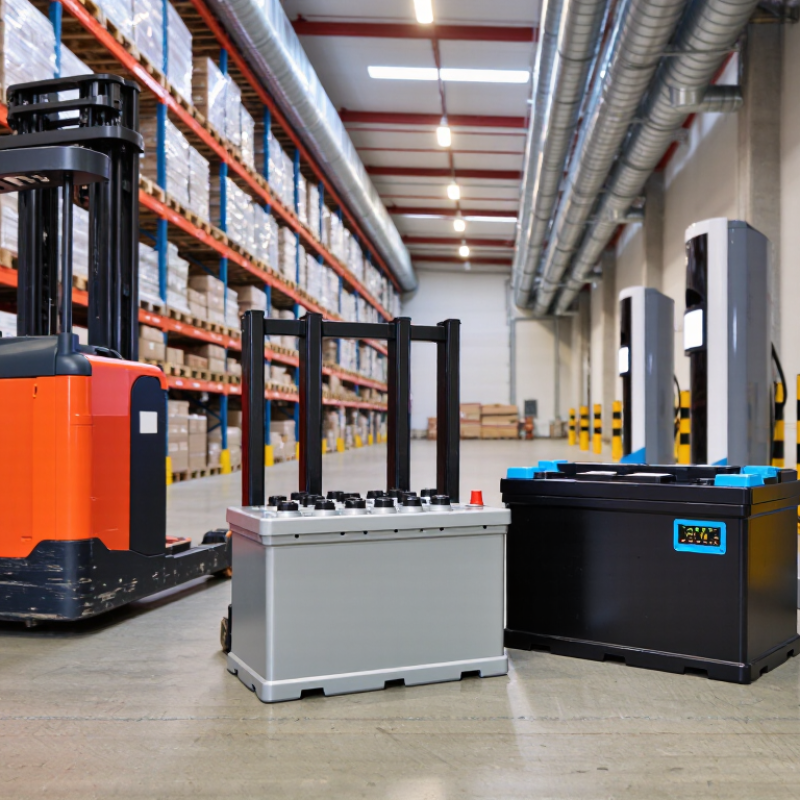
How to Choose the Right Electric Forklift Battery?

Electric Forklift Battery Types and Their Key Differences

Electric forklift batteries differ in chemistry, charging needs, working time, and maintenance. The common choice is a flooded lead-acid battery. It usually costs less initially and handles demanding warehouse work well. However, it needs regular watering, ventilation, and cleaning. Charging can also take several hours.

Lithium-ion batteries charge faster and support opportunity charging during short breaks. They usually require less maintenance and deliver steady power as the charge falls. Their higher purchase price may be difficult for smaller operations. Battery temperature, charger compatibility, and daily operating hours still require careful checking. I have seen simple comparisons fail because they ignored charging schedules.

Tips: Match the battery to your shift pattern. Measure daily energy use. Check the forklift manufacturer’s specifications. Keep charging areas clean and dry. Do not assume a larger battery is always better.

Absorbed glass mat batteries offer a sealed lead-acid option with fewer spill concerns. They can suit lighter applications, but they may cost more than flooded batteries and still charge slowly. Lead-acid batteries are often practical for single-shift operations with overnight charging. Lithium-ion can be more efficient for multi-shift fleets with limited downtime. The right decision depends on total operating cost, not only the purchase price. A basic energy audit can reveal surprising results. Consider labor, electricity, replacement timing, and charging space before choosing.

Assessing Voltage, Capacity, and Forklift Compatibility

Choosing the right electric forklift battery starts with voltage. Match the battery’s nominal voltage to the forklift’s electrical system. A 24-volt battery cannot safely replace a 48-volt unit. Check the equipment plate, service manual, and charger rating before ordering. A mismatch may cause poor lifting performance, overheating, or permanent electrical damage.

Capacity, measured in ampere-hours, should reflect the work pattern. A forklift moving pallets for eight hours needs more capacity than one used briefly in a warehouse. Consider travel distance, load weight, ramp use, and charging opportunities. Higher capacity can extend operating time, but it also adds weight, cost, and charging time.

In one warehouse assessment, a battery seemed adequate until frequent ramp work exposed its limited reserve. Real duty cycles matter.

Compatibility involves more than voltage and capacity. Confirm battery dimensions, connector type, polarity, mounting method, and weight requirements. The battery may act as a counterweight, so a lighter replacement can affect stability. Match the charger’s output profile and charging voltage as well.

I once focused too heavily on capacity and overlooked clearance around the battery compartment. The installation became unnecessarily difficult.

Measure the compartment carefully, including cable space and ventilation. Battery data sheets, forklift manuals, and qualified service technicians provide reliable checks before purchase.

Comparing Battery Chemistry, Runtime, and Charging Requirements

Choosing the right electric forklift battery starts with chemistry. According to the U.S. Department of Energy’s Energy Storage Handbook, lithium-ion systems typically achieve 90–95% round-trip efficiency. Lead-acid batteries often reach about 70–85%. That difference becomes visible on a long shift. Less energy is lost as heat. Lithium-ion also supports opportunity charging without a full cool-down period. Lead-acid technology remains practical where purchase cost matters more than charging speed.

Runtime depends on more than the battery’s rated capacity. A 40-kWh battery may last eight hours in light pallet movement, but far less during continuous lifting on ramps. The U.S. Department of Energy reports that temperature, load, and operating patterns can significantly affect battery performance. In my experience, cold storage exposes weak assumptions quickly. A battery gauge can still show 30%, while the truck struggles under a heavy load. That is easy to miss.

Charging requirements can change facility design. Lead-acid batteries need ventilated charging areas, watering routines, and scheduled equalization. Lithium-ion batteries require suitable chargers, thermal monitoring, and electrical capacity for rapid charging. The Electric Power Research Institute identifies charging infrastructure as a major factor in fleet electrification planning. Measure daily energy use, not just truck count. One overlooked detail remains shift overlap. A charging plan that works on paper may fail during lunch breaks, peak orders, or an unexpectedly extended shift.

Evaluating Battery Life, Maintenance, Safety, and Operating Conditions

How to Choose the Right Electric Forklift Battery?

Battery life depends on more than its rated capacity. Match the battery to the forklift’s daily workload, travel distance, load weight, and shift pattern. A battery that supports one shift may struggle during cold starts or continuous lifting. Record voltage, charging time, and runtime for several weeks. These records reveal real performance better than a brochure. Capacity loss also deserves attention. A battery may still charge fully but deliver less working time.

A battery that supports one shift may struggle during cold starts or continuous lifting.

Maintenance routines should be simple and consistent. Inspect cables, connectors, terminals, and the battery case for heat, damage, or corrosion. Keep charging areas clean, dry, and properly ventilated. Operators need clear training on charging procedures and warning signs. Safety comes first. For lead-acid batteries, control water levels and avoid contact with electrolyte. For lithium-ion batteries, monitor unusual heat, swelling, or fault messages. Follow the battery maker’s instructions and local safety requirements. I have found that rushed inspections often miss small warning signs. That mistake can become expensive.

Tips: Compare expected cycle life with your actual shifts. Check whether charging equipment matches the battery. Leave space for safe handling. Review performance during winter and summer. Do not judge a battery after one busy day. Conditions change.

Selecting the Best Battery for Your Budget and Material-Handling Needs

How to Choose the Right Electric Forklift Battery?

Battery selection should begin with your working pattern, not the lowest purchase price. A two-shift warehouse needs different support from a small workshop operating four hours daily. Record lift cycles, travel distance, load weight, charging time, and available floor space. The U.S. Department of Energy identifies battery-electric forklifts as producing zero tailpipe emissions, but charging still depends on the electricity source. That detail is easy to overlook.

Lead-acid batteries usually offer a lower upfront cost and familiar maintenance procedures. They need watering, cooling time, ventilation, and dedicated charging areas. Lithium-ion batteries cost more initially, but opportunity charging can reduce battery-change labor and spare-battery requirements. The International Energy Agency reported that average lithium-ion battery pack prices fell 14% in 2023. That figure covers broader vehicle markets, not forklift batteries. Use it carefully. Forklift pricing remains application-specific.

Budgeting must include electricity, labor, downtime, infrastructure, and battery replacement. A fleet with short breaks may waste hours waiting for lead-acid batteries to cool. A lithium-ion fleet may expose weaknesses in charger capacity or electrical planning. Measure before deciding. The calculation may be imperfect. It is still better than guessing. Ask suppliers for cycle-life data under your actual load profile, charging records, temperature range, and maintenance conditions. The best battery is the one that keeps materials moving without quietly creating a new operating problem.

How to Choose the Right Electric Forklift Battery? - Selecting the Best Battery for Your Budget and Material-Handling Needs

Battery Type Typical Energy Efficiency Typical Service Life Charging Characteristics Maintenance Requirements Operating Environment Typical Initial Cost Best Fit
Flooded Lead-Acid Medium
Established technology with moderate charging losses.
Approximately 1,200–1,500 full cycles when properly maintained. Typically 6–8 hours to charge; requires a cooling period before use. Opportunity charging is generally avoided. High: watering with distilled or deionized water, ventilation, cleaning, and electrolyte checks are required. Suitable for standard indoor operations with a dedicated charging area and battery-changing equipment. Low Budget-conscious, single-shift or predictable-duty operations where downtime can be scheduled.
Absorbent Glass Mat (AGM) Lead-Acid Medium
Sealed design reduces routine energy and service handling.
Approximately 800–1,200 full cycles, depending on depth of discharge and operating conditions. Typically 6–8 hours; charging should follow the battery manufacturer's specified profile. Low to medium: sealed construction eliminates routine watering, but charging controls and inspection remain important. Clean indoor applications where reduced electrolyte handling is valuable. Medium Facilities seeking a lower-maintenance alternative to flooded lead-acid without moving to lithium-ion.
Lithium-Ion High
High charge and discharge efficiency with low standby losses.
Approximately 2,000–4,000 full-equivalent cycles, depending on chemistry, temperature, and operating profile. Often 1–3 hours; supports opportunity charging during breaks when the battery-management system allows it. Low: no watering or electrolyte equalization; monitoring electronics and correct charging equipment are required. Well suited to multi-shift indoor operations; thermal management may be needed in very hot or cold conditions. High High-utilization fleets that need minimal downtime, consistent voltage, and reduced battery handling.
Lithium Iron Phosphate (LFP) High
Stable output and high round-trip efficiency.
Approximately 2,000–5,000 full-equivalent cycles, depending on design and duty cycle. Commonly 1–3 hours; frequent partial charging is generally practical with an approved charger. Low: sealed battery system with integrated battery-management protection; no routine watering. Strong choice for indoor warehouses and applications requiring frequent charging and high thermal stability. High Continuous or multi-shift material handling where long-term operating cost is more important than purchase price.
Nickel-Metal Hydride (NiMH) Medium
Reliable performance but generally less energy-efficient than modern lithium-ion systems.
Approximately 1,500–2,500 full cycles, depending on operating conditions and charging practice. Typically several hours; charger compatibility and heat management must be confirmed. Low to medium: generally sealed, but the charging system and battery condition require regular checks. Suitable for selected indoor and moderate-temperature applications. Medium to High Specialized operations that value sealed construction and established rechargeable-battery technology.

Selection note: Actual service life, charging time, energy efficiency, and total cost depend on forklift voltage and capacity, daily operating hours, depth of discharge, ambient temperature, charger compatibility, maintenance practices, and the number of shifts. Always size the battery and charger as a matched system for the specific forklift model and duty cycle.