China Top 10 Industrial Fan and Blower Manufacturers?
China has become a major manufacturing base for industrial ventilation equipment. Its factories supply fans and blowers for cement plants, power stations, warehouses, tunnels, and chemical facilities. This guide examines China Top 10 Industrial Fan and Blower Manufacturers through practical purchasing criteria, not marketing claims alone.
The review considers product range, airflow performance, pressure ratings, motor options, noise control, energy efficiency, and customization capability. It also examines factory experience, quality systems, testing procedures, export service, and after-sales support. A reliable manufacturer should provide clear technical drawings, performance curves, material details, and inspection records. These details matter when equipment operates continuously in dusty, humid, or high-temperature environments.
Real projects often reveal more than impressive catalogs. A fan may look suitable on paper but fail when system resistance changes. That risk deserves attention. Buyers should compare operating points, maintenance access, spare-part availability, and delivery consistency before selecting Industrial Fans And Blowers. Customer references can strengthen confidence, although their results may not match every application. Rankings also change with technology, certifications, production capacity, and regional service coverage. Therefore, this list should support further verification rather than replace it. Some manufacturers may excel in heavy-duty axial fans, while others focus on centrifugal blowers, explosion-resistant designs, or customized ventilation systems. The strongest choice depends on the working environment, budget, compliance needs, and long-term operating cost. Performance first. Claims require evidence.
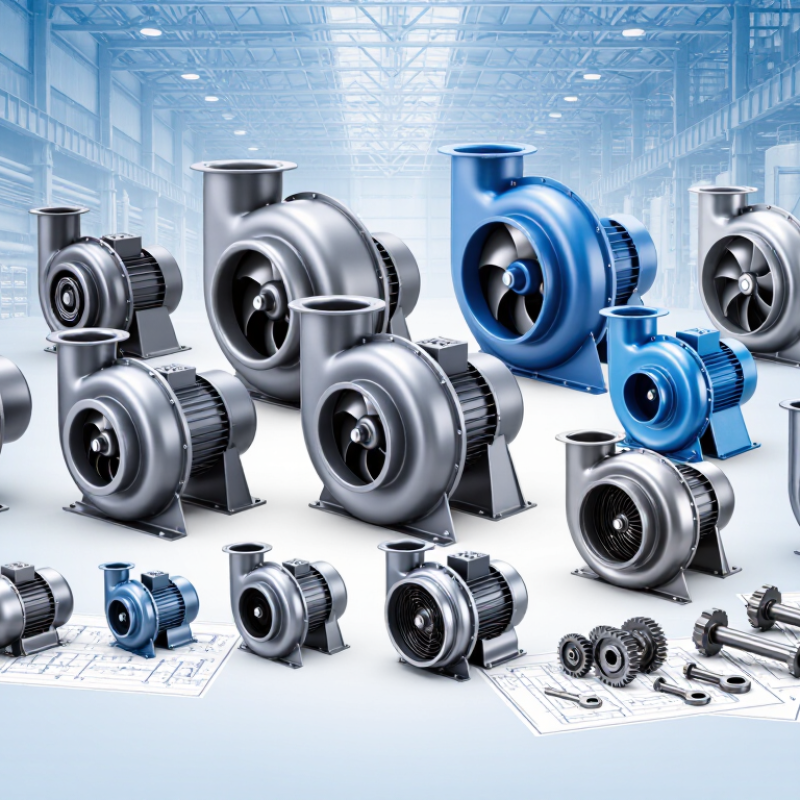
Industrial Fan Types: Airflow (m³/h), Pressure (Pa), and Efficiency (%)
Industrial fan selection starts with the air the system must move.
Axial fans push high volumes of air along a straight path, making them useful for ventilation. Centrifugal blowers turn airflow through an outlet and can handle greater resistance from ducts, filters, or process equipment.
Airflow is usually stated in cubic metres per hour (m³/h). A large number looks impressive, but it only matters if the fan delivers it at the required operating pressure.
Pressure, measured in pascals (Pa), describes the resistance a fan can overcome.
Check the specified airflow and pressure together; a catalogue’s free-air figure may fall sharply once ductwork is connected.
Efficiency (%) also needs context. Compare performance at the duty point, not just a headline rating, and consider motor input as well as delivered airflow.
Small design details matter. A dirty filter or tight bend can change real-world performance, sometimes more than expected.
Tips:
Ask manufacturers for a fan curve showing airflow against pressure, plus efficiency at your target point. Confirm whether figures use the same test conditions. Measure duct dimensions and note filter losses before comparing options. A quick estimate can help, but it is not a substitute for testing; even experienced teams sometimes miss installation effects.
China’s Top 10 Manufacturers: Products, Capacity, and Certification Data
A useful comparison of China’s ten leading industrial fan and blower manufacturers should start with product mix, not rankings alone. Typical ranges include axial fans for high-volume ventilation, centrifugal blowers for duct pressure, and units designed for dusty or hot process air. Buyers should compare airflow, static pressure, efficiency, noise, and materials at the same operating point. Small differences matter.
Capacity figures need careful reading. Annual output, installed production capacity, and current lead time are not interchangeable. Ask for the rated test conditions, production scope, and recent delivery records behind each figure. The U.S. Department of Energy’s 2014 motor-systems sourcebook estimates that motor-driven systems account for about 70% of U.S. manufacturing electricity use. That is not China-specific, but it explains why verified efficiency data deserves attention. A catalogue number alone is weak evidence.
Certification claims also need scope checks. ISO 9001 concerns quality management; it does not certify fan performance. Request current certificates and independent test reports, with performance measured using a recognized method such as ISO 5801. For export projects, confirm that product-specific conformity documents match the destination market. One gap remains: public rankings rarely disclose comparable factory utilization or audited output, so capacity claims can be difficult to verify.
Application Analysis: Steel, Cement, Power, Mining, and HVAC Industries
Industrial fans and blowers serve very different duties across steel, cement, power, mining, and HVAC facilities. In steel plants, high temperatures and airborne scale can quickly wear down poorly selected components. Cement lines bring abrasive dust, especially around kilns, mills, and material-transfer points. Dust changes everything. Buyers should check operating temperature, particle load, airflow, and pressure together rather than comparing capacity figures alone.
Power stations often need dependable draft and cooling airflow, with equipment matched to continuous operation and maintenance access. Mining ventilation has another priority: moving large volumes of air through long, resistant duct networks. In these settings, fan efficiency matters, but so do vibration levels, casing strength, and the availability of service support. A small design mismatch can raise energy use for years.
HVAC applications usually place greater emphasis on noise, controllability, and stable performance across changing loads. A manufacturer’s relevant experience should include documented duty conditions, materials, testing methods, and commissioning support. Catalog data helps, but it cannot fully predict a dusty site or an unusual duct layout. That matters. I may be simplifying complex plant conditions here; actual selection still depends on measured system resistance and site requirements. Comparing suppliers by application evidence, not broad claims, gives engineers a more useful shortlist.
China Top 10 Industrial Fan and Blower Manufacturers: Application Analysis
Representative process-air temperature envelopes across major industrial fan and blower application sectors.
Steel and cement applications typically require the highest-temperature fan systems because of furnaces, kilns, cooling lines, and material-processing equipment. Power-generation systems cover a broad range of temperatures, while mining and HVAC applications generally operate in lower-temperature air-handling environments. These are representative engineering ranges rather than company-specific or market-share data; actual conditions vary by process design.
Performance Comparison: Airflow, Pressure, Motor Power, Noise, and Warranty
Comparing ten industrial fan and blower manufacturers requires matching equipment to the same duty point.
Airflow figures matter only when read alongside static pressure. A unit rated for high volume may deliver less air through a long duct or restrictive filter. Check the fan curve at your required operating point, not just its maximum rating. Numbers can mislead.
Motor power affects energy use, but compare input power under load rather than relying on motor size alone. Ask for noise readings with a stated distance and test condition; a quiet-room figure may not reflect a factory floor. Warranty terms deserve equal attention. Confirm coverage length, included parts, and service response expectations in writing. A longer warranty is not automatically stronger if exclusions are broad.
For a fair comparison, request the same airflow, pressure, voltage, and noise test details from each supplier. Check the test. Small differences in measurement methods can distort a ranking. I would also leave room for uncertainty: installation, duct design, and maintenance change real-world performance. A spreadsheet helps, but it cannot replace reviewing the actual duty conditions.