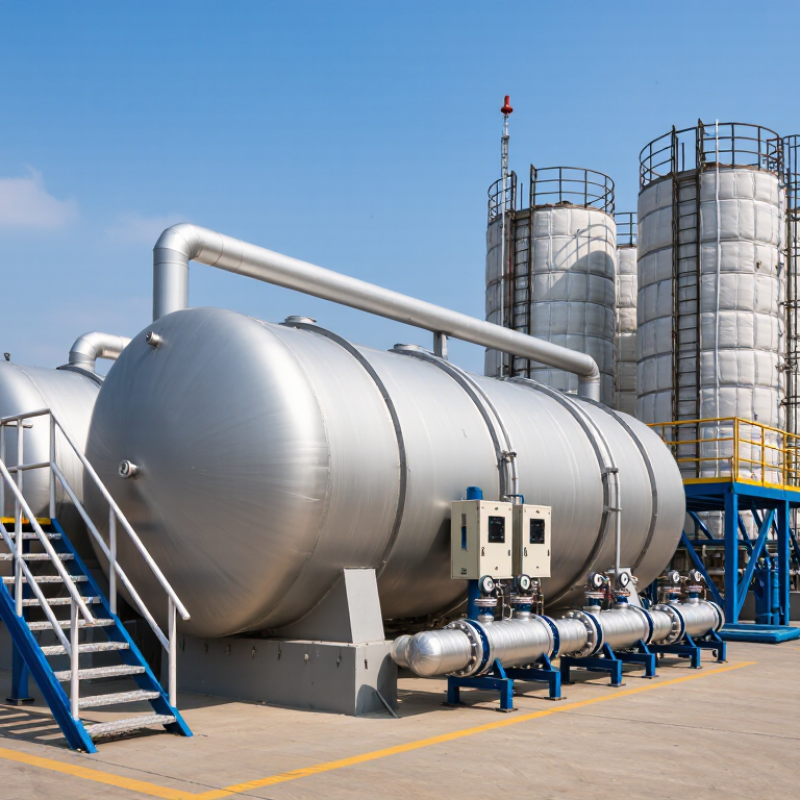
China Top Asphalt Tank Manufacturers for Global Buyers
China’s asphalt equipment sector is becoming increasingly important for global road contractors. Asphalt Tank manufacturers now compete on thermal stability, insulation, pumping accuracy, safety design, and delivery reliability. These details matter when bitumen travels long distances or remains heated overnight.
The National Asphalt Pavement Association’s annual industry surveys consistently show strong use of reclaimed asphalt pavement in the United States. This trend increases demand for controlled heating and dependable material handling. The International Energy Agency also identifies transport infrastructure efficiency as an important part of reducing energy use and emissions. An efficient Asphalt Tank can support that goal through better insulation, automated temperature control, and reduced heat loss.
Mike Acott, former President of the National Asphalt Pavement Association, said, “Asphalt pavement is America’s most recycled material.” His statement highlights a practical point. Tank performance affects more than storage. It influences material quality, fuel consumption, maintenance schedules, and project continuity.
Chinese manufacturers offer varied designs, including horizontal tanks, vertical tanks, mobile units, and electric or thermal-oil heating systems. Global buyers should examine weld quality, heating uniformity, insulation thickness, control-system accuracy, and after-sales support. Factory photographs are not enough. Request test records, component specifications, and operating references.
The market is not perfectly transparent. Some product claims need independent verification. That deserves attention. A low purchase price may hide higher fuel use, difficult cleaning, or delayed spare parts. Reliable suppliers should provide traceable documentation and realistic performance data. For international projects, the best Asphalt Tank is not simply the largest model. It is the model that maintains temperature steadily, travels safely, and performs consistently under local operating conditions.
Asphalt Tanks: Definition, Functions, and Main Applications
An asphalt tank is an insulated vessel designed to store and manage liquid asphalt. It maintains controlled heat, prevents premature hardening, and supports steady material discharge. Unlike ordinary steel storage tanks, it uses thermal insulation, heating coils, temperature sensors, and carefully sized outlets. That distinction matters. A tank may hold thousands of litres, but capacity alone does not determine performance. In field operations, poor insulation often causes cold spots, uneven flow, and unnecessary fuel use.
Its main function is temperature control. Many paving-grade asphalts require storage around 140–180°C, although the correct range depends on the material specification. Direct or indirect heating systems can raise temperature gradually and reduce local overheating. Pumps then transfer asphalt to mixing plants, road-construction equipment, or loading systems. Reliable level indicators, pressure controls, emergency shutoffs, and accessible maintenance points are essential details. Small design omissions can create expensive delays.
Asphalt tanks serve road contractors, asphalt mixing plants, infrastructure projects, waterproofing producers, and industrial maintenance teams. Horizontal tanks suit large fixed installations, while vertical or mobile designs may support limited sites and changing project locations. Global buyers should examine steel quality, insulation thickness, heating uniformity, corrosion protection, and documented testing. Certification documents help, but they do not replace a practical inspection. Real performance can still differ after installation, especially when local weather, fuel quality, and operator training are overlooked.
Types of Asphalt Tanks Manufactured in China
China’s asphalt tank manufacturers produce several configurations for road construction, terminals, and mixing plants. Horizontal storage tanks are widely used because they offer stable placement and convenient loading access. Their insulated steel shells help reduce heat loss during long storage periods. Many include thermal oil coils, electric heaters, temperature sensors, and level indicators. Tank geometry affects more than capacity.
Vertical tanks suit facilities with limited ground space and higher storage requirements. Their smaller footprint can simplify plant layout. Mobile asphalt tanks are mounted on trailers for paving projects that change location. They often include compact heating systems, safety valves, insulated pipelines, and reinforced support frames. Easy to relocate.
Manufacturers also build modified asphalt tanks with agitators and emulsion tanks with controlled mixing. These designs help reduce separation, but excessive agitation may affect some formulations. A suitable tank depends on viscosity, storage temperature, heating method, and delivery frequency. During supplier evaluation, global buyers should request material certificates, welding inspection records, insulation details, and factory test reports. I would also check nozzle positions and drain access, because drawings can hide maintenance problems. Reliable production requires pressure testing, accurate temperature control, and clear operating instructions. A specification may look complete and still miss the actual unloading conditions.
Key Criteria for Evaluating Chinese Asphalt Tank Manufacturers
China Top Asphalt Tank Manufacturers for Global Buyers
When evaluating Chinese asphalt tank manufacturers, inspect more than price and production photos. Request factory records, material certificates, welding procedures, and pressure-test reports. A reliable supplier should explain tank capacity, heating method, insulation thickness, discharge speed, and temperature-control accuracy in clear technical language. Ask for drawings before ordering. Small design details matter.
Experience becomes visible during a factory audit. Check storage areas, welding equipment, testing instruments, and finished-tank protection. Speak with engineers, not only sales staff. Review completed projects with similar climates, road conditions, and transport requirements. Photos help, but traceable project documents offer stronger evidence. Ask how the manufacturer handles spare parts, installation guidance, operator training, and service after delivery.
Compliance needs careful verification. Confirm applicable export requirements and request valid inspection documents from recognized testing bodies. Do not accept copied certificates without checking their scope and issue date. A polished brochure can still hide weak quality control. No supplier is perfect. Even experienced manufacturers may miss a detail, such as drain placement or insulation access. Raise these concerns early and record every agreed specification in the contract. That habit reduces disputes and shows whether the manufacturer values transparency over a quick sale.
Production Standards, Quality Control, and Customization Options
China Top Asphalt Tank Manufacturers for Global Buyers
Production standards separate a durable asphalt tank from a costly heating problem. NAPA reports that asphalt serves about 94% of paved roads in the United States. This demand requires dependable storage equipment. Qualified manufacturers should follow relevant pressure, welding, electrical, and insulation requirements. API 650 may guide atmospheric tank design, while ASTM specifications help verify asphalt properties. Factory inspections should include material certificates, weld inspection, leak testing, and thermal checks. Ask for inspection records, not only photographs.
Quality control must continue after fabrication. Technicians should check heating coils, insulation thickness, temperature sensors, pumps, valves, and control panels. A practical factory will simulate heating before shipment. It should record warm-up time and temperature stability. Customization can include 20–1000 cubic meter capacity, thermal-oil or electric heating, horizontal or vertical construction, external ladders, mixing systems, and local voltage requirements. Bigger is not always better. An oversized tank may increase heat loss and reduce operating flexibility. This detail is often overlooked.
Tips: Request a complete data sheet. Specify asphalt grade, target temperature, climate, power supply, loading method, and unloading speed. Confirm whether the quoted capacity is usable or total volume. Review drawings before production. Independent inspection adds confidence, although it also adds cost. Ask for spare sensor and valve recommendations. A supplier promising perfect performance without operating conditions deserves careful questioning. Cite NAPA survey data and applicable standards in your procurement file.
How Global Buyers Can Select and Import Asphalt Tanks from China
Selecting an asphalt tank from China requires more than comparing steel thickness and prices. Define capacity, asphalt grade, storage temperature, heating method, insulation, power supply, and discharge rate first. Typical hot asphalt storage operates around 150–180°C, but the correct range depends on the binder and local regulations. A specification can still be incomplete.
The International Energy Agency’s Oil 2024 report forecasts global oil demand growth through 2030, supporting continued infrastructure investment and asphalt handling needs. For import planning, the World Bank’s Logistics Performance Index 2023 ranks customs, infrastructure, and shipment reliability as key logistics factors. Ask suppliers for tank drawings, material certificates, welding procedures, heating-system calculations, and factory inspection records. Confirm whether the design follows recognized standards such as API 650, EN 14015, or applicable national codes. Do not assume one standard automatically satisfies your country’s requirements.
Review the landed cost, not only the quotation. Include inland transport, export packing, ocean freight, insurance, duties, installation, commissioning, and spare heating elements. Select the correct HS classification with a customs broker. Request a pre-shipment inspection and photograph hidden areas, especially insulation joints and heating coils. Small omissions become expensive at the port. A cheaper tank may have weak thermal control, poor drainage, or unsuitable electrical components. I would also require a clear warranty response time, because remote troubleshooting is slower than expected.
| Selection Dimension | Common Specification or Market Range | Recommended Buyer Checkpoints | Import Documentation or Evidence |
|---|---|---|---|
| Tank Type | Horizontal cylindrical storage tank, vertical atmospheric tank, mobile asphalt tank, heated bitumen tank, or containerized tank system. | Select the configuration according to storage volume, installation area, heating method, and transport frequency. | General arrangement drawing, equipment specification sheet, foundation loads, and installation drawings. |
| Nominal Capacity | Common project capacities include 20–60 m³ for small facilities, 60–200 m³ for medium plants, and larger multi-tank systems for terminals and refineries. | Confirm whether the quoted capacity is nominal, working, or usable capacity. Allow headspace for thermal expansion and safe operation. | Tank capacity certificate, dimensional drawing, calibrated volume chart, and inspection report. |
| Tank Material | Welded carbon steel is widely used for asphalt storage. Common material selections include Chinese pressure-vessel or structural grades equivalent to internationally accepted carbon-steel grades, subject to design approval. | Verify material grade, plate thickness, weldability, corrosion allowance, and compatibility with the stored asphalt and heating system. | Material certificates, mill test reports, welding procedure specifications, and weld traceability records. |
| Operating Temperature | Many paving asphalt applications are stored approximately at 140–180°C. Exact temperature depends on asphalt grade, viscosity, local regulations, and the supplier's technical instructions. | Do not use one temperature for every asphalt product. Confirm storage temperature, maximum allowable temperature, heating-up rate, and thermal expansion design. | Temperature design basis, operating manual, high-temperature alarm settings, and thermal calculation. |
| Heating Method | Thermal-oil coils, electric heating elements, hot-gas heating systems, or external heat exchangers. Thermal-oil systems are commonly selected for uniform indirect heating. | Check heat-transfer area, thermal-oil flow, heater capacity, insulation thickness, temperature control, and protection against localized overheating. | Heating-system schematic, heat-load calculation, pump and heater specifications, control-panel drawings, and factory test records. |
| Thermal Insulation | Mineral wool, rock wool, or other high-temperature insulation is commonly covered with galvanized steel or stainless-steel cladding. Typical insulation thickness is often around 50–100 mm, subject to climate and energy requirements. | Specify insulation material, thickness, weatherproofing, removable sections, and the maximum allowable external surface temperature. | Insulation specification, heat-loss calculation, cladding details, and surface-temperature test results when required. |
| Design Pressure | Most asphalt storage tanks are atmospheric or low-pressure tanks rather than high-pressure vessels. The exact design pressure and vacuum rating must be defined in the approved design. | Confirm venting capacity, emergency venting, vacuum protection, manway arrangement, and whether pressure-vessel regulations apply in the destination country. | Design calculation, vent sizing report, pressure or leak-test record, and applicable code compliance statement. |
| Applicable Standards | Possible design references include GB/T 150 for pressure vessels where applicable, API 650 or EN 14015 for relevant welded storage-tank designs, and local electrical and safety regulations. | Agree on one governing design code before production. Avoid accepting a general “international standard” statement without identifying the exact edition and scope. | Code compliance matrix, design-code declaration, third-party inspection report, and approved drawings. |
| Tank Fittings | Typical fittings include asphalt inlet and outlet, thermal-oil inlet and return, drain valve, manway, level gauge, temperature sensor, vent, overflow protection, and sampling connection. | Check connection sizes, flange standard, valve temperature rating, access height, maintenance clearance, and compatibility with the buyer's piping system. | Nozzle schedule, piping and instrumentation diagram, flange data, valve certificates, and accessory list. |
| Instrumentation | Common instruments include temperature transmitters, level indicators, high-temperature alarms, low-level protection, and automatic heating controls. | Specify signal type, control voltage, enclosure protection, alarm settings, sensor insertion length, and compatibility with the plant control system. | Instrument datasheets, wiring diagrams, calibration certificates, control logic description, and user manual. |
| Leak and Weld Inspection | Typical quality controls may include visual inspection, dimensional inspection, hydrostatic or leak testing where suitable, and non-destructive testing of selected welds. | Define the inspection percentage and acceptance criteria in the purchase contract. High-temperature tanks should also be checked for distortion and insulation damage. | Inspection and test plan, weld inspection reports, NDT records, pressure or leak-test certificate, and final inspection checklist. |
| Surface Treatment | External surfaces are commonly prepared by abrasive blasting or mechanical cleaning and protected with high-temperature primer and topcoat. Internal coating is not automatically suitable for hot asphalt service. | Confirm surface-preparation grade, coating system, dry-film thickness, color, repair procedure, and whether any internal lining is technically required. | Paint data sheet, coating inspection report, dry-film-thickness record, and surface-preparation report. |
| Electrical Requirements | Industrial heating and control systems may use different voltage, frequency, hazardous-area classifications, and cable-entry requirements depending on the destination country. | Provide the destination electrical standard, supply voltage, frequency, control-panel requirements, grounding method, and hazardous-area classification before quotation. | Electrical schematic, component list, conformity declaration, grounding diagram, and factory acceptance test report. |
| Transport Configuration | Factory-assembled tanks may be shipped as complete units, while larger tanks may be shipped in sections or as a site-assembled package. Transport feasibility depends on length, diameter, weight, and port restrictions. | Request packed dimensions, gross weight, lifting points, center of gravity, container suitability, and site-assembly requirements. | Packing list, lifting drawing, cargo dimensions, gross and net weights, loading photographs, and shipping marks. |
| Shipping and Incoterms | Common commercial terms include EXW, FOB, CFR, and CIF. Oversized tanks may require breakbulk, flat-rack, or project-cargo transport rather than standard container shipping. | Compare total landed cost, including inland transport, ocean freight, insurance, customs clearance, unloading, foundation work, and installation. | Commercial invoice, packing list, bill of lading, certificate of origin, insurance document when applicable, and export declaration. |
| Supplier Evaluation | Relevant evaluation factors include similar-project experience, engineering capability, welding qualifications, production capacity, inspection control, export experience, and after-sales support. | Use a technical questionnaire and score suppliers against identical criteria. Request anonymized project references if company disclosure is restricted. | Quality certificates, welding qualifications, production photographs, sample inspection records, project schedule, and warranty terms. |
| Recommended Contract Terms | Key terms normally cover approved drawings, material grades, design code, inspection plan, delivery schedule, payment milestones, spare parts, warranty, and delay remedies. | Link the production start and final payment to drawing approval, inspection completion, documentation submission, and satisfactory factory acceptance testing. | Technical annex, approved drawing register, inspection and test plan, warranty certificate, spare-parts list, and operation manual. |