
• Parts
  • Services
  • OEM Equipment &
    Engineered Systems
  • EPC &
    Turnkey
  • Industries
    Served

China Best Cable Lug Manufacturer for Global Buyers?

Choosing the best Cable Lug manufacturer in China requires more than comparing unit prices. Global buyers need evidence of stable materials, controlled production, and dependable technical support. A polished copper lug may look excellent under warehouse lighting. Its real value appears after crimping, vibration, heat, and years of current flow.

Dr. Werner Fischer, an electrical-connection specialist, states, “A cable lug is only as dependable as its crimp, material, and traceable test record.” This practical view matters when evaluating Chinese suppliers. Buyers should examine copper purity, tin-plating thickness, barrel dimensions, and mold consistency. They should also request test reports, batch records, and clear crimping instructions. Small details can prevent expensive failures.

Certification matters too. Reliable manufacturers usually work against recognized requirements, such as IEC 61238-1 or UL 486A-486B, when applicable to the product and market. However, a certificate alone proves little without current factory records. An on-site audit, sample inspection, and pull-out testing can reveal uncomfortable truths. Sometimes, the lowest quotation hides weaker plating or inconsistent wall thickness. That possibility deserves attention.

Experience counts.

A capable China-based supplier should explain conductor sizes, die selection, installation tools, and regional compliance needs without vague promises. They should communicate openly about tolerances and limitations. Global buyers may also review export packaging, labeling, lead times, and after-sales responses. The best partnership is not always the cheapest one. It is the one that remains technically honest when specifications become difficult. This guide examines how buyers can identify that level of quality and reliability.
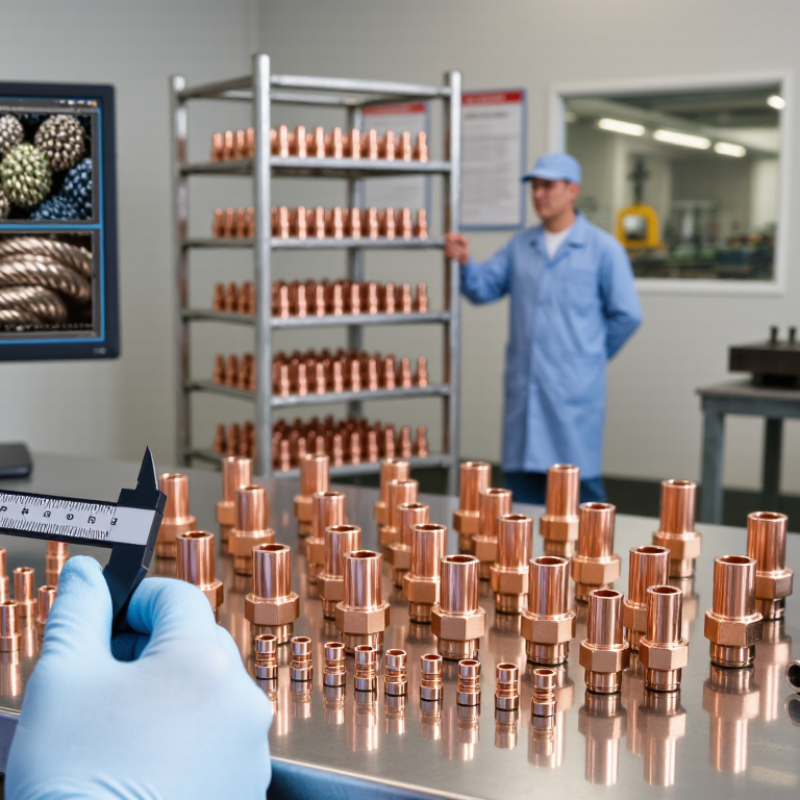
China Best Cable Lug Manufacturer for Global Buyers?

What Defines a Reliable Cable Lug Manufacturer for Global Buyers?

China Best Cable Lug Manufacturer for Global Buyers?

What Defines a Reliable Cable Lug Manufacturer for Global Buyers?

A reliable cable lug manufacturer shows its process, not only its product catalog. Buyers should inspect material records, tooling controls, and batch traceability. Copper lugs need stable conductivity and accurate dimensions. Aluminum versions require suitable surface treatment and clear application guidance. Small differences matter.

Ask for samples from normal production batches. Check barrel dimensions, palm thickness, hole accuracy, and crimp performance. A capable factory can provide inspection reports with measurable results. Useful tests may include tensile pull testing, electrical resistance checks, and salt spray evaluation. The testing method should be explained clearly. Vague claims deserve questions.

Production experience also appears in communication. Engineers should discuss conductor size, crimping tools, installation temperature, and packaging conditions. Export cartons need protection from moisture, impact, and mixed specifications. Batch labels should remain readable after transport. A polished brochure is not proof.

No factory is flawless. A missing measurement or delayed corrective action can reveal weak systems. Reliable manufacturers admit such gaps and document improvements. Buyers should review sample consistency, response speed, and after-sales handling before placing large orders. This practical evidence is often more valuable than a low quotation.

Cable Lug Types, Materials, Standards, and Manufacturing Capabilities

China Best Cable Lug Manufacturer for Global Buyers?

Cable Lug Types, Materials, Standards, and Manufacturing Capabilities

Selecting a cable lug manufacturer requires more than comparing unit prices. In practical panel and power-cable projects, ring, fork, pin, and butt lugs serve different installation needs. Copper lugs provide strong conductivity. Aluminum lugs reduce weight and cost. Tinned copper improves resistance against oxidation and humid environments. Bimetallic lugs help connect copper cables to aluminum terminals safely.

A capable Chinese manufacturer should control the full process. This may include tube forming, stamping, annealing, surface plating, insulation molding, and custom tooling. Buyers should request material certificates, dimensional reports, crimp samples, and traceable batch records.

Small details matter. A loose barrel can create heat after repeated loading. Poor plating may appear acceptable but fail in salt air. These problems are not always visible during a quick inspection.

Standards must match the destination market and application. Common references include IEC 61238-1, UL 486A-486B, and DIN 46235. Requirements may cover mechanical strength, electrical resistance, temperature rise, and crimp performance.

Factory testing should use calibrated equipment and documented procedures. Production samples deserve independent verification when the installation carries high current.

No supplier is perfect. Even experienced teams can miss a drawing revision or packaging weakness. Clear communication, engineering review, and corrective action records make manufacturing more reliable for global buyers.

How to Evaluate Cable Lug Quality, Safety, and Product Certification

China Best Cable Lug Manufacturer for Global Buyers?

Evaluating cable lug quality starts with the metal, not the catalogue photo. Check copper purity, wall thickness, surface finish, and dimensional consistency across samples. A reliable lug should accept the specified cable size without forcing or excessive looseness. During inspection, I examine crimp marks, burrs, and plating coverage around the barrel and palm. These small details often reveal weak production control. A smooth surface can still hide poor conductivity, though.

Safety requires more than a certificate. Ask for current test reports covering electrical resistance, temperature rise, mechanical pull-out strength, and corrosion performance. Verify the testing laboratory, report number, tested model, and applicable standard. Certification must match the exact product family, material, and manufacturing site. Documents with vague descriptions deserve careful questioning. I have seen impressive paperwork that explained little about actual batch control.

Tips: Request production samples before placing a large order. Compare sample dimensions with approved drawings. Check lot traceability, inspection records, and packaging protection against moisture. Confirm whether the manufacturer controls crimping guidance and installation instructions. Do not judge quality from plating shine alone. It is easy to overfocus on appearance. A practical factory audit, even a limited one, may expose process gaps that documents miss. Recheck certificates before each major purchase.

Global Supply, Customization, Pricing, and Export Service Considerations

China Best Cable Lug Manufacturer for Global Buyers?

Global Supply, Customization, Pricing, and Export Service Considerations

Selecting a cable lug supplier requires more than comparing catalog prices. In practical sourcing, buyers should verify copper purity, tin plating, barrel dimensions, and crimp performance. Request recent inspection records and sample test results. Small details matter.

A reliable manufacturer should support international orders with stable production capacity and clear export procedures. Confirm the loading port, carton protection, moisture control, and document preparation before placing an order. Commercial invoices, packing lists, certificates of origin, and test reports should match the shipment. Delays often begin with one incorrect item code.

Customization may include hole diameter, palm shape, plating thickness, insulation color, and private packaging. Send a technical drawing, cable range, material requirement, and target standard. IEC or other recognized specifications can guide acceptance, but local installation rules still require review. Not every requested shape is practical. Some designs increase tooling costs or weaken the connection.

Pricing depends on copper market changes, order quantity, mold fees, plating, packaging, and inspection depth. A low quotation can hide thin material or limited testing. Ask for a complete cost breakdown. Compare delivered cost, not only unit price. Payment terms, lead time, warranty handling, and replacement procedures also affect real value.

Export service should remain responsive after dispatch. Buyers need tracking updates and fast answers when cartons arrive damaged. Communication is sometimes imperfect, especially across time zones. Written specifications reduce misunderstandings. A factory that admits production limits may be more dependable than one promising everything.

Global buyers typically evaluate cable lug suppliers across technical compliance, customization capability, supply reliability, total cost, and export support. The percentages shown are an indicative procurement planning model based on commonly used industrial sourcing criteria, not company-specific or brand-specific market data.

Key Criteria for Selecting the Best Cable Lug Manufacturer Internationally

Choosing the Best Cable Lug Manufacturer for Global Buyers

Selecting an international cable lug manufacturer requires more than comparing unit prices.

Grand View Research estimated the global cable accessories market at USD 49.72 billion in 2023. This growth increases supplier choices, but also increases quality risks.

Experienced buyers should verify copper purity, tin-plating thickness, barrel dimensions, and crimp compatibility. Ask for batch-level inspection records. A polished sample means little without traceability.

Compliance should be measurable. Cable lugs intended for power connections should align with relevant IEC 61238-1 requirements or equivalent national standards.

Request independent test reports covering electrical resistance, temperature cycling, short-circuit performance, and corrosion exposure. ISO 9001 certification supports process control, but it does not replace product testing.

That distinction matters. A reliable factory should explain its sampling plan, calibration schedule, and corrective-action process in clear English.

Production capability also deserves close inspection. Confirm whether the manufacturer controls stamping, annealing, plating, and final inspection internally.

Review lead times using real purchase records, not optimistic quotations. Check packaging details: sealed bags, visible batch codes, and moisture protection reduce warehouse damage.

I have seen low-cost lugs fail because the barrel wall was inconsistent.

Still, no checklist is perfect. Buyers should test samples with their actual conductor types, crimp dies, and installation conditions before approving regular orders.