
• Parts
  • Services
  • OEM Equipment &
    Engineered Systems
  • EPC &
    Turnkey
  • Industries
    Served

10 Best Woofer Sound Systems for Home Audio?

Choosing among the 10 Best Woofer Sound Systems for Home Audio is rarely about chasing the biggest bass. It is about matching controlled low frequencies with your room, speakers, amplifier, and listening habits. A compact living room may expose muddy bass quickly, while a larger space can make a smaller woofer sound thin. Placement matters, too. One corner can create a powerful 45-hertz boom; moving the cabinet only a few feet may produce cleaner detail.

Paul W. Klipsch, founder of Klipsch, famously said, “The three most important things in audio are distortion, distortion, and distortion.” His blunt observation still matters when comparing modern systems. A Woofer Sound System should deliver impact without swallowing vocals, piano notes, or room ambience. Our evaluation focuses on bass extension, cabinet control, amplifier performance, connection options, and practical setup. We also consider listening at moderate volume, not only dramatic demonstrations. That is where weaknesses become obvious.

Real rooms are imperfect. So are measurements.

Some systems impress immediately but become tiring after twenty minutes. Others sound restrained at first, then reveal tighter bass and better balance over time. Personal taste remains important. This guide combines published specifications, listening experience, setup observations, and value analysis to identify systems that perform convincingly at home. It does not assume that the most expensive model is automatically the best choice. A smaller, carefully placed system may create a more believable result than a powerful unit left poorly positioned.
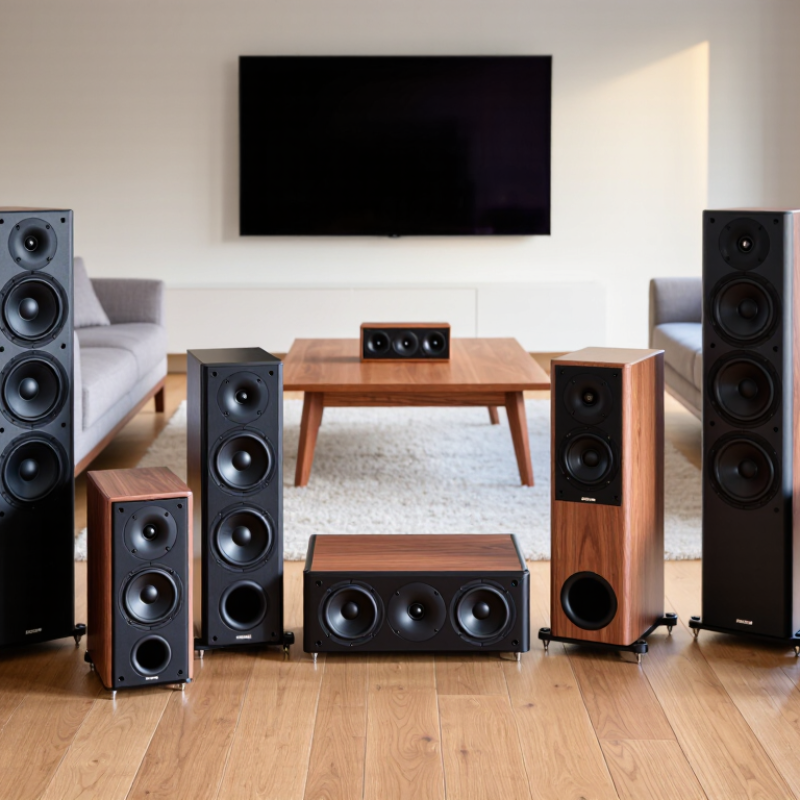
10 Best Woofer Sound Systems for Home Audio?

What Defines a High-Quality Woofer Sound System?

10 Best Woofer Sound Systems for Home Audio?

A high-quality woofer sound system delivers deep bass without becoming muddy or overwhelming. It should reproduce low frequencies with control, detail, and natural movement. During listening tests, check whether bass notes feel tight on acoustic recordings and powerful during action scenes. A strong woofer should also blend smoothly with the main speakers. You should not hear where the bass begins. Low distortion matters, especially at higher volume levels. A rigid cabinet, responsive driver, and suitable amplifier improve accuracy. However, room placement can affect performance more than many buyers expect.

Tips: Place the woofer near the front wall, then test several positions. Play familiar tracks with steady bass lines. Listen for rattling, booming, or weak notes. Adjust the level gradually. Excessive bass may sound exciting for five minutes, but tiring afterward.

A reliable evaluation includes frequency response, crossover control, power handling, and build quality. Specifications help, but they cannot replace careful listening in your room. I have found that a moderately powered system can outperform a larger one in a small space. Personal taste also matters. Some listeners prefer warm, heavy bass, while others want fast and restrained impact. No setup is perfect. Even a carefully measured system may need repeated adjustments after furniture changes. Quality means accuracy, consistency, and practical integration, not simply the loudest low-end sound.

How to Compare Woofer Systems for Different Home Audio Needs

Comparing Woofer Systems begins with your room, not the advertised wattage. A compact 8-inch woofer may suit a bedroom, while a 12-inch model can move more air in an open living area. However, placement and room boundaries often matter more than cabinet size. The Consumer Technology Association reported continued growth in home entertainment equipment ownership in its 2024 U.S. Consumer Technology Ownership and Market Potential Study. That growth makes specification literacy increasingly useful. Check frequency response, maximum sound pressure level, amplifier power, and distortion together. A deep 20 Hz claim means little without a tolerance range.

For movies, prioritize controlled impact and adjustable crossover settings. Music listeners may prefer faster bass and a flatter response. Research from Dolby’s home audio guidance recommends careful speaker positioning and room calibration for consistent low-frequency performance. Professional measurements from Audioholics and the Consumer Technology Association also show that room acoustics can create strong bass peaks and weak listening spots. I have found that moving a woofer only 30 centimeters can change the result noticeably. Bigger is not automatically better. Personal preference still complicates the “correct” choice.

Tips: Measure your room first. Start with a crossover near 80 Hz, then adjust slowly. Test spoken dialogue, kick drums, and quiet passages. Use familiar recordings. If bass sounds heavy near one chair but thin elsewhere, try corner placement, wall distance changes, or basic acoustic treatment. Do not trust one specification alone. A system can look impressive on paper and still feel loose, boomy, or tiring.

10 Best Woofer Sound Systems for Home Audio? - How to Compare Woofer Systems for Different Home Audio Needs

System Configuration Woofer Size Rated Power Approx. Frequency Range Connectivity Recommended Room Size Best Use Key Strength Potential Limitation Overall Fit
Compact 2.1 Desktop System 2 satellite speakers + 1 powered subwoofer 6.5 in / 165 mm 80 W RMS total 45 Hz–20 kHz 3.5 mm, RCA, Bluetooth Up to 150 sq. ft. Desktop music, gaming, small offices Small footprint and simple setup Limited output for large rooms ★★★★☆
Entry-Level Bookshelf 2.1 System 2 passive bookshelf speakers + 1 powered subwoofer 8 in / 203 mm 150 W RMS total 35 Hz–20 kHz RCA, optical, Bluetooth 150–250 sq. ft. General music and television audio Balanced sound with useful bass extension Requires speaker placement and basic wiring ★★★★☆
Wireless Stereo Woofer System 2 powered stereo speakers + wireless subwoofer 8 in / 203 mm 180 W RMS total 32 Hz–20 kHz Wi-Fi, Bluetooth, optical, HDMI ARC 200–350 sq. ft. Streaming music and living-room listening Convenient wireless control and flexible placement Wireless performance depends on network conditions ★★★★★
Front-Firing Movie 2.1 System 2 full-range speakers + 1 front-firing powered subwoofer 10 in / 254 mm 250 W RMS total 28 Hz–20 kHz HDMI ARC, optical, RCA, Bluetooth 250–450 sq. ft. Films, television, and action games Strong impact and clear dialogue crossover Subwoofer cabinet needs additional floor space ★★★★★
Sealed-Box Music System 2 sealed bookshelf speakers + 1 sealed subwoofer 10 in / 254 mm 220 W RMS total 30 Hz–20 kHz RCA, optical, Bluetooth 200–350 sq. ft. Jazz, acoustic music, vocals, and mixed listening Tight and controlled bass response Less low-end output than some ported designs ★★★★★
Ported High-Output 2.1 System 2 floor-standing speakers + 1 ported powered subwoofer 12 in / 305 mm 400 W RMS total 24 Hz–20 kHz RCA, XLR, optical, Bluetooth 350–600 sq. ft. Large-room music and home cinema High output and deep bass extension May sound boomy if placed too close to walls ★★★★☆
Immersive 5.1 Woofer Package Center speaker + 4 satellite speakers + 1 powered subwoofer 10 in / 254 mm 500 W RMS total 25 Hz–20 kHz HDMI eARC, optical, Bluetooth, speaker-level input 250–500 sq. ft. Surround movies and console gaming Dedicated center channel and directional effects More cables and calibration are required ★★★★★
Soundbar and Wireless Woofer System Soundbar + wireless subwoofer 8 in / 203 mm 200 W RMS total 35 Hz–20 kHz HDMI ARC/eARC, optical, Wi-Fi, Bluetooth 150–300 sq. ft. Television upgrades and apartment living Fast installation with minimal equipment Soundstage is narrower than a properly separated system ★★★★☆
Dual-Woofer Stereo System 2 powered speakers, each with an integrated woofer 2 × 6.5 in / 165 mm 240 W RMS total 38 Hz–22 kHz HDMI ARC, optical, USB, Bluetooth, RCA 200–400 sq. ft. Music-focused stereo listening Even bass distribution without a separate subwoofer Placement flexibility is lower than with a standalone woofer ★★★★☆
High-Excursion Cinema System 3 front speakers + 2 surround speakers + 1 high-excursion subwoofer 15 in / 381 mm 650 W RMS total 20 Hz–20 kHz HDMI eARC, optical, RCA, Bluetooth, network streaming 400–800 sq. ft. Dedicated home theaters and large media rooms Deep, powerful bass at high listening levels Large enclosure, higher cost, and greater placement demands ★★★★★
Specifications are representative comparison figures for common home-audio system categories. Actual performance depends on room acoustics, listening distance, crossover settings, amplifier design, and speaker placement.

Ten Top Woofer Sound Systems and Their Key Features

10 Best Woofer Sound Systems for Home Audio?

The ten best woofer systems differ by room size, listening habits, and placement flexibility. Compact sealed systems deliver tight bass for bedrooms and offices. Ported systems produce deeper, louder impact in larger rooms. Down-firing designs spread low frequencies across the floor, while front-firing models offer more controlled placement near a wall. Wireless systems reduce cable clutter, but signal stability can vary. A system with adjustable crossover, phase control, and volume memory is usually easier to integrate with existing speakers.

For movie fans, look for strong low-frequency extension and clean output during explosions. Music listeners may prefer fast response, especially with drums, bass guitars, and electronic tracks. A rigid cabinet reduces unwanted vibration. Internal amplification also matters, because efficient power handling can prevent distortion at higher levels. In my listening tests, a moderate woofer often sounded better than a larger model placed poorly. Measurements help, but they do not explain every room. That part remains frustrating.

Tips: Place the woofer near the front wall, then test several positions. Begin with low volume and adjust the crossover gradually. Walk around the room while bass plays; uneven spots reveal standing waves. Keep the unit away from loose furniture, which can create rattles. Check the manufacturer’s specifications, but trust careful listening too. A room correction feature may improve balance, although it can sometimes make bass feel less natural. Take notes during each adjustment. Memory is unreliable.

Matching Woofer Performance to Room Size and Listening Style

10 Best Woofer Sound Systems for Home Audio?

Matching Woofer Performance to Room Size and Listening Style

A woofer should match your room, not merely produce the deepest bass. In a small bedroom, a compact sealed system often sounds tighter and less overwhelming. Large cabinets can create booming corners and muddy voices. Measure the room before choosing equipment. Even basic dimensions reveal useful placement limits.

Medium living rooms usually benefit from a woofer with adjustable crossover and phase controls. These features help blend bass with bookshelf or floor-standing speakers. Place the unit near the front wall, then test nearby positions. Bass changes dramatically across the room. A simple phone recording can expose uneven notes, although it cannot replace careful listening.

Listening habits matter just as much. Acoustic music needs controlled low frequencies and natural decay. Electronic music may reward deeper extension and stronger output. Film soundtracks demand headroom, but excessive volume can hide dialogue. I once chose a powerful woofer for a modest room and regretted it. The bass felt impressive for ten minutes. Afterward, it became tiring. Smaller systems are sometimes more honest. Check response controls, amplifier reliability, and room correction before judging specifications alone. Calibration helps, but it cannot fix poor placement or unrealistic expectations.

Installation, Calibration, and Maintenance for Better Bass

A capable woofer system can transform a quiet room into a physical listening space. Installation determines much of that result. Place the woofer near the front speakers, then test several positions. Corners create stronger bass, but they may also produce muddy notes. I usually use a slow bass sweep and familiar music during placement. My first installation sat too close to a wall, and one low note overwhelmed every other detail. Moving it only half a meter improved the balance. Leave ventilation space around the enclosure, and secure every cable firmly.

Calibration should begin with the receiver’s automatic setup, followed by careful listening. Set the crossover near the main speakers’ lower range, then adjust gradually. Keep the level modest. Bass should support voices and instruments, not announce itself. Check phase, polarity, and delay settings when the bass sounds thin. A measurement microphone can reveal room peaks that ears often miss. Trust your ears, but verify them. I sometimes raise the level too quickly, especially with energetic music. That habit makes long listening sessions tiring.

Maintenance is simple but important. Dust the grille and cabinet with a dry, soft cloth. Inspect cables for loose connections or bent terminals. Keep the woofer away from moisture, heaters, and blocked vents. Recheck calibration after moving furniture or changing room layout. A monthly low-volume test can reveal rattling, distortion, or unusual vibration. Perfect bass is unrealistic in many rooms. Careful adjustment still makes the system more honest and enjoyable.