
• Parts
  • Services
  • OEM Equipment &
    Engineered Systems
  • EPC &
    Turnkey
  • Industries
    Served

China Best Cereal Bars Making Machines for Sale?

Demand for convenient breakfasts and portable snacks is reshaping cereal-bar production. Grand View Research estimated the global cereal bar market at about US$15.4 billion in 2023 and projected continued growth through 2030. Market estimates vary by product definition, so buyers should treat forecasts as direction—not a guarantee of machine utilization.

That outlook puts Cereal Bars Making Machines in focus for manufacturers planning new lines or replacing manual steps. A practical line may include mixing, slab forming, cooling, cutting, and wrapping. Picture a warm oat-and-honey sheet moving beneath a calibrated roller, then cooling before a sharp blade portions it. Small changes in moisture or ingredient size can affect texture and cutting accuracy. Details matter.

Equipment selection also depends on the product range. Nut-rich bars, crisped-rice bars, and soft fruit bars can require different forming pressure, temperature control, and cleaning routines. PMMI’s industry reporting on automation and packaging highlights manufacturers’ interest in efficiency and workforce support, but automation alone cannot fix an inconsistent recipe. It can even make waste faster. Buyers should compare output rates under stated product conditions, changeover time, food-contact materials, and after-sales support. Request a trial with your own ingredients. A polished brochure is not production evidence. This guide examines what to check when evaluating China-made cereal bar equipment, while recognizing that published market figures cannot predict the results of any single factory.
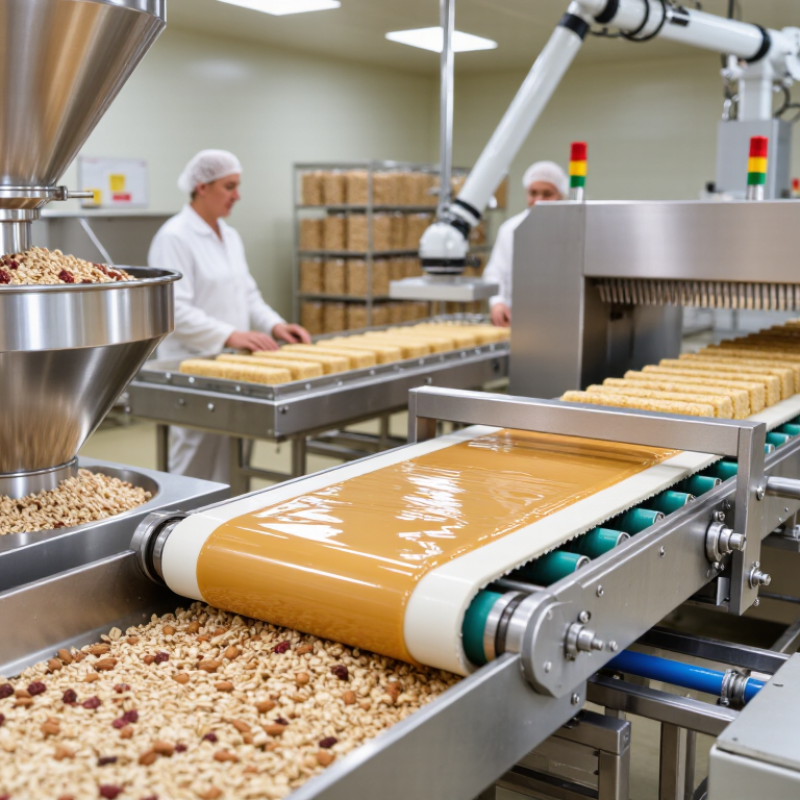
China Best Cereal Bars Making Machines for Sale?

What Are Cereal Bar Making Machines?

Cereal bar making machines are integrated food-processing systems that turn measured ingredients into uniform bars. A typical line includes dry-ingredient dosing, syrup cooking, mixing, slab forming, cooling, cutting, and packaging. Oats, nuts, seeds, and dried fruit meet heated binders in a mixer. The mixture is then pressed into a continuous sheet, cooled until firm, and cut to size. Small process changes matter. A slightly warmer syrup can make bars sticky, while excess pressure may create hard edges. Operators therefore monitor temperature, thickness, belt speed, and cutter alignment during production.

Equipment selection depends on recipe, output target, and bar shape—not simply machine speed. The Grand View Research Cereal Bars Market report estimated the global market at about US$11.4 billion in 2023 and projected growth through 2030. That market figure is not a machine-performance measure, but it signals why flexible production lines attract attention. Buyers should check whether a system handles inclusions without crushing them, allows quick cleaning, and maintains consistent portion weights. Ask for a trial using the actual recipe. Real ingredients behave differently. A line may perform well with plain oat mixtures yet struggle when sticky fruit pieces interrupt feeding; that limitation is easy to overlook in a brochure.

Cereal Bar Making Machines: Typical Process Temperature Ranges

Cereal bar production lines commonly combine syrup cooking, ingredient mixing, forming, cooling, and packaging equipment. The chart shows indicative temperature ranges for selected stages; actual settings depend on the recipe, equipment, and product requirements.

How Do Cereal Bar Making Machines Work?

How Do Cereal Bar Making Machines Work?

Cereal bar making machines turn measured ingredients into evenly shaped bars through a series of controlled steps. Operators typically feed oats, crisped grains, dried fruit, or seeds into a mixer. A heated binder, such as syrup, coats the dry ingredients and helps them hold together. The mixture should look evenly coated, not wet or pooled. Small differences in moisture can affect the finished texture.

The mixture then moves onto a forming belt, where rollers press it into a sheet of consistent thickness. Some lines use a cooling section to firm the sheet before rotary knives cut it into individual bars. A longer cooling tunnel may help bars keep their shape during wrapping. Depending on the recipe, equipment can also include an enrobing unit for a chocolate coating. Settings need adjustment when ingredients change; fruit pieces, for example, may compress differently from oats. It is easy to assume automation removes all variation. It does not. Operators still need to check dimensions, weight, and texture during production, since even a well-tuned line can produce brittle edges or uneven cuts.

What Types of Cereal Bar Making Machines Are Available in China?

China Best Cereal Bars Making Machines for Sale?

What Types of Cereal Bar Making Machines Are Available in China?

Cereal bar machines in China range from compact batch systems to continuous production lines. Batch mixers suit small runs and frequent recipe changes. Operators blend oats, puffed rice, syrup, and inclusions in a heated mixing bowl, then shape the mixture by hand or with a forming unit. Continuous lines handle higher output. They typically combine mixing, slab forming, cooling, and cutting in a linked process. Some systems add a chocolate enrober or a wrapping machine. More equipment means more coordination.

A slab-forming line presses the mixture into an even sheet before cutting it into bars. Extrusion machines shape softer or denser mixes through a die. These options behave differently with sticky syrups, nuts, and dried fruit. A line that runs smoothly with oats may struggle when the recipe changes. That detail is easy to underestimate. Buyers should compare usable output, changeover time, cleaning access, and the range of bar sizes—not just the advertised speed.

Tips: Ask for a product trial using your actual recipe. Check whether the machine controls slab thickness and cutting weight consistently. Request clear details on food-contact materials, operator training, spare parts, and installation support. A short test can reveal sticking or uneven edges. It may not reveal every problem, though, so leave room in the budget for adjustments.

China Best Cereal Bars Making Machines for Sale? - What Types of Cereal Bar Making Machines Are Available in China?
Machine Type Main Function Typical Products Key Considerations
Batch Mixer and Cooker Mixes cereal ingredients with a binder, such as syrup, and may heat the mixture to support blending and binding. Granola bars, nut bars, and cereal bars made from cooked or warmed mixtures. Check batch capacity, heating and mixing controls, and whether the equipment suits the recipe and required production volume.
Continuous Mixer Feeds and blends ingredients in a continuous process for production lines with steady material flow. High-volume cereal and granola bar mixtures. Works best when ingredient supply and downstream forming equipment are designed for continuous operation.
Slab Forming and Cutting Line Spreads or presses the mixture into a sheet, then cuts it into bars or other portions. Flat granola bars, muesli bars, and pressed cereal bars. Line setup may include feeding, leveling, cooling, and cutting stages. Product thickness and dimensions depend on the equipment configuration.
Roller Sheeting and Guillotine Cutting Line Uses rollers to form a continuous cereal sheet and a cutting unit to divide it into individual pieces. Uniform bars produced from cohesive mixtures. Roller settings and cutting arrangements should match the mixture's texture and the desired bar size.
Extrusion Forming Machine Pushes a prepared mixture through a shaped opening to form a continuous rope or strip for cutting. Extruded cereal bars and products with consistent cross-sections. Not every cereal mixture is suitable for extrusion; mixture consistency and ingredient particle size affect forming performance.
Enrobing and Coating Equipment Applies a layer of chocolate or another coating to formed bars, commonly followed by cooling. Chocolate-coated cereal, granola, and protein bars. Often used as an additional stage rather than a complete bar-making line. Cooling equipment may be needed to set the coating.
Cooling Conveyor or Cooling Tunnel Moves formed or coated bars through a controlled cooling process to help set their shape or coating. Bars made with warm binders and coated products. Cooling time and conditions depend on the formulation, bar size, and production speed.
Individual Bar Packaging Machine Wraps finished bars in individual packages after forming and cooling. Retail-ready cereal and snack bars. Packaging format and film compatibility should be confirmed, along with the required connection to the production line.

Which Factors Matter When Choosing a Cereal Bar Machine?

Choosing a cereal bar machine starts with the recipe, not the advertised production speed. A sticky date-and-syrup mixture behaves differently from a crisp, low-moisture blend. Ask suppliers to test your actual ingredients and target bar size. Bring samples if possible. A short trial can reveal whether the mixture feeds evenly, holds its shape, and releases cleanly from the cutting blades.

Check the full production line, including mixing, forming, cooling, cutting, and packaging connections. A fast former is not useful if the cooling tunnel becomes a bottleneck. Measure the available floor space and note where operators need access for cleaning and adjustments. Changeovers matter, too. If you plan to make several flavors, ask how long it takes to replace product-contact parts and reset the cutting dimensions. Small delays add up.

Capacity should match realistic demand, not an optimistic sales forecast. Review the machine’s operating speed with your recipe, since published figures may describe ideal conditions. Also inspect controls, safety guards, spare-part availability, and cleaning instructions. Request clear maintenance intervals and operator training. There is a trade-off. A more automated system may reduce repetitive handling, but it can require more technical support. I would not choose on price alone; yet I would question features that cannot be tied to a specific production need. A little uncertainty is normal. Test before committing.

How Can Buyers Evaluate Chinese Cereal Bar Machine Suppliers?

A cereal bar machine should match the product, not just the advertised output. Ask suppliers for a test using your actual recipe, including sticky syrup, nuts, or dried fruit. Watch the line run. Does the feeder distribute ingredients evenly? Do bars keep their shape after cutting? A short video helps, but an in-person or live remote test reveals more.

Check the equipment details closely. Request the forming width, cutting tolerance, production speed, and cleaning procedure in writing. Ask which parts contact food and how operators remove them for washing. Review electrical drawings and the proposed layout before making a deposit.

Small gaps around a scraper can collect residue. That detail is easy to miss.

Supplier experience matters. Request references from buyers making similar bars, then ask about downtime, spare-part delivery, and staff training. Confirm what the warranty covers and how technical support works across time zones. A dependable supplier should explain limits, not promise perfect performance.

I would also compare the quoted capacity with the output observed during a sustained trial. One hour is useful; a longer run is better.

Specifications can look neat on paper. Production is messier.