2026 Best U40B Glass Insulator for Global Buyers
Choosing a U40b Glass Insulator for an international project involves more than comparing prices. Buyers need to check the product’s stated mechanical and electrical ratings against the line design and applicable project requirements. U40B listings can vary by manufacturer, so confirm the specification sheet rather than relying on a familiar model name. Small differences matter.
This guide looks at the details that shape a dependable purchase: glass quality, metal fittings, dimensions, test documentation, packaging, and supplier communication. Ask for clear drawings and traceable inspection records. Check how insulators are separated inside export crates; chipped glass at delivery can delay an installation and complicate claims. Also confirm coating, hardware, and connection details with the project engineer before placing an order. No single checklist replaces a careful review.
Global sourcing adds practical questions. Can the supplier explain its test process clearly? Are markings readable, and do documents match the batch being shipped? Buyers should compare lead times, shipping terms, and after-sales support alongside unit cost. A low quote may leave out useful inspection or packaging details. That assumption can be wrong.
The sections ahead offer a grounded way to assess options without treating every supplier claim as proof. They also note where buyers may need independent technical review. A product page is only a starting point. Verify the details before purchase.
U40B Glass Insulator: Definition, Purpose, and Typical Applications
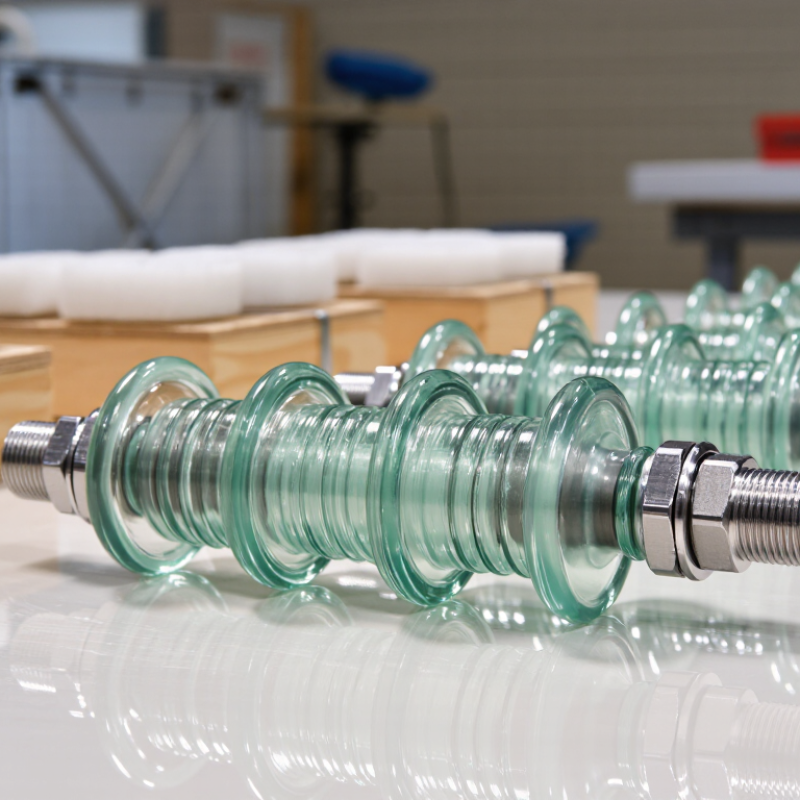
An U40B glass insulator is a toughened-glass cap-and-pin unit rated for a 40 kN mechanical failing load under IEC 60305 classifications. Its steel cap, cemented pin, and glass disc create a compact suspension assembly for overhead power lines. The glass body also supports visual inspection: damaged units often show visible shattering instead of hiding internal cracks.
Its main purpose is clear. It electrically separates energized conductors from towers while carrying mechanical tension, wind, and conductor weight. U40B units commonly appear on medium- and high-voltage distribution or transmission lines, especially in suspension strings and angle towers. Actual voltage suitability depends on string length, pollution level, altitude, and required creepage distance. A catalog label cannot decide that alone.
Demand is practical, not theoretical. The IEA report Electricity Grids and Secure Energy Transitions states that more than 80 million kilometres of grids must be added or refurbished globally by 2040. That expansion increases the need for standardized, inspectable insulator components. CIGRE guidance on overhead-line insulation also emphasizes pollution testing, mechanical verification, and field inspection. Buyers should request test certificates, dimensional drawings, glass quality records, and batch traceability. One overlooked detail matters: salt, dust, and industrial deposits can reduce performance sharply. The U40B designation helps, but it is not the whole engineering decision.
Design, Materials, and Key Technical Specifications
2026 Best U40B Glass Insulator for Global Buyers
U40B glass insulators are designed for medium and high-voltage overhead lines. Their 40 kN electromechanical failing load suits many standard suspension applications. The glass shell uses toughened insulating glass. It offers strong visibility after damage because shattered sections remain noticeable. Galvanized steel caps and pins provide mechanical support. Cement bonding must remain uniform and free from visible cracks.
Technical selection needs more than voltage matching. Check creepage distance, dry power-frequency withstand, and lightning impulse withstand. These values depend on pollution levels and system design. Cap-and-pin dimensions should match the existing string hardware. Some U40B drawings differ slightly between production standards. I have seen buyers focus on load rating and overlook corrosion protection. That mistake can shorten service life near coastal routes. Verify test reports, dimensional drawings, and batch traceability before approval.
Tips: Compare the insulator with local IEC requirements. Inspect the glass surface under clear light. Reject deep chips, sharp edges, or loose fittings. Confirm zinc coating thickness with supplier records. Ask for routine and design test evidence. Do not assume a familiar code guarantees identical dimensions. A small mismatch matters.
2026 Best U40B Glass Insulator for Global Buyers – Design, Materials, and Key Technical Specifications
Typical U40B reference electrical ratings for international transmission-line procurement
Mechanical Failing Load 40 kN
Approx. Creepage Distance 185 mm
Typical Unit Diameter 175 mm
Typical Unit Spacing 110 mm
U40B is a cap-and-pin suspension insulator class commonly manufactured from toughened soda-lime glass, galvanized steel or malleable-iron metal fittings, and Portland-cement bonding material. The chart presents typical IEC 60305-style reference values: 70 kV dry power-frequency withstand, 40 kV wet power-frequency withstand, 100 kV lightning impulse withstand, and 100 kV puncture withstand. Final selection should be confirmed against the supplier’s test certificate, applicable national standard, pollution level, altitude, and specified coupling hardware.
Electrical and Mechanical Performance Standards
2026 Best U40B Glass Insulator for Global Buyers
Electrical and Mechanical Performance Standards
An effective U40B glass insulator must balance electrical insulation and mechanical strength. The U40B designation often indicates a 40 kN mechanical class, but buyers should verify the technical drawing. National codes may use different naming systems. IEC 60305 defines requirements for cap-and-pin insulators used on overhead lines. IEC 60120 addresses coupling dimensions and interchangeability. These references help engineers compare products across regions.
Electrical performance depends on more than rated voltage. Wet withstand voltage, impulse withstand voltage, pollution level, altitude, and creepage distance all influence field reliability. IEC 60815 provides guidance for selecting insulation under polluted conditions. The IEA’s Electricity Grids and Secure Energy Transitions report states that annual grid investment must exceed 1 trillion US dollars by 2030. That expansion increases demand for dependable, standardized components. Still, laboratory figures cannot fully predict coastal salt, desert dust, or repeated freezing.
Tips: Request type-test reports, routine-test records, and material certificates. Check the stated 40 kN value against the actual design drawing. Confirm glass quality, cement condition, galvanizing thickness, and coupling tolerance. A clean datasheet is not enough. Ask for test conditions. Small omissions matter. CIGRE technical guidance also stresses field inspection and contamination assessment, yet maintenance planning is often underestimated. Buyers should compare electrical margins and mechanical loads together, not separately. That practical review can expose weaknesses before shipment or installation.
Global Sourcing, Quality Checks, and Shipping Considerations
2026 Best U40B Glass Insulator for Global Buyers
Global Sourcing, Quality Checks, and Shipping Considerations
IEA’s 2023 Electricity Grids report estimates that over 80 million kilometres of grids require replacement or addition by 2040. This demand increases pressure on U40B glass insulator sourcing. Global buyers should confirm the 40 kN rating, applicable drawings, and installation conditions before comparing prices. IEC 60383-1 provides a useful reference for testing suspension insulators. However, a catalogue description cannot replace project-specific verification.
Quality checks should cover glass transparency, chips, cracks, metal fitting alignment, and cement bonding. Request routine test records, material certificates, and batch-level traceability. Mechanical failing-load tests should match the approved design. Inspectors should also check dimensions with calibrated tools. Small fitting errors can complicate string assembly. That detail is easy to underestimate.
Shipping needs equal attention. Use rigid crates, internal separators, moisture protection, and visible handling labels. Photograph each crate before loading. The World Bank’s 2023 Logistics Performance Index covers 139 economies and highlights differences in customs, infrastructure, and delivery reliability. Buyers should therefore confirm port conditions, insurance responsibilities, Incoterms, and import documents early. Glass can survive long transport, but careless stacking may create hidden damage. A low factory price may become expensive after breakage, delays, or replacement testing. The uncomfortable lesson is simple: excellent inspection cannot fix weak packaging.