
2026 Best Silicon Nitride Manufacturers for Global Buyers?
Choosing the 2026 best Silicon Nitride manufacturers requires more than comparing prices or polished websites. Global buyers need evidence of stable quality, dependable capacity, and application-specific engineering. A supplier may offer impressive specifications, yet struggle with delivery consistency or technical support. That difference matters when a component enters a ceramic bearing, semiconductor process, turbine assembly, or high-temperature furnace.
W. David Kingery, a respected ceramic scientist, wrote, “The properties of ceramics are determined by the nature of the material and the way in which it is processed.” This principle remains highly relevant to Silicon Nitride manufacturing. Powder purity, forming methods, sintering control, machining accuracy, and inspection practices can change final performance. Buyers should therefore examine grain structure, density, fracture toughness, thermal conductivity, and batch traceability. They should also request realistic test data, not only catalog averages.
Details reveal capability. Look for clean production areas, calibrated furnaces, documented quality systems, and dimensional reports beside finished parts. Ask whether the manufacturer supports custom drawings, prototype quantities, and long-term production. ISO certification can help, but it does not replace technical evaluation. No ranking is perfect. Even experienced buyers can overlook communication delays, packaging risks, or regional service limitations.
This guide compares leading manufacturers through practical criteria. It considers material grades, production expertise, export readiness, quality assurance, delivery reliability, and industry experience. The strongest supplier is not always the largest. It is the one that can repeatedly deliver the right Silicon Nitride solution, with transparent evidence and responsible support. That standard deserves careful review.
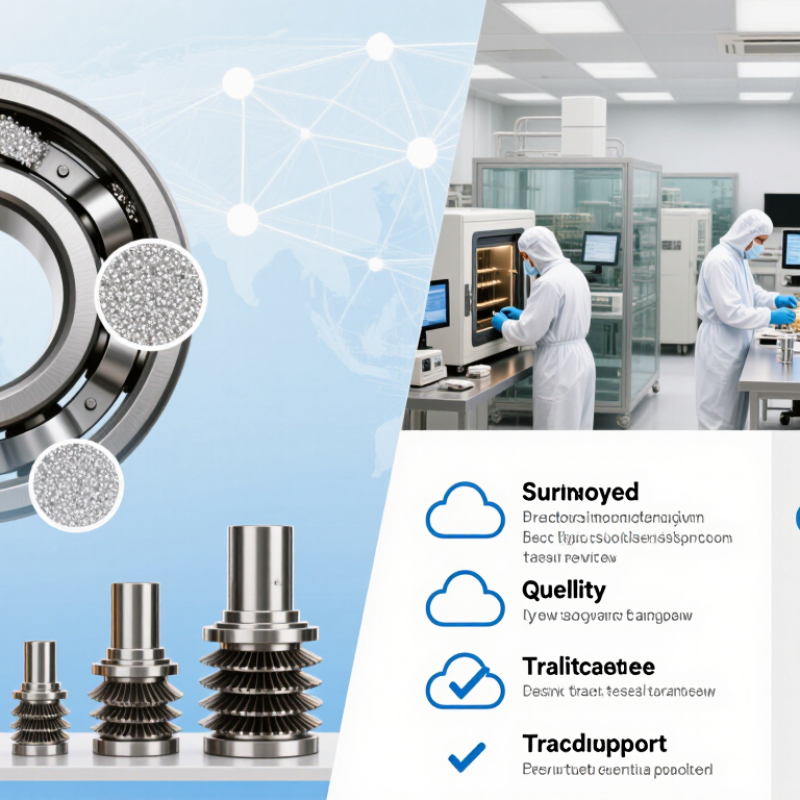
What Is Silicon Nitride and Where Is It Used?
Silicon nitride is an advanced ceramic made from silicon and nitrogen, commonly written as Si3N4. It combines low density with high strength, hardness, and thermal shock resistance. Unlike many ceramics, it can survive rapid temperature changes more reliably. It also resists wear, oxidation, and contact with molten metals. That combination makes it useful where steel becomes too heavy or soft.
Engineers use silicon nitride in bearings, cutting tools, engine components, seals, and electrical insulators. In semiconductor equipment, ceramic parts may face heat, plasma, and chemical exposure. In metal processing, tubes and crucibles can reduce contamination during contact with molten alloys. Medical and laboratory equipment may also use carefully finished components. Tiny surface defects still matter.
Global buyers should examine the material grade, density, porosity, dimensional tolerance, and surface finish. Ask for recent test reports, production traceability, and evidence of process control. A serious manufacturer should explain powder preparation, forming, sintering, and inspection methods clearly. Sample testing under real temperature and load conditions is valuable. Datasheets alone can mislead. I have seen specifications look impressive while edge chipping caused installation problems. Buyers should also confirm packaging, export documents, lead times, and communication procedures before placing large orders.
2026 Best Silicon Nitride Manufacturers for Global Buyers? - What Is Silicon Nitride and Where Is It Used?
Technical comparison of silicon nitride material types, typical properties, applications, and purchasing considerations for international buyers
| Material Type | Typical Manufacturing Route | Typical Density (g/cm³) | Typical Thermal Conductivity (W/m·K) | Coefficient of Thermal Expansion (×10⁻⁶/K) | Key Performance Characteristics | Common Industrial Uses | Important Buyer Checks |
|---|---|---|---|---|---|---|---|
| Reaction-Bonded Silicon Nitride (RBSN) | Shaped silicon powder is nitrided in a controlled nitrogen atmosphere, usually with limited liquid-phase densification. | 2.0–2.5 | 5–15 | 2.5–3.5 | Low shrinkage during processing, good thermal-shock resistance, and useful resistance to molten metals. Porosity is generally higher than in pressure-sintered grades. | Foundry fixtures, kiln furniture, burner components, thermocouple protection tubes, and furnace supports. | Open porosity, gas permeability, dimensional tolerance, surface finish, and resistance to the specific molten metal or atmosphere. |
| Pressure-Sintered Silicon Nitride (SSN) | Fine silicon nitride powder is compacted and sintered with additives under controlled temperature and atmosphere. | 3.1–3.3 | 20–60 | 2.8–3.3 | High strength, strong fracture toughness for a ceramic, good wear resistance, and reliable performance under thermal cycling. | Bearings, pump components, wear parts, seals, cutting tools, and engineering components exposed to heat and mechanical loads. | Room-temperature and high-temperature flexural strength, Weibull modulus, fracture toughness, porosity, and batch consistency. |
| Hot-Pressed Silicon Nitride (HPSN) | Powder is densified under simultaneous heat and uniaxial pressure, producing a highly dense material with controlled grain structure. | 3.1–3.3 | 20–80 | 2.5–3.3 | High density, high strength, good wear resistance, and strong resistance to oxidation and thermal shock. Shapes may be limited by pressing direction. | High-load bearings, cutting-tool components, nozzles, valve parts, and high-temperature wear components. | Maximum component size, anisotropy, pressing direction, machining allowance, dimensional tolerances, and internal-defect inspection. |
| Hot-Isostatic-Pressed Silicon Nitride (HIPSN) | Powder or a presintered body is densified using high-temperature gas pressure applied uniformly in all directions. | 3.2–3.3 | 50–120 | 2.8–3.3 | Very low residual porosity, high reliability, improved strength distribution, and strong suitability for demanding structural applications. | Aerospace components, high-speed bearings, precision wear parts, energy systems, and components requiring high reliability. | Internal porosity, non-destructive testing, strength distribution, lot traceability, qualification history, and total delivered cost. |
| Gas-Pressure-Sintered Silicon Nitride (GPSN) | Pressure-assisted sintering in nitrogen reduces decomposition and supports near-full densification of complex ceramic shapes. | 3.1–3.3 | 25–80 | 2.8–3.3 | Good combination of strength, toughness, thermal-shock resistance, and production scalability for engineered components. | Automotive and industrial bearings, turbocharger-related parts, rollers, wear components, and heat-resistant structural parts. | Gas-pressure capability, complex-shape reproducibility, dimensional control, machining quality, and application-specific qualification data. |
| Electrical-Insulating Silicon Nitride | Dense or partially stabilized silicon nitride is processed to provide a combination of dielectric insulation and mechanical strength. | 3.0–3.3 | 15–60 | 2.5–3.5 | High electrical resistivity, low dielectric loss at suitable frequencies, good thermal-shock resistance, and strong mechanical durability. | Electrical insulators, sensor housings, high-voltage assemblies, power-electronics substrates, and protective tubes. | Volume resistivity, dielectric strength, dielectric constant, loss tangent, surface cleanliness, and insulation performance after thermal aging. |
| Silicon Nitride Powder | Produced through direct nitridation, carbothermal nitridation, or other controlled powder-synthesis processes. | Not applicable as a finished body | Not applicable as a powder | Not applicable as a powder | Powder chemistry and particle morphology strongly influence sintering behavior, final density, strength, and surface quality. | Ceramic forming, additive manufacturing feedstock, coatings, thermal-management parts, and composite development. | Alpha-to-beta phase ratio, oxygen content, carbon content, particle-size distribution, specific surface area, purity, and powder flowability. |
| Machined Silicon Nitride Components | Near-net-shape ceramic blanks are finished using diamond grinding, lapping, polishing, or electrical-discharge methods where applicable. | 3.1–3.3 | 20–120 | 2.5–3.5 | Supports tight dimensional control and specialized surface finishes while retaining silicon nitride’s low density, wear resistance, and thermal-shock resistance. | Precision bearings, seals, rollers, valve components, medical-device parts, laboratory parts, and custom fixtures. | Drawing compliance, edge chipping, surface roughness, roundness, flatness, concentricity, inspection method, and packaging protection. |
| General Silicon Nitride Property Range | Values depend on composition, grain structure, porosity, additives, processing route, and test method. | Approximately 2.0–3.3 | Approximately 5–120 | Approximately 2.5–3.5 | Typical advantages include low density compared with many engineering metals, high hardness, good fracture toughness for a ceramic, high-temperature stability, and strong resistance to wear and thermal shock. | Bearings, cutting tools, molten-metal handling, furnace hardware, pump and valve parts, electrical insulation, aerospace systems, and high-temperature machinery. | Request a grade-specific datasheet, test conditions, quality certificate, material traceability, sample approval, and confirmation of operating temperature and environment. |